

Things to Do in Amsterdam for Young Adults: 15 Ideas
Posted on: March 1, 2026

The Red Light District’s best-known erotic theatre, right on the Wallen. Book skip-the-line tickets from €50 and walk straight in.
Book Moulin Rouge ticketsTop 15 Things to Do in Amsterdam for Young Adults
Finding things to do in Amsterdam for young adults sounds easy, but most lists just repeat the same generic top attractions. You end up on a museum march or a random bar crawl and miss what actually fits an 18-25 trip. This guide mixes nightlife, culture, canals, parks, and unusual museums you can combine in one walkable day.
You can start the day with coffee and museums, spend the afternoon in a park or on a ferry, and end the night in a club, cocktail bar, or a live show.
| Best for | Top area or activity |
|---|---|
| Nightlife | Paradiso, Moulin Rouge, Leidseplein, Rembrandtplein |
| Unique museums | Upside Down Museum, Red Light Secrets, Hash Museum |
| Views and photos | A’DAM Lookout, NDSM Wharf, Jordaan canals |
| Relaxed daytime plans | Vondelpark, Jordaan, canal cruise |
| Alternative culture | NDSM Wharf, street art, creative bars |
For this list, young-adult-friendly means social, flexible, cheap to combine, and fun without much planning.
Is Amsterdam good for young adults?
Amsterdam is one of Europe’s easiest cities for young adults because it is compact, walkable, and cheap to explore on foot. Most of what an 18 to 25 trip wants, from nightlife and canals to parks, street food, and unusual museums, sits within a short walk or tram ride. You rarely need a car or days of advance booking.
The city also mixes styles well, so you can do culture by day and clubs by night without constantly changing neighbourhoods. For background on the district most young visitors are curious about, our Red Light District facts guide covers what is true and what is myth.
It is not flawless: the old centre gets crowded, hostel beds fill fast in summer, and the “anything goes” reputation is overstated. There are real rules, which we cover further down. For fun, freedom, and value, though, Amsterdam still sits near the top of any young-adult shortlist.
The 15 Ideas: Nightlife, Culture, Canals and More

Amsterdam works especially well for young adults because distances are short and neighbourhoods change fast. Within one afternoon, you can go from quiet canals to a rooftop lookout, then to a brewpub, then to live music or a late-night show.
A good day usually mixes one cultural stop, one relaxed stop, and one night activity. That keeps the day interesting and stops it from feeling like a long museum march or one long bar crawl.
If you want a fun and more daring thing to do in Amsterdam, visiting a live sex show in the Red Light District is one of the most talked-about nightlife experiences. But before you pick one, it helps to know which venue fits you better. Our Moulin Rouge vs Casa Rosso guide shows which sex show is better for first-time visitors, couples, location, atmosphere, and overall value, so you can choose the right show instead of booking blindly.
The list below includes nightlife, adult entertainment, museums, parks, views, neighbourhoods, and local drinks.
1 | Explore the Nightlife at Paradiso
Amsterdam’s nightlife runs from big clubs to live music, and Paradiso, a former church near Leidseplein, is one of its best-known live-music and club venues.
It hosts a wide range of genres, which is one reason it works so well for visitors. The old church layout gives the venue more character than a standard club room.
2 | Experience the Moulin Rouge Amsterdam
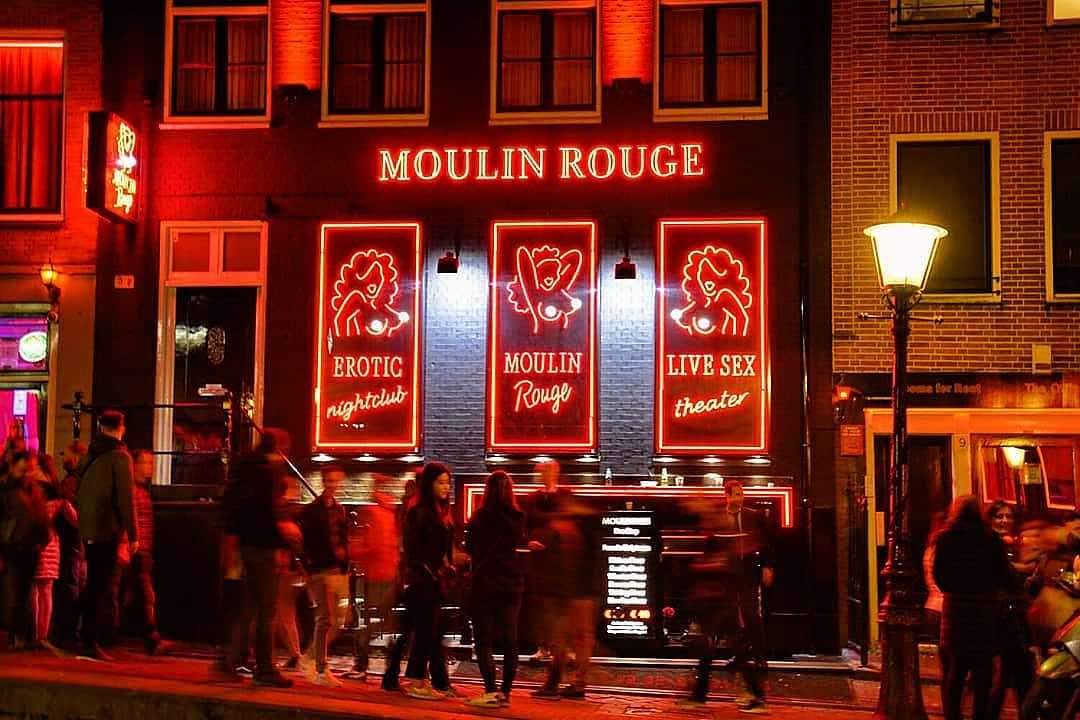
Located on Oudezijds Achterburgwal in the Red Light District, the Moulin Rouge Amsterdam is a long-running adult cabaret. It is one of the older adult-cabaret venues in the city centre and suits travellers wanting something different from a normal bar or club.
It is right in the middle of De Wallen, so it is easy to fold into a Red Light District evening.
Moulin Rouge Amsterdam tickets
Plan ahead — evening shows often sell out, especially at weekends.
3 | Walk De Wallen with a Self-Guided Audio Tour
The easiest low-cost way to actually understand the district is our self-guided Red Light District audio tour. You follow the route on your own phone and set your own pace, and at about €5 it fits an 18-25 budget far better than a €40 show (price last checked October 2026).
Our licensed local guides, who have walked De Wallen since 2014, wrote the route and the commentary. You get the history, the window etiquette, and the rules in one loop you can pause for a drink or a photo. Start it at dusk and you are already in the right place when the bars and shows open.
Budget pick: self-guided Red Light District audio tour
Walk De Wallen at your own pace on your phone, from about €5 (price last checked October 2026).
4 | Hash, Marihuana & Hemp Museum
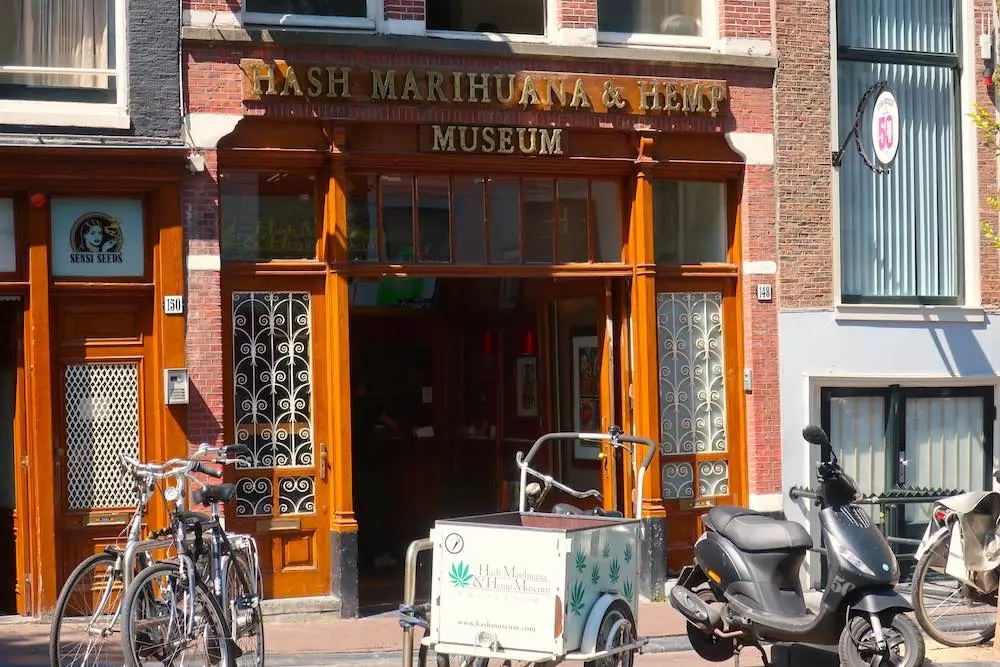
Amsterdam is famous for its relaxed cannabis culture, and the Hash, Marihuana & Hemp Museum gives useful background instead of just cliché visuals. It explains the plant’s history, uses, and place in law and culture.
It works well for young adults because it is small, central, and genuinely informative, and it balances out the heavier nightlife stops with something more educational.
5 | Amsterdam Brothel Tour

The Amsterdam Brothel Tour walks you through the Red Light District with a licensed local guide. It adds legal and historical context to an area many visitors misread.
It works best for people who want a respectful, factual view of sex-work history and the legal setting in Amsterdam.
| If you want… | Pick this |
|---|---|
| Live music and club vibe | Paradiso |
| Adult nightlife spectacle | Moulin Rouge Amsterdam |
| Cultural background | Amsterdam Brothel Tour |
| Short museum stop | Hash Museum |
If your plans cover several neighbourhoods in one day, this GVB Amsterdam public transport pass can help a lot. It is especially useful if you are combining Leidseplein, De Pijp, Amsterdam Noord, and the city centre in one trip.
6 | The Upside Down Museum
The Upside Down Museum is built for playful photos and group fun. It suits young adults because it is social, energetic, and easy to enjoy with friends without needing much background knowledge.
It is especially strong if your group likes content creation, unusual photo spots, or indoor attractions on a rainy day.
7 | Red Light Secrets Museum
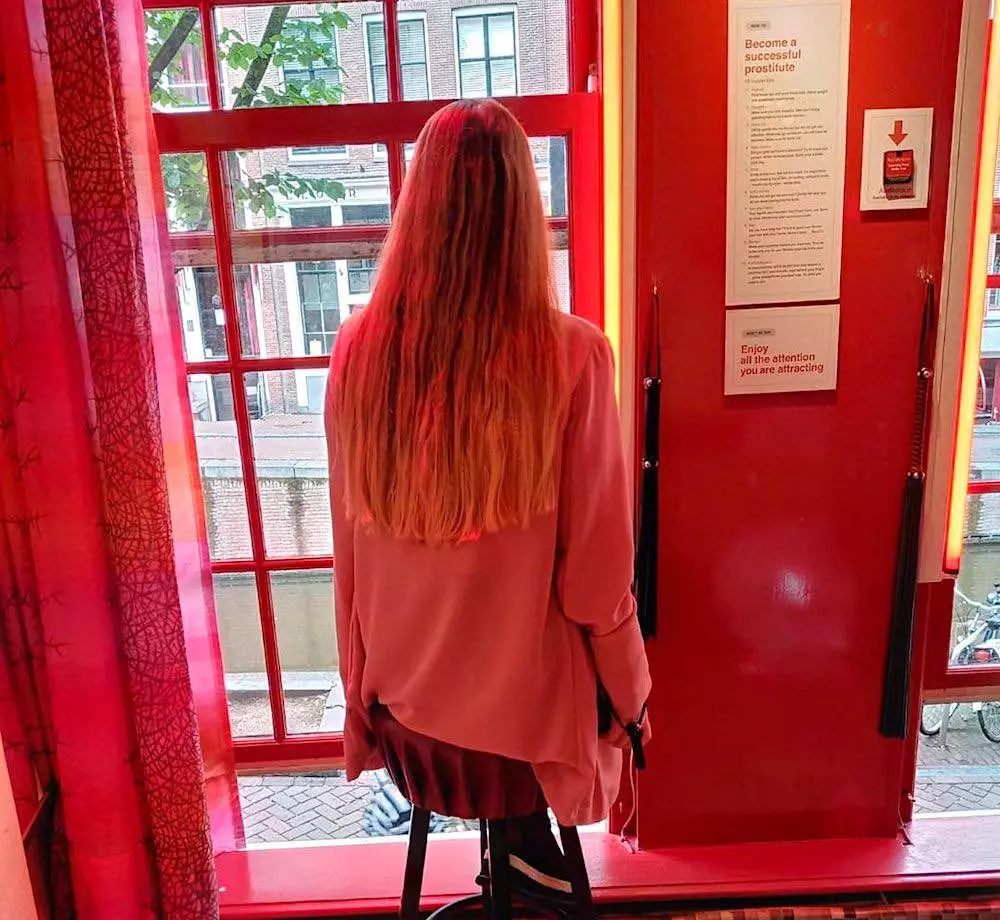
The Red Light Secrets Museum offers a closer look at sex work in Amsterdam. Located in a former brothel, it uses stories and exhibits to explain the district in a more human and respectful way.
It has a red-light window too, which makes the visit more hands-on than a standard museum, and the exhibits explain the lives of the women who work the windows with care.
8 | Wynand Fockink
Wynand Fockink is a historic Dutch tasting room and distillery in the old centre. It is a good stop for young adults who want local flavour without a full dinner or a long activity.
The old atmosphere is the real draw here. If you want to try Dutch genever or liqueurs somewhere that still feels rooted in the city’s past, this is a strong pick.
9 | Cafe de Prael
Cafe de Prael is a good place to slow down after sightseeing. It offers locally brewed beer and a more relaxed atmosphere than the louder club scene.
It is a comfortable stop with a social but not hectic feel. It works well in the late afternoon or early evening before a bigger night out.
10 | Vondelpark
For a break from nightlife and museums, visit Vondelpark. It is an easy place to sit outside, walk, bike, picnic, or recover from a late night.
Every young-adult itinerary benefits from one calm stop like this, especially in summer when the park is lively but not overwhelming.
| Mood | Best pick |
|---|---|
| Playful group fun | Upside Down Museum |
| Quiet drink | Wynand Fockink or Cafe de Prael |
| Open-air reset | Vondelpark |
| Learning with edge | Red Light Secrets Museum |
If your group wants a more cultural daytime route before nightlife, our guide to museums in Amsterdam Red Light District is a useful next step. It helps you plan a city-center day that feels richer than just bars and clubs.
11 | Anne Frank House
A visit to the Anne Frank House is one of the most serious and meaningful experiences in the city. It offers important historical context and a different emotional tone from the lighter stops on this list.
Many visitors find it the most moving stop of their trip, so book timed tickets well ahead. For young adults, it adds depth to a trip that might otherwise be all nightlife and entertainment.
12 | A’DAM Lookout
For a strong city view, head to A’DAM Lookout. The observation deck offers wide views over Amsterdam, and the swing adds a thrill factor that appeals to many younger visitors.
It is simple but memorable. It is a very good choice if your group wants photos, skyline views, and something more active than just walking canals.
13 | Heineken Experience
Beer enthusiasts will enjoy the Heineken Experience, which takes visitors through the original Heineken brewery building, which no longer brews on site. It mixes brand history, brewing basics, and tasting in a way that feels more playful than formal.
It is easy to enjoy even if you are not a big beer expert. It works best for groups who want a social indoor activity with a built-in finish.
14 | Jordaan District
The Jordaan District is one of Amsterdam’s best neighbourhoods for slow wandering. Narrow streets, canals, cafés, and local shops make it a good fit for young adults who want a more relaxed side of the city.
It works best when you do not over-plan it. Just walk, stop for food or drinks, and let the neighbourhood do the work.
15 | NDSM Wharf
For a different side of the city, visit NDSM Wharf in Amsterdam Noord. This former shipyard is now a large creative area with street art, events, food spots, and a rougher, more alternative vibe.
It suits young adults who want something less polished and more local, and it is a nice contrast to the old centre.
Where young people actually hang out in Amsterdam
Young locals and students spend less time in the tourist core and more in a handful of neighbourhoods. De Pijp has cheap international food and the Albert Cuyp market, Amsterdam Noord has NDSM Wharf and IJ-side bars reached by the free ferry, and the parks (Vondelpark, Westerpark, and Oosterpark) fill up on any warm day. Oost is another student-heavy area worth a wander.
For going out, Leidseplein and Rembrandtplein are the busiest late-night squares, while Nieuwmarkt and the lanes around the Red Light District pull a mixed crowd. To see how these areas connect before you go, our Red Light District map shows the city-centre layout at a glance, and the Amsterdam nightlife guide covers where the night actually happens.
A simple rule is that the further you drift from Dam Square, the more local it feels. Students gravitate to De Pijp, Oost, and Noord, so those are good areas to base a day around if you want fewer tourists and lower prices.
Things to Do in Amsterdam for Young Adults at Night
Streets get busier after dark, Leidseplein, Rembrandtplein and the Red Light District fill up, and you can trace the lit-up lanes on our Red Light District map. If you are looking for things to do in Amsterdam for young adults at night, the best plan is to mix one main venue with one or two flexible follow-up stops.
Here are the strongest night ideas, with Moulin Rouge at number 1 and five extra fun options that are not on the main list above:
- Moulin Rouge Amsterdam for a long-running adult nightlife experience in the Red Light District.
- Take an evening canal cruise to see the city lit up from the water.
- Do a late cocktail crawl around the Jordaan or Leidseplein.
- Visit a comedy night or improv show for a lighter, social evening.
- Go to a late-night karaoke bar with friends.
- Take the free ferry to Amsterdam Noord for bars with IJ views and a different crowd.
Nights tend to work better when you move between a couple of areas rather than staying in one. A simple plan is dinner, then a main activity, then one last bar.
Helpful extras for planning your trip
One of the best daytime add-ons for young adults is getting out on the water. The city makes much more sense once you see it from the canals, especially if this is your first trip. If you want to compare route styles, atmosphere, and price levels, this guide to Amsterdam canal tours is a very useful next read.
It also helps to balance high-energy stops with easier ones — do not stack only nightlife or only museums into one day. Travelling on a budget? Check typical Red Light District prices before a night out.
| Best type of day | Simple formula |
|---|---|
| Culture + nightlife | Museum + canal walk + evening venue |
| Relaxed social day | Park + café + bar + neighbourhood walk |
| Alternative day | NDSM + ferry + street art + drinks |
| Classic first-time visit | Jordaan + Vondelpark + A’DAM + nightlife |
How much money do you need? A budget for young travellers
Amsterdam is not the cheapest European capital, but a young-adult trip works on a modest budget if you plan around free and low-cost activities. Walking the canals, the parks, the Albert Cuyp market, and the free Noord ferry cost nothing, which offsets the paid attractions. Your biggest variable costs are your bed, your drinks, and paid entries.
Prices change often, so check current rates before you book. The usual budget stretchers are hostel dorm beds over hotels, supermarket or street food over sit-down meals, and a transit pass if you move around a lot.
For the district itself, one of the cheapest ways to understand it is our self-guided Red Light District audio tour, currently around €5, which lets you walk at your own pace instead of paying for a full guided group. It suits budget travellers who still want proper context.
Getting around, nightlife age rules, and staying safe
Getting around is simple: the centre is walkable, trams and the metro cover the rest, and bikes are everywhere if you are confident in traffic. If your day crosses several neighbourhoods, a GVB transport pass is often more convenient than buying single fares.
The legal age to buy alcohol and to enter a cannabis coffeeshop in the Netherlands is 18, so an 18-year-old can legally drink and enter most venues. Individual clubs set their own door policies, though, with some at 18-plus and others at 21-plus or higher, so check the venue before you queue and carry ID because age checks are common.
Amsterdam is generally safe for young travellers, with the usual big-city caveats. Watch for pickpockets in crowds and on busy trams, do not photograph the women in the Red Light District windows, and stay aware around the canals at night. The district has clear etiquette rules, which our Red Light District facts guide explains so you know what is allowed.
A 2 to 3 day Amsterdam plan for young adults
Two to three days is enough for a first young-adult trip. The plan below mixes one cultural stop, one relaxed stop, and one night activity each day, all within a short walk or tram ride. Treat it as a loose frame and swap in whatever fits your group.
| Day | A simple plan |
|---|---|
| Day 1 — classic highlights | Rijksmuseum or Anne Frank House in the morning (book ahead), a canal walk through the Nine Streets, dinner, then the Red Light District at dusk with the self-guided audio tour (about €5). |
| Day 2 — local and views | De Pijp and the Albert Cuyp market, an afternoon in Vondelpark, A’DAM Lookout at sunset, then nightlife around Leidseplein or Rembrandtplein. |
| Day 3 — alternative and chill | The free ferry to Amsterdam Noord for NDSM street art, a brown café back in the centre, and an optional Moulin Rouge show or a club to finish. |
With only two days, drop Day 3 and keep the free ferry trip as a half-day add-on. Book the busy museums and any show in advance, since weekend slots fill fast.
Skip the tour group and wander whenever you like. The self-guided audio tour gives you a GPS route and 22 expert stories on your phone.
Get the audio tourThings to Do in Amsterdam for Young Adults: FAQ
Amsterdam is one of the best European cities for young adults because it is compact, walkable, and affordable to explore on foot. You can combine nightlife, canals, parks, and unusual museums in a single day without long transfers. The city suits the 18 to 25 age group especially well, since many activities are social, flexible, and budget-friendly. The main downsides are summer crowds and busy weekends in the old centre.
Young locals and students spend most of their time outside the tourist core. Popular areas include De Pijp for cheap food and the Albert Cuyp market, Amsterdam Noord and NDSM Wharf for creative bars and events, and parks such as Vondelpark, Westerpark, and Oosterpark on warm days. For going out, Leidseplein and Rembrandtplein are the busiest late-night squares. The further you drift from Dam Square, the more local it tends to feel.
In your 20s, Amsterdam works best as a mix of nightlife, culture, and relaxed outdoor time. A typical day might pair one museum or guided experience with a park stop and an evening venue such as a club, a live-music spot, or a Red Light District show. Low-cost options like canal walks, markets, and the free Noord ferry keep the budget in check. The variety is what makes the city flexible for different group moods.
Amsterdam is not the cheapest European capital, but a young-adult trip can be affordable with some planning. Hostel dorm beds, supermarket and street food, and free activities like the parks, markets, and the Noord ferry all help stretch a budget. Paid attractions and nightlife add up, and prices change often, so check current rates before booking. A self-guided option such as our Red Light District audio tour, currently around €5, is one of the cheaper ways to see the area.
A realistic daily budget depends heavily on your accommodation and nightlife habits, so treat any figure as a rough guide and check current prices yourself. Travellers who stay in hostels, eat casually, and focus on free or low-cost activities spend far less than those booking hotels and sit-down dinners. Your biggest variable costs are your bed, your drinks, and paid attractions. Building in free stops like the parks and the ferry is the simplest way to keep the total down.
The legal age to buy alcohol in the Netherlands is 18, so an 18-year-old can legally drink and enter most venues. Individual clubs set their own door policies, however, and some admit 18-plus while others require 21-plus or higher, so check the venue in advance. Doors can also refuse entry based on how busy the night is or how large your group is. Always carry ID, since age checks are common.
Amsterdam is generally safe for young travellers, with the usual big-city precautions. Pickpocketing happens in crowded tourist areas and on busy trams, so keep valuables secure. In the Red Light District, do not photograph the women in the windows, respect the area’s rules, and stay aware near the canals at night. Drinking responsibly and planning a route back to your accommodation go a long way.
Two to three days is enough to cover the main sights, some nightlife, and a couple of neighbourhoods at a relaxed pace. Three days gives room for the city centre, a park, Amsterdam Noord, and an evening out without rushing. Longer stays make sense if you want day trips or a slower, more local rhythm. For a first young-adult trip, three days is a common sweet spot rather than too much.
The best area depends on your priority. The city centre and Leidseplein put you closest to nightlife but cost more and get noisy, while De Pijp offers food, bars, and a more local feel at a slightly lower price. Amsterdam Noord and Oost are quieter and often cheaper, with easy transit or ferry links to the centre. Hostels in or near the centre are the usual budget choice for first-timers.
The Red Light District is worth visiting for its history, its canal-side architecture, and the reality behind one of Europe’s most misunderstood areas. It is legal, regulated, and busiest in the evening, when the lit windows and narrow lanes draw large crowds. Respect the rules by taking no photos of the workers and keeping moving in the tight streets. Reading up on the facts beforehand helps separate what is true from the common myths.
At night, young adults can choose from clubs and live music, evening canal cruises, cocktail and bar crawls, comedy shows, and Red Light District nightlife. A good plan pairs one main venue with one or two flexible follow-up stops rather than staying in a single spot all evening. Many areas stay busy late, and night buses replace most trams after midnight, so check night-transport options. Closing times vary by day of the week, so confirm them before heading out.
Do walk or use trams and the metro, respect bike lanes, and carry ID for age checks. Do not photograph sex workers in the Red Light District, block the narrow lanes, or treat the city’s relaxed rules as no rules at all. Public drinking and littering can bring fines in parts of the centre, so check local signs. Being considerate of residents in busy areas keeps the trip smooth and avoids trouble.





-
- Home
- Tours
- Hotels
- Information
- History
- FAQ
- Contact
- Privacy Policy
Sitemap
-
- Coffeeshops
- Restaurants
- Sex Clubs
- Museums
- Canal Cruises
- Bike Rental
Entertainment
-
Contact

© 2010–2026 Amsterdam Red Light District – Amsterdam Red Light District Travel Guide. Webdesign by BIRO.
 EN
 DE
 FR
 NL
 ES
 ZH