


De Wallen Amsterdam
What Is De Wallen in Amsterdam?
De Wallen is the local name of Amsterdam’s most famous Red Light District. This page explains what De Wallen means, where it is, why it is called that, and how the neighborhood developed into one of the city’s best-known and most misunderstood areas.
Planning a visit? Use our interactive Amsterdam Red Light District map to find the main streets, window areas and walking routes.
Prefer a private booking over the window areas? Compare the 10 best escort agencies in Amsterdam.
Key facts
- Local name: De Wallen is the neighborhood name; Red Light District is the international description most tourists know.
- Where it is: In Amsterdam’s historic centre, around the Oudezijds canals, a short walk from Central Station.
- Why the name matters: The word refers to old canal walls / embankments / defensive edges in medieval Amsterdam.
- What it includes: Historic canals, the Oude Kerk, red-lit windows, nightlife, museums, bars, and residential streets.
- Main visitor reminder: De Wallen is not just a tourist attraction. It is also a living neighborhood.
Helpful guides: Complete Red Light District guide • Map • Rules
Last reviewed: April 2026

Amsterdam’s oldest canal area pictured by one of our local guides in the afternoon.
Want to explore De Wallen at your own pace?
Get the self-guided audio tour →What does De Wallen mean?
De Wallen is the Dutch name for the area many visitors call Amsterdam’s Red Light District. The word refers to older embankments, defensive canal edges, and the historic water lines that helped shape the medieval city.
In simple terms:
- De Wallen = the neighborhood name
- Red Light District = what the area is internationally known for
Locals often say De Wallen. Tourists more often say Red Light District.
Where is De Wallen located?
De Wallen is in Amsterdam’s old city centre, just southeast of Amsterdam Centraal Station. It sits around the Oudezijds Achterburgwal and Oudezijds Voorburgwal canals, near Warmoesstraat, Zeedijk, Nieuwmarkt, and the Oude Kerk.

We took this picture of the Oudezijds Achterburgwal on a quiet morning.
If you want to walk the area without guessing, use the interactive De Wallen map.
Why is De Wallen also called the Red Light District?
Internationally, the area became famous because of its red-lit window brothels and adult nightlife. That is why many visitors know it only as Amsterdam’s Red Light District. But the neighborhood itself is older, broader, and more historic than that label suggests.
De Wallen includes:
- historic canals and alleyways
- Amsterdam’s oldest church
- window brothels in specific streets
- museums, bars, restaurants, and cafés
- residential houses and local businesses

The most narrow alley in Amsterdam.
History of De Wallen
De Wallen grew out of Amsterdam’s earliest canals, defense lines, trade routes, and religious centre. That is why it still feels old and dense: tight streets, medieval traces, canal houses, and very limited space.
Over centuries, the area became associated with trade, lodging, nightlife, and sex work—something that also happened in many old harbour cities.
Today, you can still see several historical layers at once:
- medieval church life around the Oude Kerk
- Golden Age canal houses and trade streets
- modern tourism and nightlife
- local regulation and neighborhood change
| Era | What shaped De Wallen |
|---|---|
| Medieval | Canals, embankments, city defenses, church life |
| Golden Age | Trade, dense building, harbour activity, lodging |
| Modern | Regulation, tourism, nightlife, city-centre pressure |
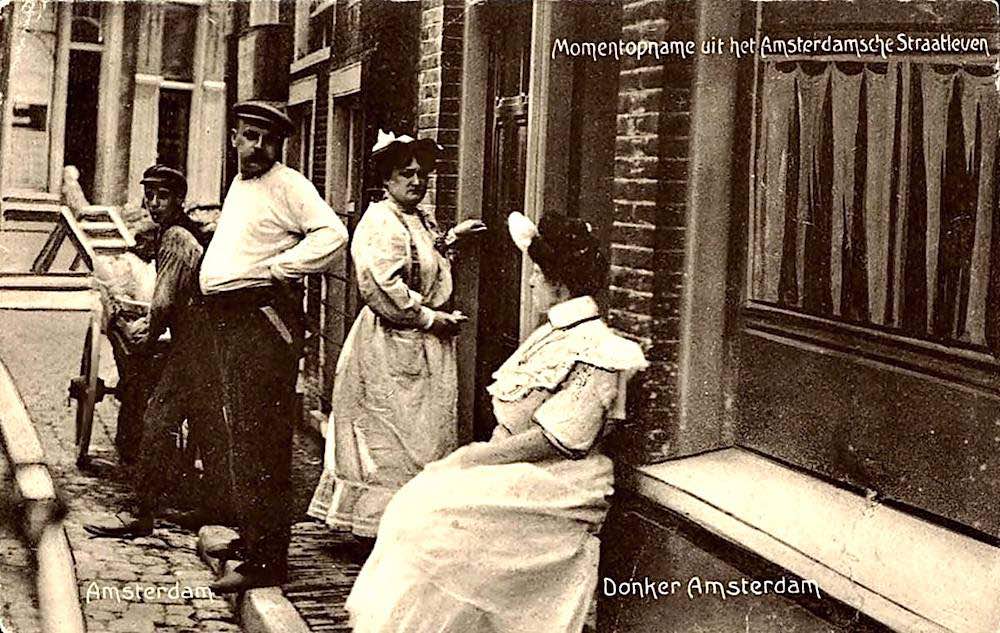
Amsterdam’s Red Light District in 1905.
Prostitution has a long history in this area, but the current form of window prostitution developed much later, especially in the twentieth century. The modern Red Light District that tourists recognize today is the result of regulation, tourism, and urban change—not something that appeared fully formed centuries ago.
What will you see in De Wallen today?
A walk through De Wallen shows much more than many first-time visitors expect. Yes, there are red-lit windows and adult nightlife, but there are also canals, bridges, museums, bars, churches, historic façades, and ordinary residential streets.
Most visitors commonly notice:
- the Oude Kerk and surrounding square
- historic canal houses
- red-lit window streets
- small museums and nightlife venues
- narrow alleyways and strong evening foot traffic

How many people live in De Wallen?
De Wallen is not an attraction only. It is also home to residents. In 2025, the Burgwallen-Oude Zijde area, which includes De Wallen, has about 4,760 inhabitants.
That is one of the most important things visitors often forget: this is not a closed entertainment zone. It is a lived-in neighborhood with local routines, housing, noise concerns, and community pressure from tourism.
Why understanding De Wallen helps visitors
When people understand that De Wallen is both a historic neighborhood and a nightlife area, they usually behave better. They walk with more awareness, take fewer bad photos, make less noise, and understand why rules are stricter here than they first assumed.
If you want the practical visitor version, read the complete Red Light District guide.
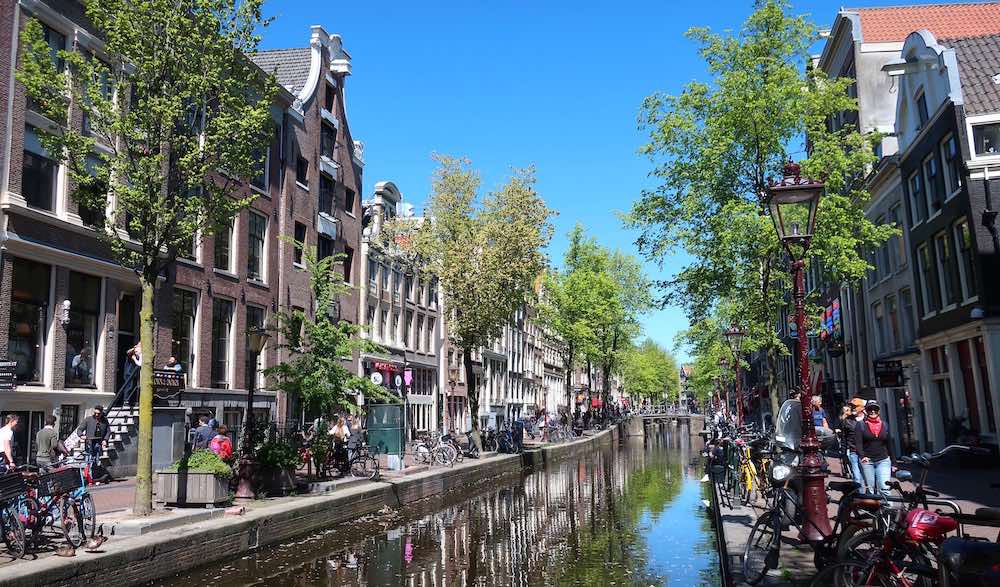
Amsterdam, De Wallen, Oudezijds Achterburgwal.
Frequently asked questions about De Wallen
Is De Wallen the same as the Red Light District?
Yes. De Wallen is the neighborhood name; Red Light District is the international description most tourists use.
Where is De Wallen?
In Amsterdam’s city centre, around the Oudezijds canals, near Centraal Station, Warmoesstraat, and Nieuwmarkt.
Why is it called De Wallen?
The name comes from the old embankments and defensive canal edges that shaped medieval Amsterdam.
Is De Wallen only about prostitution?
No. It is also one of Amsterdam’s oldest neighborhoods, with canals, churches, bars, cafés, museums, shops, and residents.
Is De Wallen safe to visit?
Generally yes for most visitors, especially if you stay aware, avoid nuisance behavior, and respect local rules.

Is De Wallen safe to visit at night?
Generally, yes. De Wallen is busy and well-policed in the evening, which is when most visitors come. Stay on the main streets, keep an eye on your belongings in the crowds, and never photograph the window workers.
When is the best time to see De Wallen?
After dark the red neon along the canals creates the atmosphere the area is famous for. For a quieter visit and a clearer look at the historic Red Light District architecture, come in the late morning.
What time does De Wallen open?
De Wallen is a public neighbourhood, so the streets are open 24/7. The red-lit windows keep their own hours — most are busy in the evening and generally close between about 6:00 and 8:00 in the morning. Bars, museums and shops follow their own opening times.
What is there to do in De Wallen besides the windows?
Plenty. You can visit the 13th-century Oude Kerk, the Red Light Secrets museum, old brown cafés, the Zeedijk and Chinatown, canal-side bars, and even the world’s oldest condom shop. De Wallen is a historic neighbourhood, not only a red-light strip.
How much does it cost to visit De Wallen?
Walking around De Wallen is completely free. If you visit a window, a short visit typically starts around €50 and rises with time and services; museums and attractions have their own ticket prices.
ALSO READ:



-
- Home
- Tours
- Hotels
- Information
- History
- FAQ
- Contact
- Privacy Policy
Sitemap
-
- Coffeeshops
- Restaurants
- Sex Clubs
- Museums
- Canal Cruises
- Bike Rental
Entertainment
-
Contact

© 2010–2026 Amsterdam Red Light District – Amsterdam Red Light District Travel Guide. Webdesign by BIRO.
 EN
EN  DE
DE  FR
FR  NL
NL  ES
ES  ZH
ZH