Best for first-time visitors
Start with the complete guide, then use the map to build a simple walking route.
Read the complete guide

Amsterdam travel guide • De Wallen • Updated for 2026
Planning a Red Light District tour, or a self-guided visit to Amsterdam’s De Wallen? This guide explains what De Wallen is, what to expect, the main rules, safety tips, and a simple walking route — plus your tour options, from a self-guided GPS audio tour to small-group guided walks. Start with the essentials below, then use the free map, FAQ, and audio tour to plan your visit.
Amsterdam’s Red Light District, also called De Wallen, is one of the city’s oldest neighborhoods. It is known for its canals, historic alleys, nightlife, sex-work windows, bars, and museums. Many visitors come for the history and curiosity, but it is still a residential and regulated area, so respectful behavior matters.
Start with the complete guide, then use the map to build a simple walking route.
Read the complete guideUse the free Red Light District map to find the main streets and canals and plan your route.
Open the mapCheck the key laws, etiquette, and common mistakes before you go.
Read the rulesUse the audio tour on your phone for a structured route and local context.
Start the audio tourFor full context, practical tips, and what first-time visitors usually miss, read the complete Red Light District guide.
It depends what you want. If you'd like context on De Wallen's history, how the window system works and the local rules, a guide adds that. Prefer to wander? Our free self-guided route and audio tour cover the basics. Worth it for context; skippable if you only want a walk.
Prices vary by operator and tour type. Walking the district yourself is free, and our audio tour costs nothing. Paid guided tours are commonly in the €20–45 range per person, with small-group or private options higher. Always check the operator's current price before booking — figures here are typical, not quotes.
Windows are lit through the day but get busiest after dark, roughly from 9pm until the early hours, with weekends busiest. Early evening (around 7–9pm) is the most atmospheric time to walk while it's still relatively calm; late nights get rowdier. Many windows stay active well past midnight.
Treat it like a working neighbourhood. Don't photograph or film the women in the windows — it's the one rule everyone must follow. Don't touch, haggle aggressively or block the narrow alleys. Drugs sold on the street are illegal, and the area is strictly 18+. Prices and services are agreed directly with the worker.
You can photograph the streets, canals and architecture, but never the women in the windows. Taking their picture is strictly forbidden, considered a serious breach of privacy, and can lead to confrontation or a phone being taken. Put the camera away whenever you pass a window. General street photos are fine.
Yes, De Wallen is one of Amsterdam's most-watched areas, with heavy police presence, cameras and crowds most evenings. The usual city risks apply: pickpockets in dense crowds, aggressive street dealers to ignore, and drunk groups late at night. Keep valuables secure, stay on the main alleys, and it's comfortable for most visitors.
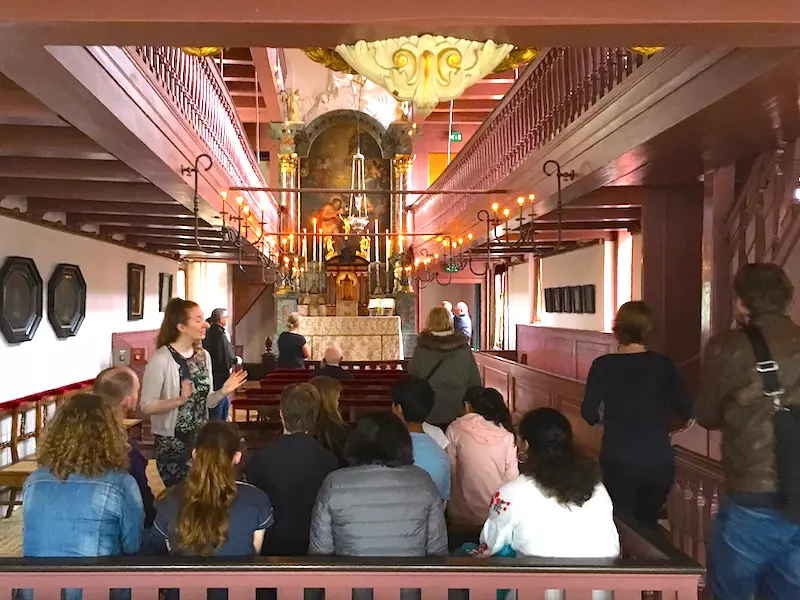
Allow about 1 to 1.5 hours to walk the core of De Wallen at a relaxed pace, following a route like Nieuwmarkt to the Oude Kerk and along Oudezijds Achterburgwal. Add time for a stop at a bar, a museum such as Our Lord in the Attic, or a guided tour.
Need more details? Read the full FAQ.
Use the free map and route planner to explore De Wallen with less backtracking.
Learn the key rules, fines, etiquette, and what visitors should avoid.
Get quick answers to the most common visitor questions.
Explore at your own pace with a self-guided GPS audio tour.
Follow the self-guided walking route our local guides use through De Wallen, street by street.
Understand what De Wallen is, where it is, and what to expect.
How the windows work, what to expect, and the typical prices.
Who works behind the windows, and how regulated sex work operates here.
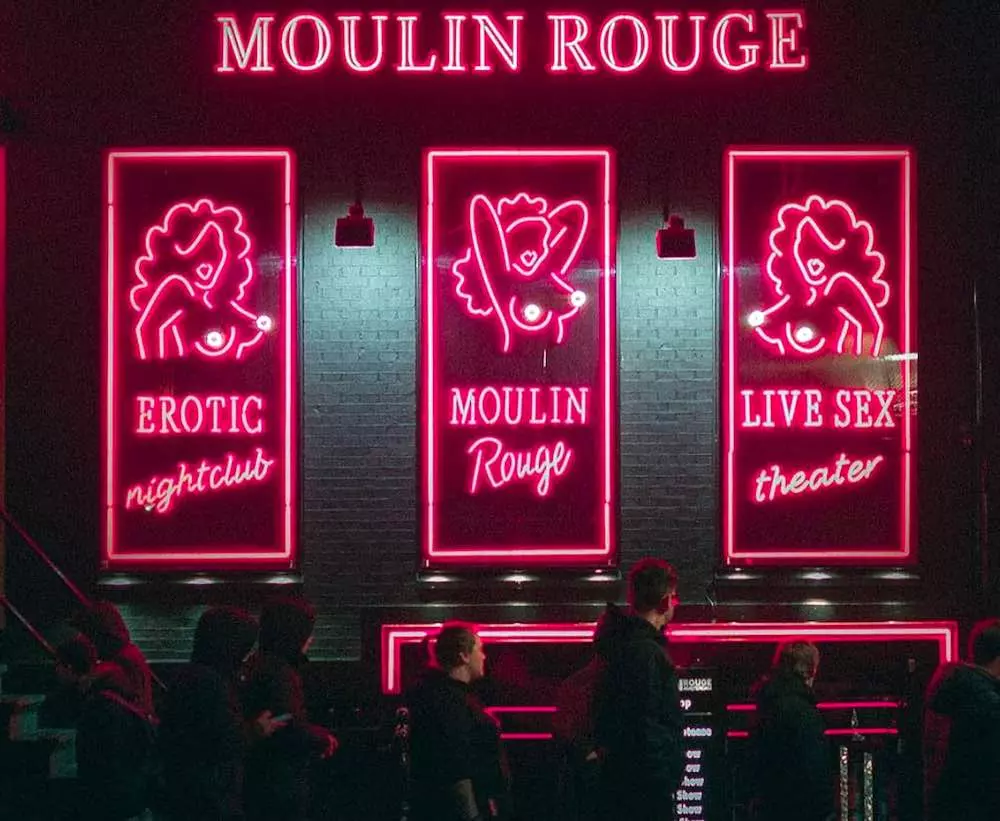
A ticketed cabaret-style evening show and nightlife option near De Wallen, for visitors who want something to do after dark.
Whether you join a small-group guided walk, use our self-guided GPS audio tour, or simply wander, a Red Light District tour of De Wallen tends to take in the same ground. Most cover:
Exact stops, length and price vary by operator — compare the options below, or follow our free self-guided walking route.
After reading the guide, compare tours, self-guided options, and entertainment tickets relevant to the Red Light District area.










© 2010–2026 Amsterdam Red Light District – Amsterdam Red Light District Travel Guide. Webdesign by BIRO.
 EN
EN  DE
DE  FR
FR  NL
NL  ES
ES  ZH
ZH