

Amsterdam Red Light District: A Complete Visitor Guide
Posted on: January 1, 2026

The Amsterdam Red Light District confuses most first-time visitors: they arrive unsure what’s legal, where the windows are, and how to behave. Rumours, etiquette slip-ups, pickpockets, and tour restrictions turn a simple walk into a worry. This guide sorts it out — location, laws, how the windows work, etiquette, safety, what to see, costs, and a route you can follow. De Wallen is Amsterdam’s oldest quarter and a working neighbourhood, not a theme park.
The pages below stick to what the city itself says and skip the myths. Where a rule, a law, or a policy is mentioned, it points to the source — mostly the City of Amsterdam and the national government — so you can visit with the right expectations and treat the area, and the people who work there, with basic respect.
Written by Martijn, an Amsterdam local guide. Last reviewed October 2026 and checked against official City of Amsterdam and national-government sources.
Why you can trust this guide
- Amsterdam Red Light District Tour has been online since 2010, and our local guide team has helped visitors in person since 2014.
- Every rule, law and policy here is checked against official sources — mainly the City of Amsterdam, the national government and the WODC research institute.
- Written for real visitors, not search engines: clear, respectful and practical.
- Illustrated with real, on-location photos of De Wallen rather than stock imagery.
Want to explore De Wallen at your own pace?
What and where is the Red Light District?

The main zone is De Wallen, the medieval core of Amsterdam wrapped around two parallel canals: Oudezijds Achterburgwal and Oudezijds Voorburgwal. The Oude Kerk, the city’s oldest church, sits right in the middle, with lit windows a few steps from its walls. This is the part almost everyone means by “the Red Light District.”
Most guides stop there, but De Wallen is not the only windowed area. Two smaller pockets exist: the Singelgebied along the Singel canal, near the flower market, and Ruysdaelkade in De Pijp, south of the centre. Both are quieter and far less touristy than De Wallen.
The good news for planning is scale. The district is compact and flat, and you can cover the core on foot in an hour or two. From Amsterdam Centraal station it is a short, straightforward walk — well under fifteen minutes. To see how the three areas sit relative to the station and each other, this Red Light District map lays out the streets and the windowed stretches before you set off.
How to get to De Wallen from Centraal
Walking is the simplest option. Leave Centraal by the main exit, cross toward Damrak, and take the first streets on your left into the old town. Warmoesstraat runs almost parallel to Damrak and leads straight down toward the district; Zeedijk, a little further along, curves in from the eastern side past Chinatown.
Either route drops you onto Oudezijds Achterburgwal, the busiest of the two canals, within about ten minutes. There is no need for a ticket or a plan — keep the canals on your route and you will find the lit windows quickly.
If you would rather ride, trams and the metro serve the edges of the old centre from Centraal, and Nieuwmarkt metro station puts you a two-minute walk from the eastern side of De Wallen. For such a short distance, though, walking is usually faster than waiting for a connection.
Best time to visit — and how long to spend
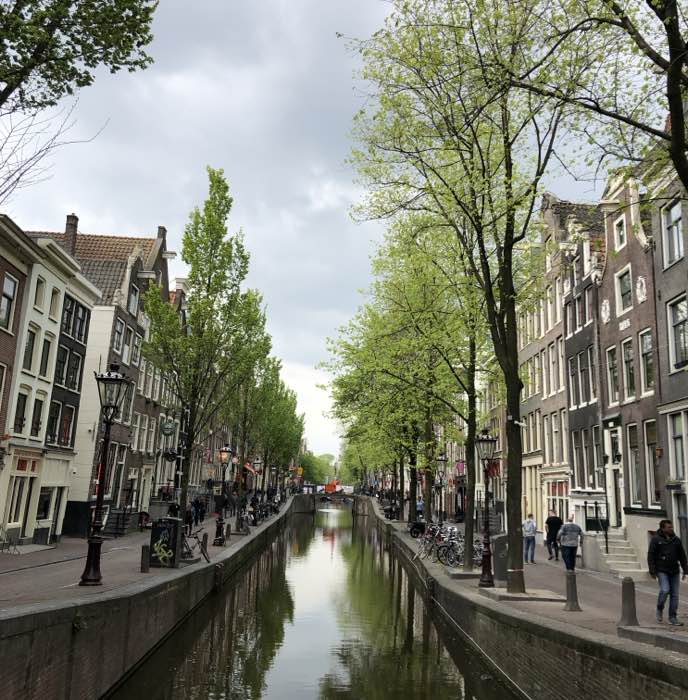
The district changes character through the day. In daylight it reads as an ordinary, handsome old neighbourhood: cafés, canal water, cyclists, people on their way to work, families passing through. Many windows are shuttered, and the medieval architecture does the talking.
Early evening is the sweet spot for a first look. The red lights are on, the streets are lively but not yet packed, and you can actually see where you are going. It feels animated without being chaotic.
Late night is the loud version. From late evening into the small hours the crowds thicken, stag and hen groups appear, and the mood gets rowdier — this is the peak, and also when nuisance and pickpocketing rise. Budget one to two hours to walk the core comfortably. Add time if you plan to stop for a museum, a show, or a canal-side drink.
Is prostitution legal in Amsterdam?
Yes. Prostitution is legal in the Netherlands as long as it involves sex between consenting adults — that is the government’s own wording, per the Government of the Netherlands. It is not a grey area or a tolerated crime; it is lawful, licensed work.
The current framework has a clear starting point. The country’s general ban on brothels was lifted on 1 October 2000, and from that point the voluntary running of prostitution by adults became legal under licensing conditions, according to the WODC, the research arm of the Dutch Ministry of Justice and Security. Licensing brought the trade into the open, with rules for operators and protections for workers.
A few myths are worth correcting. Window work is not unregulated, it is not run by the state, and the women are not trafficked by default — the sector is built around voluntary, self-employed adults working under a licence. Coercion and underage work are crimes, and enforcement targets them. The point of legalisation was to separate lawful, consenting work from the abuses that hide in the shadows. For the full detail on ages, licences, and worker protections, see the Red Light District rules and laws guide.
How the window brothels (‘ramen’) work

The lit windows — “ramen” in Dutch — run on a rental model. A worker rents a window and the small room behind it for a shift, then works for herself: she sets her own prices, decides which services she offers, and negotiates directly with the customer at the door. The operator rents the space; the worker keeps her earnings.
Negotiation happens quietly at the window, not on the street. A short visit is the standard unit, and prices climb from there depending on time and what is agreed. Rates and durations vary from window to window because each worker prices her own time — there is no fixed menu across the district. For a clearer breakdown of typical durations and price bands, the window workers page goes into the day-to-day reality behind the glass.
The lighting carries meaning. Red-lit windows are the norm; blue-lit windows have traditionally signalled transgender workers, which is where the nickname “Blue Light District” comes from. A curtain drawn across a window means the room is occupied — that is your cue to move on, not to knock or wait in front of it.
Windows are only one part of the licensed trade. Amsterdam also has licensed clubs and private venues that operate differently from the street-facing windows. If you want to understand how those indoor operations compare, the Amsterdam brothels guide covers the licensed venues beyond the ramen.
Sex shows, peep shows and adult entertainment
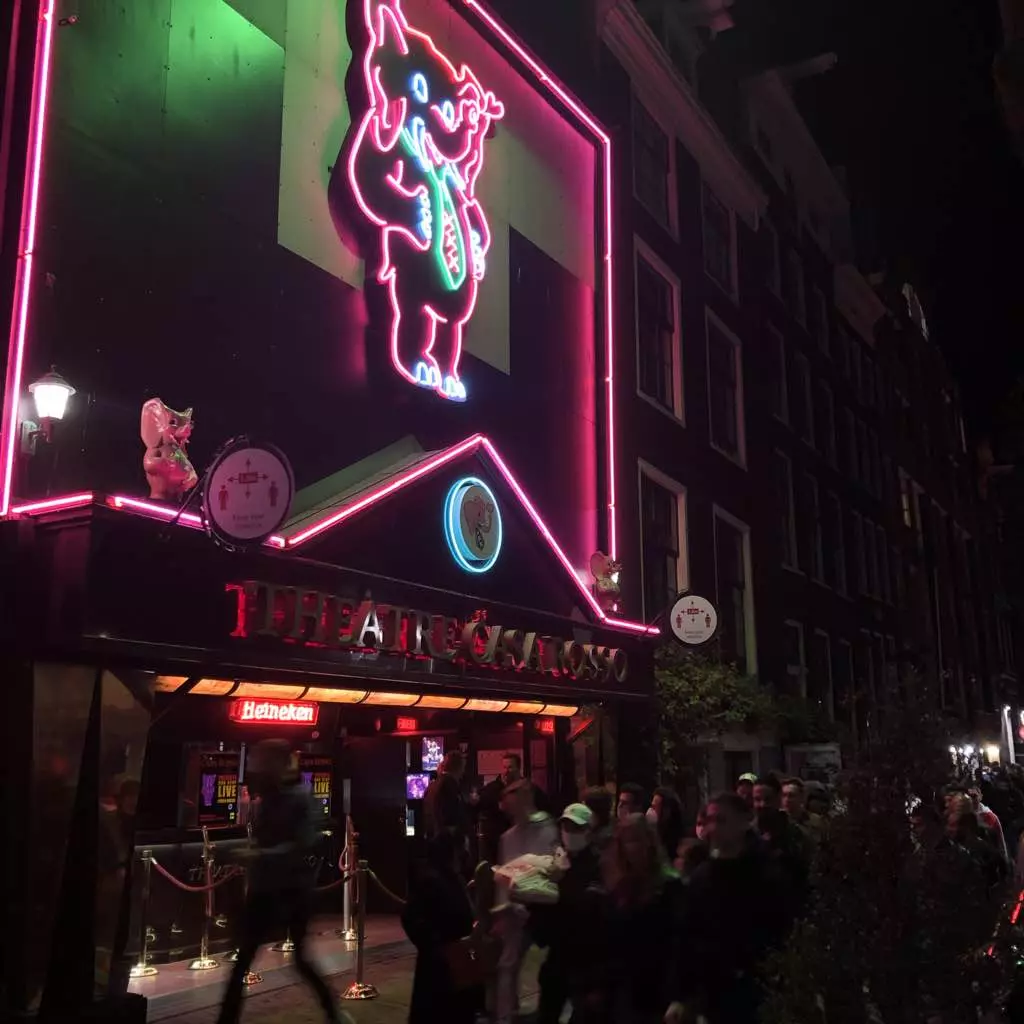
Beyond the windows, De Wallen has a run of adult venues. Live erotic theatres are the best known — Casa Rosso is the long-standing name — staging stage shows for ticketed audiences rather than anything happening at a window. Peep shows and erotic cinemas round out the street-level entertainment.
Tickets for the live theatres are usually bought at the door or online, sometimes with a drink included. Know what you are buying before you pay, and be wary of anyone pushing you toward a venue on the street. Our rundown of sex shows in Amsterdam covers what each venue offers and how ticketing works.
There is also a private, off-street side to the industry. Escort agencies arrange visits away from the windows entirely, for people who want discretion rather than a public street. That model sits outside De Wallen’s shopfront and works by appointment; the guide to escort agencies in Amsterdam explains how the private alternative differs from the windows. For the premium, discreet end of this private scene, see our guide to booking a high class escort in Amsterdam.
Rules and etiquette: the dos and don’ts
A handful of hard rules keep you out of trouble and show respect. Learn them before you arrive.
- No photos or video of the workers or the windows. The City of Amsterdam is explicit that taking pictures is not allowed. Phones stay in your pocket. This is the rule visitors break most often, and it is the one workers care about most.
- No drinking alcohol in the street. Drinking in public in the city centre is prohibited under city rules.
- No smoking cannabis in the street. In the city centre, which includes the Red Light District, smoking cannabis in public is banned and only allowed inside a coffeeshop.
- Don’t block, crowd, or linger in front of a window. Standing in a group and staring is intrusive and marks you as a tourist to avoid.
The photo ban, the public-alcohol ban, and the public-cannabis ban all come from the City of Amsterdam, and public-nuisance offences such as smoking cannabis in the street can bring a fine of between EUR 100 and EUR 650. The better reason to follow them is simpler: people live and work here. Treat the street the way you would any neighbourhood where someone is trying to do their job — that is the whole of the etiquette.
Is the Red Light District safe?
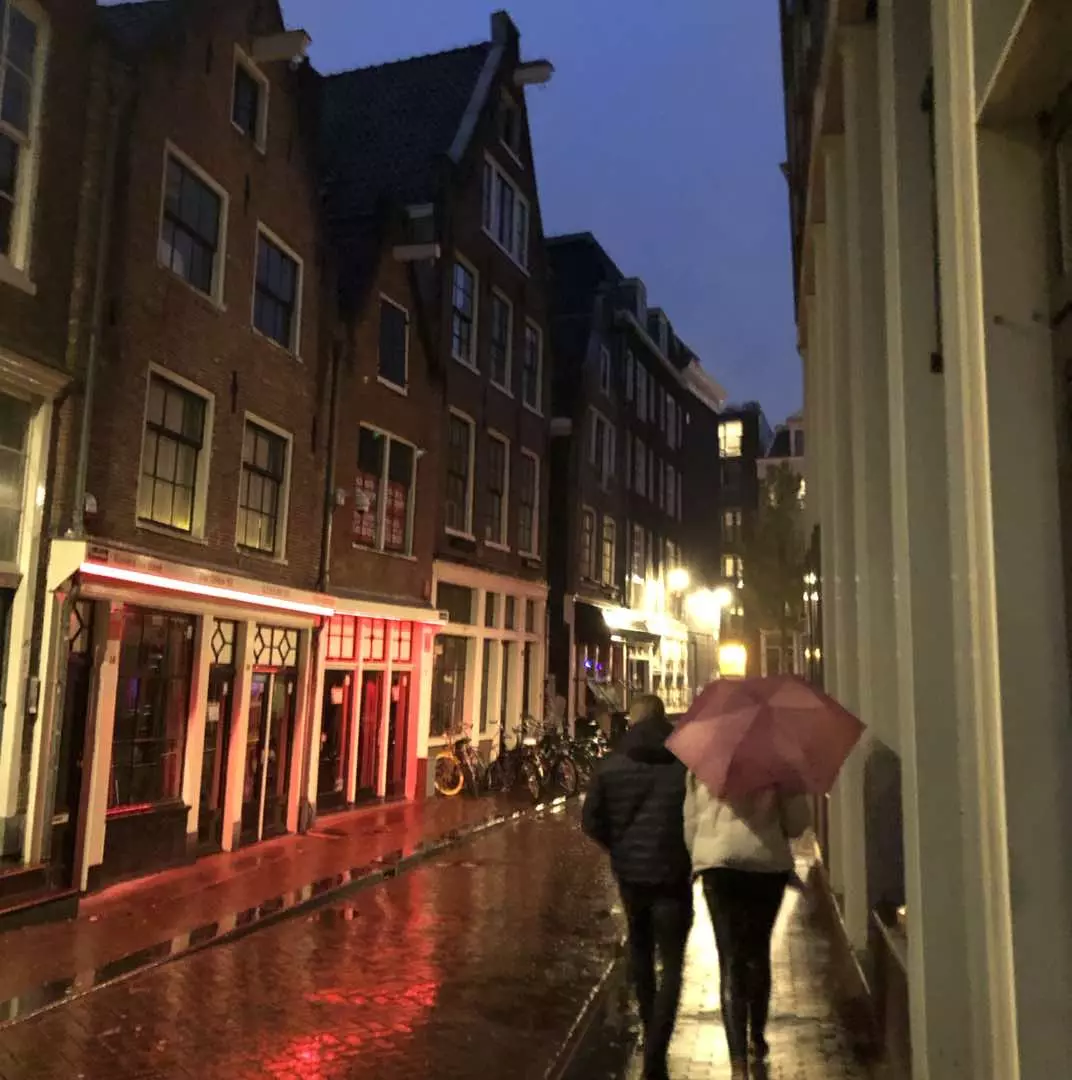
For a busy nightlife area, De Wallen is relatively safe. Violent crime is uncommon, the streets stay crowded well into the night, and a steady flow of people is itself a kind of security. Most visitors have no trouble at all.
The real risks are the everyday ones. Pickpockets work the densest crowds, especially late at night, so keep your phone and wallet secured and zipped away. Street dealers tout drugs that are frequently fake and sometimes dangerous — do not buy from them. Ignore anyone offering to “help,” and if you photograph a window, expect a sharp response from a worker or a doorman.
Solo travellers and women can walk the district comfortably by sticking to sensible habits: stay on the busy canals rather than dark side alleys, keep valuables close, and step out of any situation that feels off. Crowds are your friend here — the quieter the lane, the more alert you should be.
Amsterdam Red Light District statistics: registered crime, visitor and window numbers, each with its source.
Things to see and do beyond the windows

De Wallen is a genuine historic quarter, and plenty of it has nothing to do with the sex trade. The Oude Kerk (Old Church) is Amsterdam’s oldest building and its oldest parish church, standing since the Middle Ages in the very centre of the district — worth a look inside for its wooden vault and shifting art programme.
Several small museums pick up the neighbourhood’s themes:
- Red Light Secrets — Museum of Prostitution, set in a canal house, tells the story from the workers’ side.
- The Erotic / Sex Museum on Damrak takes a lighter, historical look at erotica.
- The Hash Marihuana & Hemp Museum covers cannabis history and the plant’s many uses.
Look, too, for the Belle statue near the Oude Kerk — a bronze figure honouring sex workers, inscribed “Respect sex workers all over the world.” By day the district rewards a slow wander: gabled canal houses, quiet bridges, and some of the oldest streets in the city. For a fuller itinerary of sights, cafés, and stops, see things to do in the Red Light District.
Coffeeshops and Amsterdam’s cannabis rules
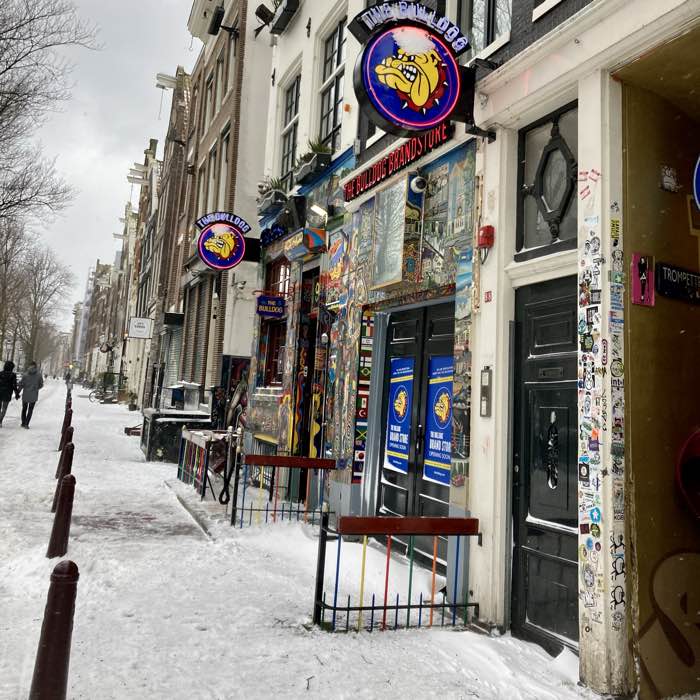
Coffeeshops — the licensed places that sell cannabis, not ordinary cafés — dot the streets in and around De Wallen. They operate under the Dutch tolerance policy, “gedoogbeleid,” where the sale of small amounts is permitted under strict conditions even though production sits in a legal grey zone.
The practical rule for visitors is about where, not whether. You can buy and smoke cannabis inside a licensed coffeeshop, but smoking it on the street in the city centre is banned and can be fined, per the City of Amsterdam. If you visit a coffeeshop, keep the cannabis inside it.
What a visit costs
Costs span a wide range because the district mixes free wandering with paid attractions. Walking the streets, seeing the Oude Kerk from outside, and photographing the canals (never the windows) costs nothing. The small museums charge modest entry fees, and live sex shows sit at the higher end of an evening’s spending.
A visit to a window worker is priced by the worker herself and agreed at the door, so there is no single rate — a short visit is the entry point, with the total depending on time and services. Add a coffeeshop stop or a canal-side drink and the evening adds up quickly. For a proper breakdown of window rates, show tickets, and museum entry, the Red Light District prices guide lays out the numbers section by section.
A 1-day Red Light District walking route

A single, logical loop covers the highlights without doubling back. It works in daylight for the history and again after dark for the lights.
- Start: Amsterdam Centraal, walking down toward Damrak.
- Zeedijk: cut through past Chinatown to reach the eastern edge of De Wallen.
- Oudezijds Achterburgwal: follow the main canal through the busiest windowed streets.
- Oude Kerk: pause at the old church and the Belle statue beside it.
- Trompettersteeg: peer down one of the city’s narrowest alleys, barely wider than your shoulders.
- Museum stop: Red Light Secrets or the Hash Marihuana & Hemp Museum.
- Finish: a canal viewpoint on Oudezijds Voorburgwal before heading back.
Guided walking tours and canal cruises can add context, but note the city’s push to reduce group crowding in the district — organised tours that stop in front of the windows are increasingly restricted. Walking it yourself, phone away, is the approach that respects the neighbourhood and the people in it.
The history and future of De Wallen
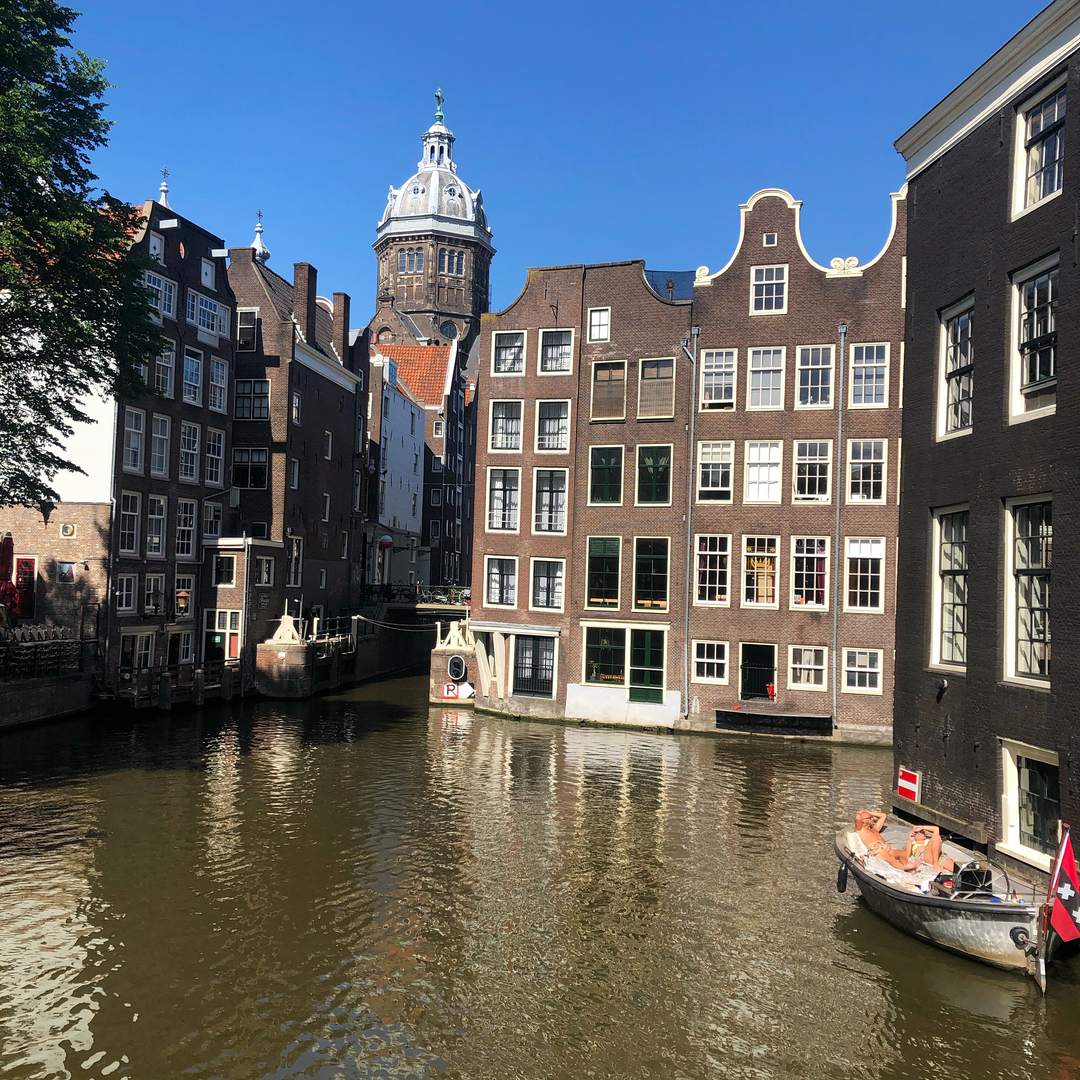
De Wallen is the oldest part of Amsterdam, with medieval roots. It grew alongside the harbour, and for centuries it served sailors coming off ships in a port city — which is how a district of taverns, lodging, and paid company took shape around these canals. The street pattern you walk today is essentially the medieval one.
The future is being actively reshaped by the city. Amsterdam has pursued a plan to reduce the number of window brothels on De Wallen and move window prostitution to a new indoor Erotic Centre, according to the City of Amsterdam. The stated goals are a safer workplace for sex workers, less influence from crime, and relief from the crowd nuisance that overtourism brings to the area.
That sits inside a broader effort to calm the district — messaging aimed at rowdy visitors, tighter management of crowds, and limits on nuisance behaviour. The window trade is not disappearing, but its footprint and its location are set to change. For the deeper backstory, including how the blue-lit windows fit in, read the history of the Red Light District.
Where to stay, eat and drink nearby
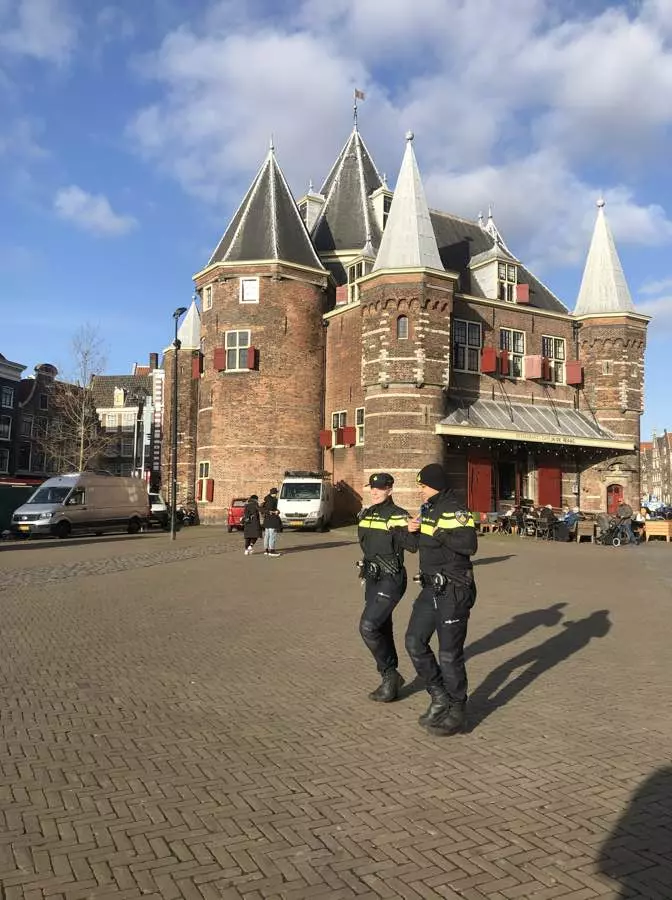
You are spoiled for food and drink here. The lanes around De Wallen hold brown cafés (Amsterdam’s traditional pubs), Chinatown restaurants along Zeedijk, and canal-side terraces for a slow drink. Warmoesstraat and the Nieuwmarkt square are reliable for a meal a step back from the windows.
For sleeping, the district is ringed by hotels and hostels, from budget bunks to boutique canal-house rooms. The upside is obvious: you are central and everything is walkable. The trade-off is noise — streets that stay loud into the early hours are not ideal for light sleepers. If you want the location without the racket, book a few streets back from the busiest canals.
Fun facts, plus health and support services
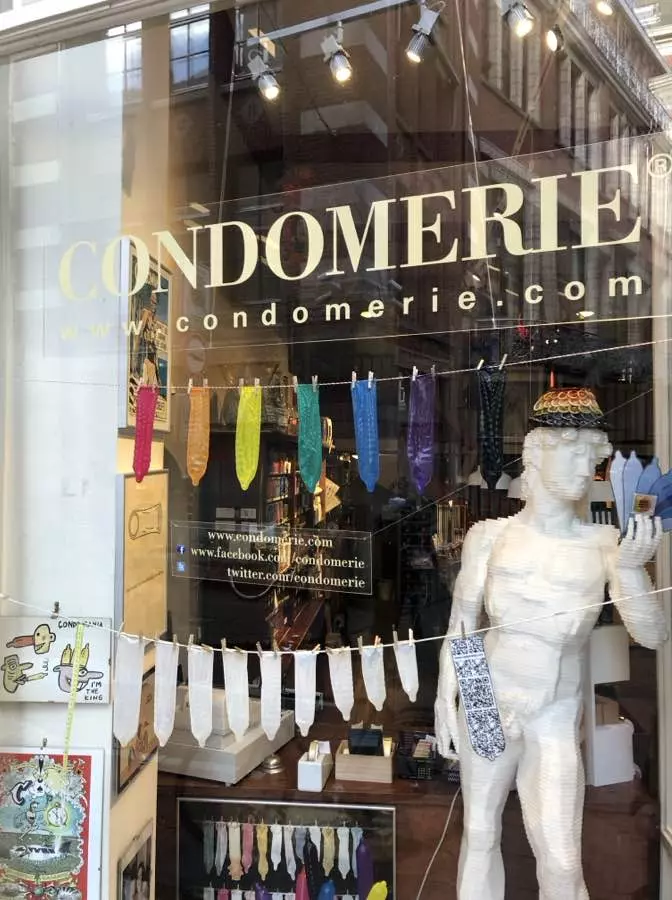
A few things stick in the memory. Trompettersteeg is famously one of the narrowest alleys in the city, barely a shoulder-width across. The blue-lit windows — the “Blue Light District” — mark where transgender workers traditionally work. And the Belle statue by the Oude Kerk is a monument dedicated to sex workers, inscribed with a call to respect them the world over.
Behind the scenes, support exists for the people who work here. The GGD, Amsterdam’s public health service, provides health services in the city, and the Prostitution Information Centre (PIC) — founded by a former sex worker — offers information and a point of contact in the district itself. They are a reminder that De Wallen is a workplace with real people in it, not a spectacle.
Frequently asked questions
Is the Amsterdam Red Light District legal?
Yes. Prostitution is legal in the Netherlands as long as it involves sex between consenting adults, per the Government of the Netherlands, and the trade has operated under licensing since the national brothel ban was lifted on 1 October 2000. The work is lawful, licensed, and restricted to voluntary, self-employed adults.
Can you take photos in the Red Light District?
No. The City of Amsterdam is explicit that taking pictures of the workers or the windows is not allowed. It is an invasion of privacy for people doing their job, and it commonly triggers a sharp response from workers or doormen. Photograph the canals and architecture instead — never the windows.
Is the Red Light District safe for tourists and solo female travellers?
Generally, yes. Violent crime is uncommon and the streets stay busy late. The main risks are pickpocketing in dense crowds and street dealers pushing fake or dangerous drugs. Keep valuables secured, stay on the busy canals rather than dark alleys, and solo travellers, including women, are usually fine.
What time does the Red Light District open, and when is it busiest?
Windows and venues run into the early hours. Early evening is calmest once the lights are on; the crowds peak late in the evening and into the small hours, which is also when it gets rowdiest and pickpocketing rises. For a quieter walk, go before the late-night rush.
How much does it cost to visit a window worker?
There is no fixed rate. Each worker sets her own prices and agrees them at the window, with a short visit as the starting point and the total depending on time and services. For typical price bands and durations, see the Red Light District prices guide.
Is the Red Light District LGBTQ+ friendly, and what are the blue lights?
Blue-lit windows have traditionally indicated transgender workers, which is why the area is sometimes called the “Blue Light District.” Amsterdam is broadly inclusive, and the district reflects that. It is one of the details that surprises first-time visitors who only expect the red lights.
Is the Red Light District family-appropriate or okay to walk through during the day?
By day it reads as a historic, fairly quiet neighbourhood — canals, old churches, cafés — and people pass through with children without issue. After dark it becomes adult-oriented, busier, and rowdier. If you are with kids, go in daylight and keep the visit short.
Are guided tours of the Red Light District allowed?
Organised group tours in the district are increasingly restricted, as the city works to ease crowding and stop tours from gathering in front of the windows. Self-guided walking, or an approved walking tour that keeps its distance and takes no photos, is the respectful way to see it.
About the author
Martijn is an Amsterdam local guide who writes practical guides about the city, De Wallen and visitor behaviour. He focuses on the city-centre layout, local etiquette and how visitors can understand sensitive topics without reducing them to stereotypes, and he keeps this guide in line with current City of Amsterdam and national policy — drawing on years of walking the area and answering the questions visitors actually ask.
Sources we checked
- Government of the Netherlands — prostitution policy
- City of Amsterdam — visitor rules and ‘How to Amsterdam’
- WODC — research on prostitution and the sex-work sector





-
- Home
- Tours
- Hotels
- Information
- History
- FAQ
- Contact
- Privacy Policy
Sitemap
-
- Coffeeshops
- Restaurants
- Sex Clubs
- Museums
- Canal Cruises
- Bike Rental
Entertainment
-
Contact

© 2010–2026 Amsterdam Red Light District – Amsterdam Red Light District Travel Guide. Webdesign by BIRO.
 EN
EN  DE
DE  FR
FR  NL
NL  ES
ES  ZH
ZH