

Amsterdam Red Light District Statistics: The Official Figures
Posted on: October 6, 2026
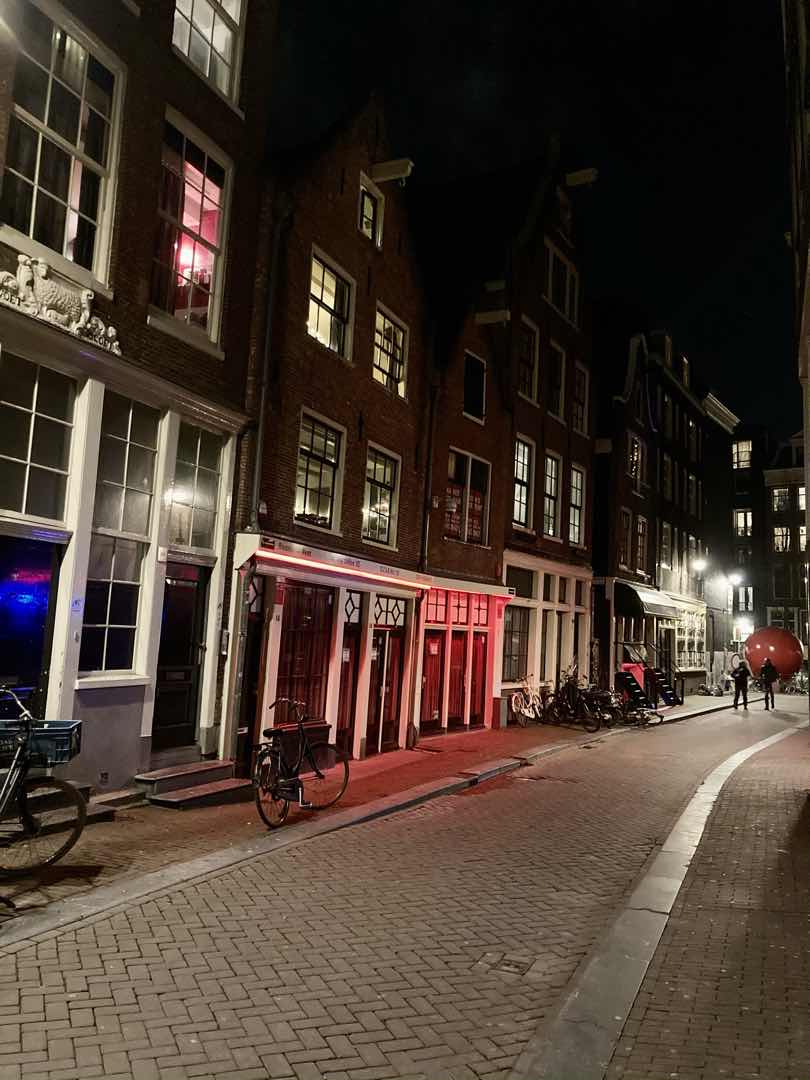
Amsterdam Red Light District statistics online contradict each other: you will find 4.2 million tourists a year in one place and 5.4 million in another, with no document behind either. Quote one and your article or essay carries a number nobody can trace. This page lists only figures we read in a published source, with the year and the publisher next to each one.
Last updated: October 2026. Every figure below was checked against the source listed for it.
Key Red Light District statistics at a glance
| Statistic | Figure | Year | Source |
|---|---|---|---|
| Sex work places in the Wallen area | 247 | Dec 2025 document | City of Amsterdam |
| Window workplaces in all of Amsterdam | 348 | 2023 | City of Amsterdam |
| Windows in the old-centre project area at the 2007 baseline | 470 | 2007 | Amsterdam Court of Audit |
| Residents of the neighbourhood | 4,714 | 2024 report | City of Amsterdam |
| Size of the neighbourhood | 40.47 hectares | 2024 report | City of Amsterdam |
| People on the street who are visitors | about 87% | 2020 | City of Amsterdam |
| Residents reporting much nuisance from tourists | 65% | 2024 | City of Amsterdam |
| Registered pickpocketing cases | 834 | 2023 | City of Amsterdam |
| Coffeeshops in Amsterdam | 167 | 2024 | WODC |
| Value added by prostitution in the Netherlands | €0.7 billion | 2021 | Statistics Netherlands (CBS) |
| Day visitors to Amsterdam (estimate) | 14 million | 2024 | City of Amsterdam |
| Overnight stays in Amsterdam (estimate) | 23 million | 2024 | City of Amsterdam |
“Neighbourhood” here means Burgwallen-Oude Zijde, the official district that the city uses for nearly all of its figures on De Wallen. It covers the whole district, not only the streets with red-lit windows.
How big is the Red Light District?
The neighbourhood covers 40.47 hectares and has 4,714 residents, according to the city’s WallenCijfers report of June 2024. The city’s open data gives 4,684 for 1 January 2026. Half of those residents are between 23 and 39 years old, and 66% of households are one person.
The average resident has lived there 6.1 years, and 64% of homes are private rentals.
The same report counts 10,792 people working in the neighbourhood across 2,056 business locations: 31% offices, 20% hotels, bars and restaurants, and 11% shops.

How many windows are there in the Red Light District?
The city puts the current number of sex work places in the Wallen area at 247, in a document dated 2 December 2025. That is the most recent official figure we found, and it comes from the city’s written response to the consultation on the Erotic Centre plan.
Older counts use different borders, so they do not form one clean series. The table shows what each figure covers.
| Year | Windows | What was counted | Source |
|---|---|---|---|
| 2007 | 482 (2007 count); 476 (2006 baseline); 470 (2013 recount for 2007) | Project 1012 area (De Wallen plus the Singel area) | Amsterdam Court of Audit, 2018 |
| 2017 | 358 | Same area | Amsterdam Court of Audit, 2018 |
| 2018 | 385 | All of Amsterdam: 345 in the centre, 40 in Zuid | City prostitution monitor, 2019 |
| 2023 | 348 | All of Amsterdam, under 31 operating permits | Letter to the city council, Dec 2023 |
| 2025 | 247 sex work places | Wallen area only | City of Amsterdam, Dec 2025 |
The well-known “482 windows” is real, but it is one of three official starting figures: 482 from a 2007 count, 476 from a 2006 baseline, and 470 from a 2013 recount applied back to 2007. The Amsterdam Court of Audit treats 470 as the most accurate.
How many windows Project 1012 closed
Project 1012 was the city’s plan to cut crime-prone businesses in postcode area 1012, including window brothels and coffeeshops. The first target was to close 192 of 482 windows, and in 2015 the council lowered it to 140.
By 2017 the city had closed 112 windows. The Court of Audit puts the result at 358 open windows, a drop of almost 25% from 470.
What happened to the Erotic Centre
The previous city government wanted to move 100 workplaces out of De Wallen to a new Erotic Centre in the south of the city, leaving about 147 in the Wallen area. The city’s own estimate for that building was up to 1.5 million visitors a year.
That plan has stopped. On 3 June 2026 the new city government presented its 2026–2030 coalition agreement, and the city states that it will not continue with the Erotic Centre as described in the December 2025 project plan.
How many people visit the Red Light District?
We found no official annual visitor count for De Wallen. We looked in the city’s Wallen figures, its two city-centre monitors and the Erotic Centre papers, and none of them gives a yearly total.
What the city does publish is this: an estimated 87% of the people in public space in the neighbourhood are visitors, as opposed to residents, workers or students. That estimate dates from 2020.
For the city as a whole there are official estimates. In 2024 Amsterdam had just over 14 million unique day visitors, who made almost 27 million day visits, and almost 10 million overnight visitors, who stayed almost 23 million nights.
| Amsterdam, 2024 (estimates) | Figure |
|---|---|
| Unique day visitors | just over 14 million |
| Day visits | almost 27 million |
| Overnight visitors | almost 10 million |
| Overnight stays | almost 23 million |
| Average stay | 2.36 nights |
| Hotels (early 2025) | 544, with about 41,000 rooms |
More than 80% of those overnight stays were by visitors from abroad. The largest markets are the United Kingdom, the United States, Germany and France.
For money spent after dark, see our Amsterdam nightlife economy statistics.
What residents report
In the 2024 safety survey (Veiligheidsmonitor), 65% of residents of Burgwallen-Oude Zijde reported much nuisance from tourists. That is the highest share of any city-centre district.
The 2023 figures below come from an earlier city report and compare the neighbourhood with the city average. Its tourism figure (58%) is not published on the same basis as the 65%, so do not read the two as a trend.
| Residents who report (2023) | De Wallen | Amsterdam |
|---|---|---|
| Nuisance from tourism | 58% | 6% |
| Nuisance from drunk people | 50% | 7% |
| Nuisance from drug use | 43% | 7% |
| Nuisance from drug dealing | 37% | 6% |
| Feeling unsafe in their own neighbourhood | 44% | 23% |
Share of residents who report each problem, 2023
Source: City of Amsterdam, WallenCijfers, June 2024.
In 2023 residents gave the neighbourhood 6.1 out of 10, against 7.5 for Amsterdam, and it stood at 7.6 in 2013.
Residents rate daytime safety 8.0 out of 10 and evening safety 5.7, where the city average for the evening is 7.2.
Clean streets score 4.9 out of 10 in 2023, against 6.2 for the city. Nuisance from litter scores lower still, at 3.4.
Crime and safety in numbers
Theft is the main registered crime in the neighbourhood, not violence. The table combines the city’s two 2023 top-five lists for Burgwallen-Oude Zijde, one for high-volume crime and one for high-impact crime.
| Registered offence, 2023 | Cases |
|---|---|
| Pickpocketing (outside public transport) | 834 |
| Other property crime | 631 |
| Shoplifting | 217 |
| Bicycle theft | 197 |
| Violence and assault | 147 |
| Vandalism | 110 |
| Street robbery | 96 |
In mid-2024 the city deployed 14 to 15 pairs of hosts in red jackets on Fridays and Saturdays and 8 pairs on Thursdays. Six municipal enforcement officers worked the weekend evenings and nights.
Street cleaners came through twice a day. For practical advice on staying safe, read our guide to the Amsterdam Red Light District.
What is sex work worth to the Dutch economy?
Statistics Netherlands (CBS) estimates that prostitution added €0.7 billion to the Dutch economy in 2021. The figure includes the legal part of the trade and was published in the 2024 revision of the national accounts.
A larger CBS number also circulates. CBS puts drugs, prostitution and illegal tobacco trade together at €4.5 billion, or 0.5% of GDP, and prostitution is the fourth-largest part of that after cannabis, cocaine and synthetic drugs.
There is no official revenue figure for De Wallen or for Amsterdam’s sex businesses. Our page on prostitution in the Netherlands explains how the CBS estimate is built.
How many sex workers are there?
There is no official count of sex workers. A 2021 study for the research institute of the Dutch Ministry of Justice (WODC) estimated 373 to 379 licensed sex businesses nationwide, against 833 in a 2014 study. The report gives both figures and notes that several larger municipalities are missing from its count.
The same study counted more than 27,000 unique online adverts in a year, with 6,500 to 7,000 active at any one time. It warns that advert counts are not a headcount: some workers are missed and others are counted more than once.
For Amsterdam the city reports capacity, not people: 348 window workplaces and 63 workplaces in 13 clubs and private houses at the end of 2023.
The last municipal estimate we could find dates from 2007. The city’s research office then cited a public-health-service estimate of more than 1,000 sex workers active behind a window or in a sex club on a given day.
Trafficking: what the official figures say
The Dutch National Rapporteur recorded 944 reported victims of human trafficking in the Netherlands in 2024, 76 more than in 2023. These are national figures for every form of exploitation, not figures for De Wallen.
Sexual exploitation is the largest group. The 2024 report lists 364 registrations for international sexual exploitation and 123 for domestic sexual exploitation, together 487 registrations. A victim can be counted under more than one form, so this is not a share of the 944.
The report adds that an estimated 5,000 people a year are victims of trafficking in the Netherlands.
Rules, fines and key dates
The rules in De Wallen are local law, and each has a date and a document. Our Red Light District rules page covers them in full.
| Date | What changed |
|---|---|
| 1 October 2000 | The national ban on brothels was lifted |
| 2013 | Amsterdam set a minimum age of 21 for sex workers |
| 1 April 2020 | Guided tours past the windows were banned |
| 1 April 2023 | Window brothels in the core area had to close at 03:00 at weekends |
| 25 May 2023 | Smoking cannabis in the street in the old centre was banned |
| 21 February 2024 | The 03:00 weekend rule ended; windows may open from 08:00 to 06:00 |
| 13 May 2026 | The Dutch government told parliament it would not proceed with the Sex Work Regulation Bill (Wrs), and said it will raise the legal minimum age for prostitution to 21 through separate legislation |
| 3 June 2026 | The new Amsterdam coalition dropped the Erotic Centre plan |
| Offence | Fine in 2026 | Source |
|---|---|---|
| Drinking alcohol in a designated no-alcohol area | €110 | Public Prosecution Service tariff list, January 2026 |
| Urinating in public | €170 | Public Prosecution Service tariff list, January 2026 |
Amsterdam had 167 tolerated coffeeshops at the end of 2024, the same number as in 2021 and five fewer than in 2015. A separate municipal dataset, based on a retail count, lists 17 coffeeshop outlets in Burgwallen-Oude Zijde and 165 in the city on 1 January 2026.
If you are planning a visit, our Red Light District prices guide and the Amsterdam Red Light District map are the practical next step.
Numbers you see online that have no source
Several figures are repeated across travel blogs and statistics sites, and we could not trace any of them to an official document. Treat them as unverified.
| Claim | What official sources give instead |
|---|---|
| “4.2 million” or “5.4 million tourists visit the Red Light District each year” | We found no official annual visitor count for De Wallen |
| “The district earns €650 million” or “€1.2 billion a year” | No official revenue figure; CBS estimates €0.7 billion for prostitution in the whole country (2021) |
| “€45 million in tax revenue” | No published source found |
| “About 290 windows remain” | 247 sex work places in the Wallen area (Dec 2025 document) |
| “1,500 windows in 2010” | 365 open windows in the project area in 2010 |
| “350 sex workers work in the district” | No current official headcount |
If you have a primary source for any of these, tell us and we will add it.
Frequently asked questions
How many windows are in the Amsterdam Red Light District?
The City of Amsterdam puts the number of sex work places in the Wallen area at 247, in a document dated 2 December 2025. Across the whole city there were 348 window workplaces under 31 permits at the end of 2023. The often-quoted 482 windows is a 2007 count for a larger area.
How many people live in the Red Light District?
The neighbourhood Burgwallen-Oude Zijde has 4,714 residents according to the city’s June 2024 report. Half of them are aged 23 to 39 and two thirds of households are a single person. The area measures 40.47 hectares.
How many tourists visit the Red Light District each year?
We found no official annual figure. The city estimates that about 87% of people on the street in the neighbourhood are visitors. Amsterdam as a whole had an estimated 14 million day visitors and almost 10 million overnight visitors in 2024.
Is the Red Light District safe according to the data?
Most registered crime is theft. In 2023 the neighbourhood recorded 834 pickpocketing cases, 147 cases of violence or assault and 96 street robberies. Residents rate their daytime safety 8.0 out of 10 and evening safety 5.7.
What is the most common crime in the Red Light District?
Pickpocketing is the most common registered crime, with 834 cases outside public transport in 2023. Other property crime follows with 631 cases, then shoplifting with 217. Violence and assault account for 147 cases.
How much is prostitution worth to the Dutch economy?
Statistics Netherlands estimates the value added by prostitution at €0.7 billion for 2021. All illegal activities together, which in the national accounts include prostitution, came to €4.5 billion or 0.5% of GDP. There is no separate figure for Amsterdam.
Is the Red Light District closing or moving?
No. The plan to move 100 workplaces to an Erotic Centre in the south of Amsterdam was dropped by the new city coalition on 3 June 2026. The city says a possible new assignment is not yet clear.
How many sex workers work in Amsterdam?
There is no current official headcount. The city reports 348 window workplaces and 63 workplaces in clubs and private houses at the end of 2023, which is capacity and not people. The last municipal estimate, from 2007, was more than 1,000 workers active on a given day.
What are the fines in the Red Light District?
Drinking alcohol in a designated no-alcohol area costs €110 and urinating in public costs €170, according to the Public Prosecution Service tariff list of January 2026. Smoking cannabis in the street in the old centre has been banned since 25 May 2023.
Since when is prostitution legal in the Netherlands?
The national ban on brothels was lifted on 1 October 2000, which made licensed sex businesses legal. Amsterdam added its own rules later, including a minimum age of 21 for sex workers. Guided tours past the windows have been banned since 1 April 2020.
How many coffeeshops are there in Amsterdam?
Amsterdam had 167 tolerated coffeeshops at the end of 2024, out of 563 in the Netherlands. The number in the city has not changed since 2021. A separate municipal retail count lists 17 outlets in the Burgwallen-Oude Zijde neighbourhood.
Methodology and sources
We used published official sources: the City of Amsterdam and its research department, the Amsterdam Court of Audit, Statistics Netherlands, the research institute of the Ministry of Justice, the National Rapporteur, the Public Prosecution Service and published law. Where we found no official figure, we say so and give no estimate of our own. Two figures are estimates passed on by an official body: the 2007 sex-worker estimate and the retail count of coffeeshop outlets.
Most neighbourhood figures cover the whole district Burgwallen-Oude Zijde, not only the streets with windows. Survey figures reflect what residents report, not measured events.
- City of Amsterdam, WallenCijfers – Aanpak Binnenstad, June 2024: openresearch.amsterdam
- City of Amsterdam, Binnenstadsmonitor 2026, 1 June 2026: openresearch.amsterdam
- City of Amsterdam, Nota van Beantwoording Erotisch Centrum, 2 December 2025: assets.amsterdam.nl
- City of Amsterdam, Erotic Centre timeline: amsterdam.nl
- City of Amsterdam, council letter on prostitution policy, 18 December 2023: assets.amsterdam.nl
- City of Amsterdam, Bestuurlijke monitor programma prostitutie 2018, 15 October 2019: openresearch.amsterdam
- Amsterdam Court of Audit, Onderzoeksrapport Project 1012, 26 June 2018: rekenkamer.amsterdam.nl
- City of Amsterdam Research and Statistics, Toerisme in cijfers, 31 July 2025: onderzoek.amsterdam.nl
- City of Amsterdam Research and Statistics, ‘Ramen’ en prostituees in Amsterdam, 11 December 2007: onderzoek.amsterdam.nl
- Statistics Netherlands (CBS), De raming van illegale activiteiten in de nationale rekeningen, 2024: cbs.nl
- WODC / Regioplan, De Nederlandse seksbranche, 10 December 2021: open.overheid.nl
- WODC / Breuer&Intraval, Coffeeshops in Nederland 2024, 2 October 2025: repository.wodc.nl
- National Rapporteur on Trafficking in Human Beings, Jaarcijfers Mensenhandel 2024, 17 October 2025: nationaalrapporteur.nl
- Public Prosecution Service, Feitenboekje, January 2026: om.nl
- Amsterdam General Local Bye-law (APV), articles 2.7, 3.30 and 3.34: lokaleregelgeving.overheid.nl
- Staatsblad 2000, 38 (brothel ban lifted): zoek.officielebekendmakingen.nl
- Gemeenteblad 2020, 43142 (tour ban) and 2023, 218382 (cannabis ban): zoek.officielebekendmakingen.nl · zoek.officielebekendmakingen.nl
- Kamerstuk 34193 nr. 21, letter of the Minister of Justice and Security, 13 May 2026: zoek.officielebekendmakingen.nl
- City of Amsterdam, BBGA open data (residents; coffeeshop outlets, Locatus count), retrieved October 2026: api.data.amsterdam.nl
Use these figures
You may quote any figure on this page. Please name the original publisher for the number and link to this page as the compilation. See the district for yourself with our self-guided Red Light District audio tour.



-
- Home
- Tours
- Hotels
- Information
- History
- FAQ
- Contact
- Privacy Policy
Sitemap
-
- Coffeeshops
- Restaurants
- Sex Clubs
- Museums
- Canal Cruises
- Bike Rental
Entertainment
-
Contact

© 2010–2026 Amsterdam Red Light District – Amsterdam Red Light District Travel Guide. Webdesign by BIRO.
 EN
EN  DE
DE  FR
FR  NL
NL  ES
ES  ZH
ZH