

67 Fun Facts About the Netherlands You Didn’t Know
Posted on: März 1, 2026

67 Fun Facts About the Netherlands (That Will Surprise You)
These fun facts about the Netherlands go past the windmills and tulips. Most lists stop there. I wanted the odd stuff: the first company ever publicly traded, graves adopted since 1945, a village with no roads, orange carrots invented for a king. So I gathered 67 of them. Some you’ll want to check twice.
67 Fun Facts About The Netherlands
Here are 67 things you didn’t know about the Netherlands that may have some scratching their heads.
1 | The VOC
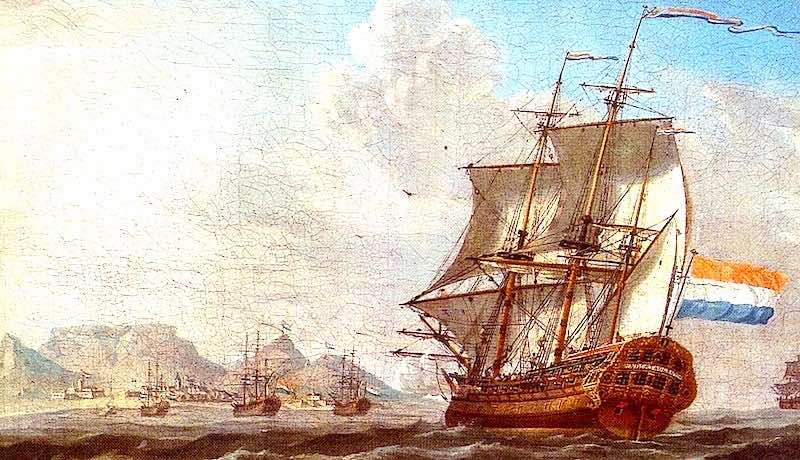
Founded in 1602, the VOC (Dutch East India Company) was the world’s first publicly traded company and set up the first official stock market in Amsterdam. It’s often called the most valuable company in history — a viral estimate puts it near €7.4 trillion in today’s money — but those cross-century comparisons are disputed, so treat the trillion-euro figure as a fun talking point rather than hard fact.
2 | Dutch families adopt WW2 graves

Source: https://commons.wikimedia.org/wiki/File:Margraten_Netherlands_American_Cemetery_and_Memorial.jpg
More than 8,000 Dutch families have adopted graves of fallen American WW2 soldiers in Limburg, caring for them since 1945. Families place flowers and pass down this honor from generation to generation—there’s even a waiting list to adopt a grave.
3 | Amsterdam’s oldest store

Source: Google Maps
The oldest store in Amsterdam is a pharmacy located in the rotlichtviertel. It has existed since 1696. This pharmacy on the left is the oldest store of Holland’s capital. It’s located on the Geldersekade – one of Amsterdam’s oldest canals – which was constructed in 1425. The Geldersekade has always been a lively part of town, as befits a port neighborhood like the Red Light District.
Its location on the open IJ river made Amsterdam a perfect water city. Almost all of the transportation of goods was shipped via the water of the canals, along which warehouses and merchants’ houses alternated. Fishermen, sail makers, sailors, ship owners, ship carpenters, wine merchants, brewers, glass merchants, shopkeepers, hawkers and prostitutes defined the character of this old town for centuries.
4 | France and The Netherlands share a border
Not in Europe but on the island of St. Maarten.

Saint Martin is an island in Caribbean, roughly 300 km (190 mi) east of Puerto Rico.
5 | The Dutch flag is the oldest tricolour still in use

The Dutch red-white-blue is the oldest tricolour still in continuous use. Its colours come from the orange-white-blue ‘Prince’s Flag’ of William of Orange (red later replaced the orange), so there is no official ‘people, church, nobility’ meaning — and while it influenced many later tricolours, they are not literally copies.
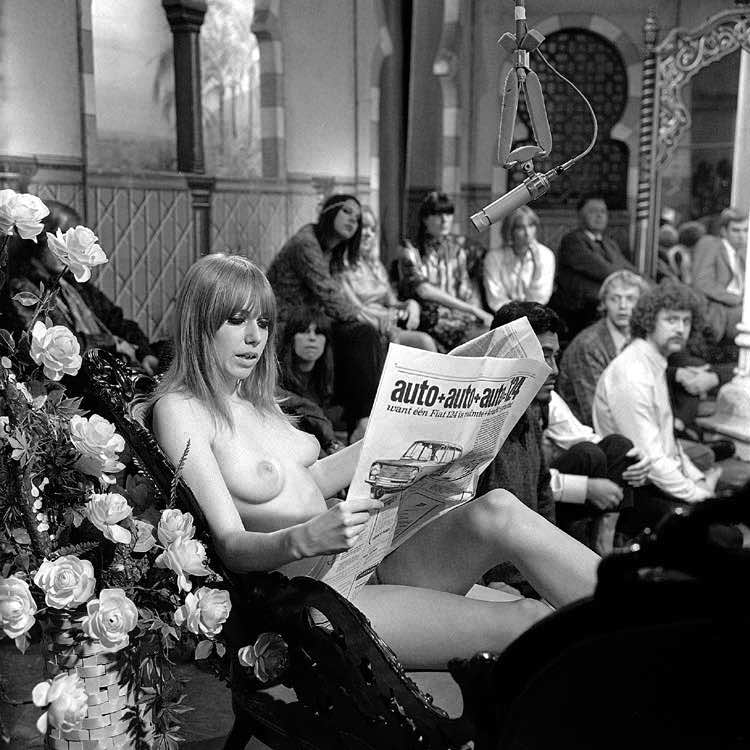
6 | The first time a naked woman appeared on Dutch TV was on October 9, 1967
Source: GeheugenvanNederland.nl
It was the 21-year-old Phil Bloom. She appeared completely naked in the VPRO program “Hoepla” as a protest against the dullness. Her appearance caused great commotion and even led to parliamentary questions. Earlier that year, Phil Bloom also posed naked in front of a statue in Amsterdam and published the picture as a postcard.
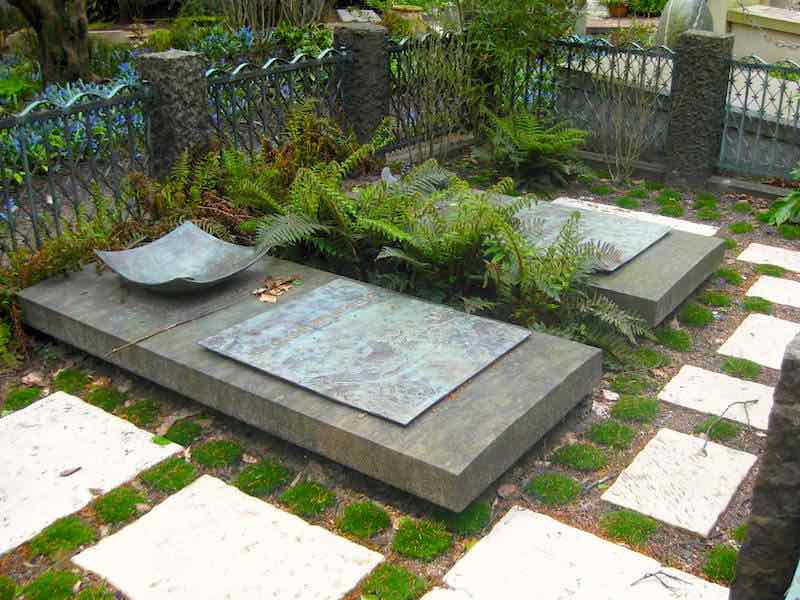
7 | If someone in Amsterdam dies without family, friends or acquaintances a poet will write a poem for this person and read it at the funeral
Source: https://en.wikipedia.org/wiki/
This is based on the idea that every human being is worth thinking about and deserves to be buried with specially chosen words. The initiative has been adopted by several cities at home and abroad. Here is the site of Eenzame Uitvaart (Foundation Lonely Funeral).
8 | South Africa has towns named after Dutch cities: Utrecht, Amsterdam, Haarlem, The Hague and Gouda

Map of South Africa with the red dot pointing to Amsterdam. Source: Google Maps
Amsterdam in Mpumalanga, South Africa, is a small sheep-farming town of around 6,800 people (2011 census), surrounded by large plantations of eucalyptus, pine and wattle trees. These South African towns borrow Dutch names, but they are namesakes rather than identical copies.
9 | The great-great-great-grandfather of the 8th US president, Martin van Buren, lived in village Buurmalsen in the Netherlands

Martin van Buren, 8th US President had Dutch roots and was the only president who learned English as a 2nd language.
The great-great-great-grandfather of Martin Van Buren, Cornelis Maessen, emigrated in 1631 from the Dutch city Buurmalsen with a ship recorded as the Eendracht (meaning “Unity”) in America. He did not have a penny in his pocket and wanted to try his luck in America. As a memento of the village where he came from he changed his name into Van Buren.
At the inauguration speech, Martin van Buren said: “Unlike all who have preceded me, the Revolution that gave us existence as one people was achieved at the time of my birth”. the 8th US President was also known as The Flying Dutchman. President Franklin Delano Roosevelt was also of Dutch heritage.
10 | The first ever goal against the Dutch national football team was actually an own goal
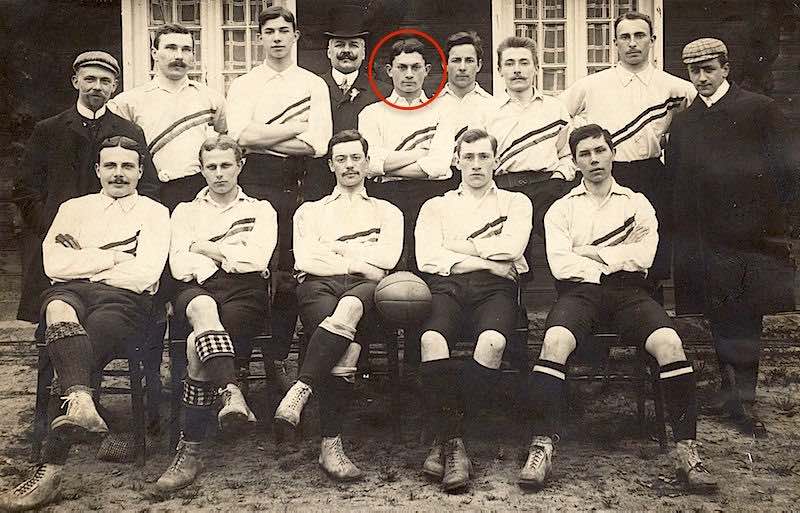
It was during the match against Belgium which was played in the 1905. Ironically, it was made by someone named Ben Stom, which literally translates into “Am Stupid”. Eventually, the Dutch won the game with 4-1.
11 | The Netherlands and Holland are not synonymous
Holland refers only to two provinces (North and South Holland) in the west of the country, which were the most economically powerful in the Dutch Golden Age.
12 | About a quarter of the Netherlands is below sea level
About 26% of the country sits below sea level (and roughly a quarter of its people live there), so land reclamation and sea defences — vast systems of dikes and pumps — are vital to keep the water at bay.
13 | The Dutch are the tallest people in the world
On average, Dutch men and women are taller than their global counterparts, a phenomenon often attributed to genetics and a rich diet.
14 | Amsterdam has more bridges than Venice
With over 1,500 bridges, Amsterdam surpasses Venice in terms of bridged waterways, making it a unique city to explore by boat.
15 | The Netherlands is a global leader in water management
Dutch expertise in hydraulic engineering is sought after worldwide, helping other countries design and implement flood protection systems.
16 | Tulips aren’t originally from the Netherlands:
Though synonymous with the country today, tulips were imported from the Ottoman Empire in the 16th century and became an object of speculation in the 17th century.
17 | The Dutch invented the stock market
The Amsterdam Stock Exchange, established in 1602 by the Dutch East India Company, is considered the world’s oldest.
18 | Cycling is a way of life
There are more bicycles than residents in the Netherlands, and the country has an extensive network of cycling paths.
19 | The Dutch monarchy is popular and ceremonial
King Willem-Alexander and his family play a significant role in national unity and represent the country in diplomatic matters.
20 | Amsterdam’s Schiphol Airport is below sea level
Positioned at -3 meters, it’s one of the world’s busiest international airports.
20 | Dutch cuisine is simple but hearty
Dishes like stamppot (mashed potatoes with vegetables) and herring are staples of the Dutch diet.
21 | The Netherlands was the first country to legalize same-sex marriage
This landmark legislation was passed in 2001.
22 | Dutch is spoken in several countries
Beyond the Netherlands, Dutch is an official language in Belgium, Suriname, Aruba, Curaçao, and St. Maarten.
23 | The Dutch are catching up fast on renewable energy
For years the Netherlands lagged near the bottom of the EU on renewables, but it has caught up quickly — reaching roughly a quarter of its electricity from renewable sources by the mid-2020s — and old and new windmills still symbolise its long relationship with wind power.
24 | The Netherlands has a museum dedicated to microbes:
Micropia, in Amsterdam, is the world’s first museum focused on microscopic life.
25 | It has a village whose old centre has no roads
In the historic heart of Giethoorn, the “Venice of the North,” canals and footpaths replace streets, so you park on the edge and travel by boat or on foot. (The wider village does have roads and car parks.)
26 | Dutch law protects bats, even inside buildings
Bats and their roosts are strictly protected, so renovating or demolishing a building that houses them can legally require surveys and bat-friendly mitigation — though there is no blanket rule that every new building must be bat-friendly.
27 | The Dutch are avid coffee drinkers
Ranking among the top in the world for coffee consumption per capita.
28 | Rotterdam is home to Europe’s largest port
The Port of Rotterdam is a critical hub for international cargo transport.
29 | The Netherlands has one of the world’s oldest national anthems
The “Wilhelmus” dates back to the 16th century.
30 | Amsterdam has hundreds of canals
The city’s canal ring area is a UNESCO World Heritage site.
31 | Orange is the color of the Dutch royal family:
The House of Orange-Nassau leads the monarchy, hence the national color.
31 | The Dutch are world leaders in flower exports
Particularly of tulips and other bulbs.
32 | Liberal policies on drugs and prostitution
The Netherlands is known for its pragmatic approach to soft drugs and the legalization of der Prostitution angesehen werden..
33 | The country hosts one of the world’s largest flower gardens
Keukenhof draws millions to see the tulips bloom each spring.
34 | Vincent van Gogh was Dutch
One of the most famous and influential figures in Western art.
35 | The Netherlands has a significant number of world heritage sites
Including the Rietveld Schröder House and the Wadden Sea.
36 | Waterpoort in Sneek is a famous water gate
Reflecting the country’s relationship with water in architecture.
37 | The Dutch celebrate King’s Day with nationwide festivities
On April 27th, marking the king’s birthday with orange attire and street markets.
38 | The International Court of Justice is in The Hague
Emphasizing the Netherlands’ role in international law and diplomacy.
39 | Dutch trains are powered by wind energy
Highlighting the country’s commitment to sustainability.
40 | Elfstedentocht is a famous ice skating tour
Covering 11 Frisian cities, it can only take place in severe winters when the ice is thick enough.
41 | The Netherlands is a founding member of the EU, NATO, and WTO
Playing a key role in international cooperation and economic policy.
42 | Delftware is the iconic blue and white pottery
Originating from the city of Delft in the 17th century.
43 | The concept of the “polder model” in Dutch politics
Refers to consensus-based decision-making, a practice stemming from the management of land reclaimed from the sea.
44 | The Netherlands has a high density of museums
Offering rich cultural experiences, from the Van Gogh Museum to the Anne Frank House.
45 | Dutch kids are among the happiest in the world
According to various international studies.
46 | The country is a pioneer in LGBTQ+ rights
In 2001 it became the first country in the world to legalise same-sex marriage. (Amsterdam’s famous canal Pride is a huge party, but it only began in 1996 — well after the first pride marches elsewhere.)
47 | Maastricht Treaty was signed in the Netherlands
Leading to the creation of the European Union and the euro.
48 | The Dutch helped make carrots orange
Dutch growers helped stabilise and popularise the orange carrot from around the 16th–17th century. The popular story that they bred it as a tribute to William of Orange is a popular myth — orange carrots already existed before then.
49 | Amsterdam has a famous (once-)floating flower market
The Bloemenmarkt, founded in 1862, is marketed as the world’s only floating flower market — though its stalls now rest on fixed pilings rather than truly floating, and it is not really one of a kind.
50 | The Netherlands has an annual cheese market tradition
Dating back to the medieval times in cities like Alkmaar.
51 | ‘Going Dutch’ is a common practice
Splitting the bill equally really is common in the Netherlands — though ‘Going Dutch’ is actually an English expression (historically a bit of a dig), not a phrase the Dutch coined about themselves.
51 | Euthanasia was legalized in 2002
The Netherlands was the first country to do so.
53 | Dutch universities are among the world’s best
Attracting a large number of international students.
54 | The country is a high-tech farming powerhouse
As the world’s #2 agricultural exporter, the Netherlands leads in high-yield, resource-efficient farming (‘more crop per drop’). It is also wrestling with a serious nitrogen-pollution crisis, though, so ‘sustainable’ comes with an asterisk.
55 | Bike theft is a common issue
Despite being a cycling paradise, bike security is a significant concern.
56 | The Netherlands is a cycling nation, but car ownership is average
Despite world-class cycling and public transport, Dutch car ownership is actually about average for Europe (around 540 cars per 1,000 people) — the bike culture is real, but it has not made car ownership unusually low.
57 | Sinterklaas is a Dutch holiday
That inspired the American version of Santa Claus.
58 | The country is a major exporter of beer
Dutch brands like Heineken are known worldwide.
59 | De Wallen in Amsterdam is one of the oldest and most famous red-light districts
Known for its liberal policies.
60 | The Dutch Royal Family has a tradition of abdications:
Allowing a smooth transition of monarchy to the next generation.
61 | Windmills are iconic Dutch symbols
Originally used for milling grain and managing water levels.
62 | The Netherlands has a significant expat population
Attracted by its high quality of life and international business environment.
63 | The country was a major naval power in the 17th century
Known as the Dutch Golden Age of exploration and trade.
64 | Gouda cheese originates from the Netherlands
Named after the city of Gouda, it’s one of the world’s most popular cheeses.
65 | Dutch law tolerates (does not legalise) cannabis in coffeeshops
Cannabis is not actually legal in the Netherlands: selling it stays formally illegal but is tolerated (not prosecuted) in licensed coffeeshops under the famous ‘gedoogbeleid’ policy, as long as strict conditions are met.
66 | The Netherlands hosts the largest bicycle parking garage in the world
In Utrecht, accommodating over 12,500 bikes.
67 | Dutch people are known for their directness
Communication is straightforward, reflecting values of honesty and efficiency.
Water Wizardry & Climate Adaptation
The Netherlands is a country that lives with water, not against it. Over a quarter of the land sits below sea level, so safety is a daily design choice, not a once-in-a-while fix. You’ll see dunes, dikes, and pumping stations woven into normal life. Even parks and plazas can store rain during storms.
Engineers keep pushing ideas beyond the old “build a wall” plan. The Delta Works protect the southwest with smart gates that close only when needed. Cities add sponge zones—green roofs, canals, and water plazas—to soak up cloudbursts. Some neighborhoods even float, so homes rise and fall with the water.
Famous Projects at a Glance
| Project / Idea | What It Does |
|---|---|
| Delta Works | Storm-surge barriers that close in storms |
| Room for the River | Gives rivers space to flood safely |
| Water Squares | Plazas that store rain, then turn back to play |
| Floating Homes | Houses on pontoons for flexible water levels |
Tech & Industry You Never Notice
The Dutch economy is quieter than you think. It runs on chips, green energy, smart farming, and world-class logistics. A small country moves huge trade thanks to the Port of Rotterdam and Schiphol Airport. The hidden theme is precision: get the right thing to the right spot at the right time.
Chipmaking tools from Dutch firms power phones, cars, and satellites. Greenhouses grow food all year using less water and land. Offshore wind farms feed clean power to the grid. You may not see it, but you feel it in prices, speed, and supply.
Logistics here is an art. Warehouses are high-tech, with robots, sensors, and clean design. Trains, trucks, barges, and bikes connect like clockwork. The network cuts delays and emissions together.
Warum es funktioniert
-
Central location inside Europe
-
Smart ports and airports
-
Strong research and design culture
-
Tight links between universities and startups
Snapshot Sectors
| Sector | What’s Special |
|---|---|
| Semiconductors | Precision tools for chip factories |
| Agri-tech | Data-driven greenhouses and vertical farms |
| Wind Power | Offshore turbines and grid know-how |
| Logistics | Ports, rails, and robotics at scale |
Cities on Two Wheels
Dutch cities put people first by design. Short trips happen by bike, tram, or train. Car-light streets feel calmer, cleaner, and safer for kids. Most daily needs sit within a 15-minute ride.
Protected bike lanes form a full network, not random strips. Intersections use clear signs and separate lights for bikes. Trains welcome cyclists, and stations offer huge, dry bike garages. The system makes the easy choice also the safe choice.
Side streets often become “woonerfs,” or living streets. Cars are guests there, moving at walking speed. Public space belongs to people: benches, trees, and play areas, not parking lots.
How Dutch Cycling Feels
-
Low stress: few close passes
-
Predictable: clear rules and signs
-
Connected: lanes link end-to-end
-
Normal: suits and sneakers both welcome
Everyday Trip Examples
| Trip Type | Typical Mode | Warum es funktioniert |
|---|---|---|
| School run | Cargo bike | Safe lanes + short distance |
| Groceries | City bike | Shops near home |
| Commute | Bike + train | Secure parking at stations |
| Night out | Bike | Lit paths, short hops |
Food, Drink & Café Quirks
Dutch food is comfort-first and surprise-second. You get hearty dishes like stamppot and erwtensoep in winter. Street snacks shine too: bitterballen, stroopwafels, and haring. Lately, chefs remix classics with lighter, plant-forward twists.
Cafés feel relaxed and unpretentious. Order at the counter. Pay with card or a “Tikkie” later with friends. Terraces pop up the moment sun appears, even if it’s chilly.
Street markets are the real gems. You’ll find cheese, fresh fish, Indonesian bites, and Surinamese roti. Global flavors reflect a long trading past and diverse communities.
What to Try
-
Bitterballen with mustard
-
Fresh stroopwafel, warm and gooey
-
Indonesian rijsttafel for a shared feast
-
Seasonal white asparagus (“het witte goud”)
Quick Food Guide
| Position | Was es ist | Pro Tip |
|---|---|---|
| Bitterbal | Fried beef ragout ball | Share a plate |
| Haring | Cured herring with onion | Try “broodje haring” |
| Poffertjes | Tiny fluffy pancakes | Add butter + sugar |
| Kroket | Ragout croquette in a bun | Grab at train stations |
Language, Humor & Social Codes
Dutch directness is famous. People say what they mean, then move on. It’s not rude; it’s efficient. Clear words save time and guesswork.
Money habits are also upfront. Splitting bills is normal, and “Tikkie” links make it easy. You’ll see it even on birthdays—paid drinks at a bar are common.
The birthday “circle” party is real. Guests sit in a ring, chat, and pass cake. You congratulate not just the person but their family too. Small rituals matter.
Helpful Phrases
-
“Doe maar normaal” — Just act normal
-
“Gezellig” — Cozy vibe with people
-
“Tikkie sturen?” — Shall I send a payment link?
-
“Fijne dag!” — Have a nice day!
Do & Don’t Table
| Tun Sie | Nicht tun |
|---|---|
| Be clear and on time | Overpromise or be vague |
| Split the bill without drama | Assume one person pays it all |
| Join small talk before business | Jump straight into demands |
| Accept feedback as help | Take bluntness as an attack |
Hidden History & Global Footprints
Dutch history is layered. There’s the sea battle era, the trading “Golden Age,” and deep ties to colonies. There’s also hard truth: wealth came with slavery and exploitation. Today, museums and schools face this history more openly.
World War II left strong memory lines. Resistance stories and tragic losses shape city stones and ceremonies. Stolpersteine—small brass plaques—mark homes of deported Jews. History lives under your feet.
Reclaimed land is another thread. Polders turned lakes into fields and towns. The idea that “God created the world, but the Dutch created the Netherlands” shows pride and grit.
Mini Timeline
-
1600s: Trade wealth and art bloom
-
1800s: Industrial growth and reform
-
1940–45: Occupation, resistance, rebuilding
-
Late 1900s–now: EU ties, design, high tech
Places to Learn More
| Konzept | Where to Explore |
|---|---|
| Maritime & Trade | Port cities and old shipyards |
| Colonial Past | Museums and archives |
| WWII Memory | Plaques, houses, memorials |
| Land Reclamation | Polder landscapes, pumping stations |
Nature You Didn’t Expect
Yes, there’s more than canals. The Wadden Sea is a wild, shifting world of sandflats and birds. The Veluwe brings forests, heaths, and roaming deer. Dunes protect the coast and offer airy trails with sea views.
Island life feels far from the mainland. Texel and its neighbors offer wide beaches, bike lanes, and quiet villages. Ferries make the trip feel like a small adventure.
Quick Nature Picks
-
Wadden wadlopen: guided walks on the sea floor at low tide
-
Dune hikes near Haarlem and The Hague
-
Veluwe cycle loops with wildlife chances
-
Bird-watching in wetlands at dawn
Where to Go & Why
| Spot | Why Visit |
|---|---|
| Wadden Sea | Unique tides and birdlife |
| De Veluwe | Forests, heaths, wildlife |
| Coastal Dunes | Trails + natural sea defenses |
| Biesbosch | Creeks, willows, kayaks |
SIEHE AUCH:
25 Facts About Amsterdam Red Light District
10 Amsterdam Red Light District Hotels & Hostels




-
- Startseite
- Touren
- Hotels
- Information
- Geschichte
- FAQ
- Kontakt
- Datenschutzrichtlinie
Inhaltsverzeichnis
-
- Cafés
- Restaurants
- Sexclubs
- Museen
- Grachtenfahrten
- Fahrradverleih
Unterhaltung
-
Kontakt

© 2010–2026 Amsterdamer Rotlichtviertel – Reiseführer für das Rotlichtviertel von Amsterdam. Webdesign von BIRO.
 DE
DE  EN
EN  FR
FR  NL
NL  ES
ES  ZH
ZH