


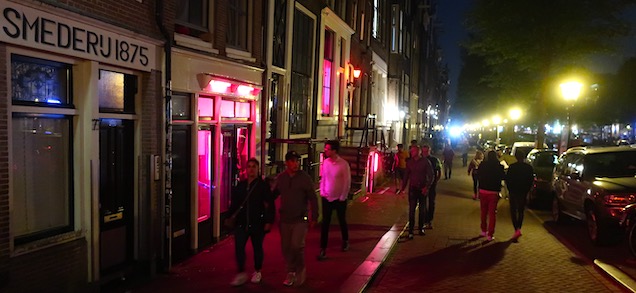
De Wallen Amsterdam
De Wallen District In Amsterdam
De Wallen – worldwide known as Amsterdam Red Light District – is a residential and entertainment area in the historical centre of Amsterdam, the city’s oldest part.
Key facts
- Where it is: De Wallen is in Amsterdam’s historic city centre, a short walk from Amsterdam Central Station, around the Oudezijds canals.
Use the De Wallen / Red Light District map and directions guide. - Opening-hours guidance: The neighbourhood is public streets (so you can walk through any time), but windows and venues have their own opening hours.
For practical timing tips, see the FAQ. - No photos / no filming: Do not photograph or film sex workers or occupied windows. Keep your phone/camera pointed away from window areas.
More: etiquette & do’s/don’ts. - Best time to visit: Early evening is lively but still manageable. Daytime is calmer for canals, history and architecture.
Late night is busier and can get rowdy—use normal city precautions. - Tour rules (important): Guided tours are not permitted to pass prostitution windows. In the city centre, larger groups may require an exemption and tours must end by 22:00.
Official rules: City of Amsterdam – rules for guided tours. - Main streets people mean: The core De Wallen area is around Warmoesstraat, Oudezijds Voorburgwal, Oudezijds Achterburgwal and Zeedijk.
Navigate with the interactive map. - Cash tip: Card payments are common in Amsterdam, but it’s smart to carry some cash in and around De Wallen.
Don’t assume every payment method works everywhere.
Primary sources:
City of Amsterdam – rules for guided tours,
Rijksoverheid – prostitution overview.
Last reviewed: 25 March 2026

Amsterdam’s oldest canal pictured by one of our local guides during a Red Light District tour in the afternoon.
The area is almost completely made up out of old historical buildings. Some of them dating back to the 16th or 17th century. The oldest building in the city – the Oude Kerk – even dates back to the year 1300.
De Wallen is located next to the Central Station and is considered to be the entrance of Amsterdam.

We took this picture of the Oudezijds Achterburgwal on a quite morning.
In total 4,760 people live in De Wallen. People from all parts of society live here. All surrounded by sex shops, red light windows, coffeeshops (cannabis stores), sex shows, historical and religious buildings and much more.
De Wallen represents the openminded-ness of the Dutch. Only here one can find an active church encircled by many window brothels.
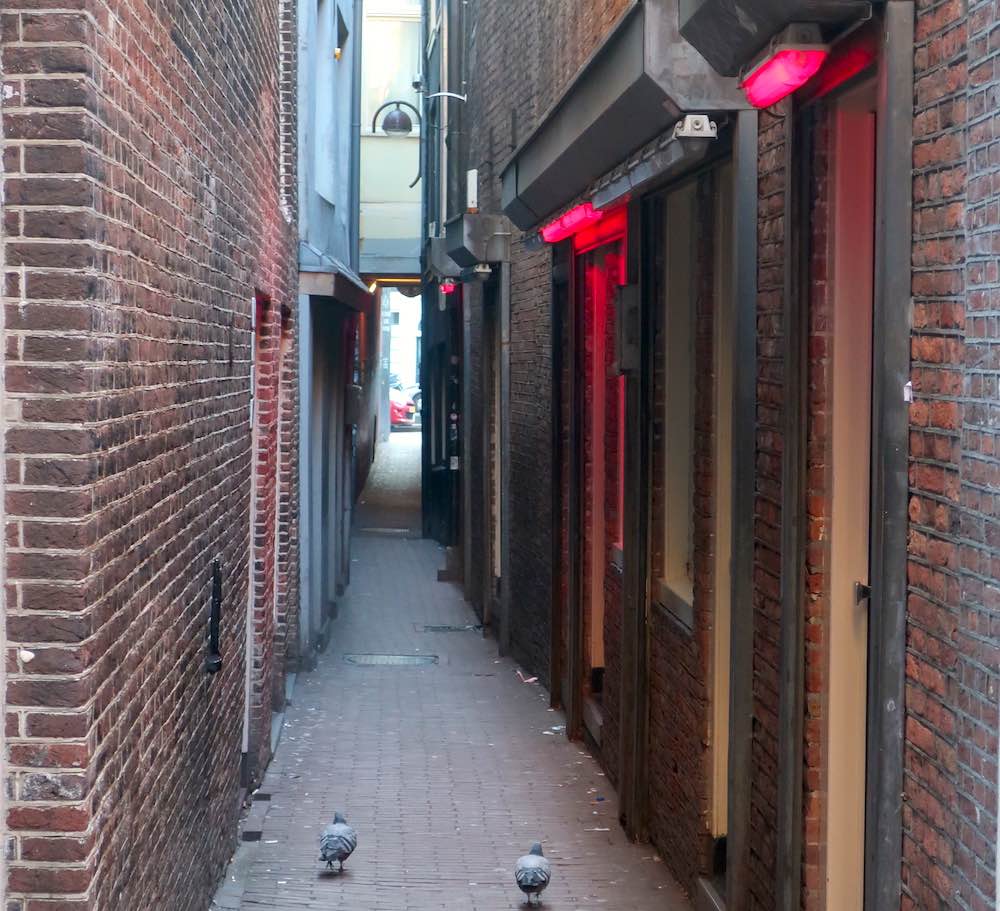
The most narrow alley in Amsterdam.
What Is De Wallen (Amsterdam Red Light District)?
De Wallen is the name of Amsterdam’s most famous Red Light District. The term “De Wallen” translates to “The Walls”, referring to the original canal walls that surrounded the medieval city center. Today, the area is defined by its narrow cobblestone streets, historic canals, and iconic red-lit windows, where licensed sex workers legally operate.
Definition:
-
De Wallen = the neighborhood name
-
红灯区 = what the area is known for (adult nightlife + tourism)
Covering several blocks around Oudezijds Achterburgwal and Oudezijds Voorburgwal, De Wallen is not only a hub for adult entertainment, but also a deeply historic and culturally complex neighborhood—home to the Oude Kerk (Old Church), traditional Dutch cafés, museums – like Our Lord in the Attic, and centuries-old architecture.
Why It’s Called De Wallen?
A literal translation of De Wallen is: Embankment.
The word “wallen” in Dutch relates to old embankments or defensive walls near water. Amsterdam grew around canals, and the early city used water lines and raised edges for protection and control. Over time, the name stuck to this part of the old center.
Definition
-
Embankment: a raised edge of land that holds back water
-
Defense wall: a barrier meant to protect a town or city
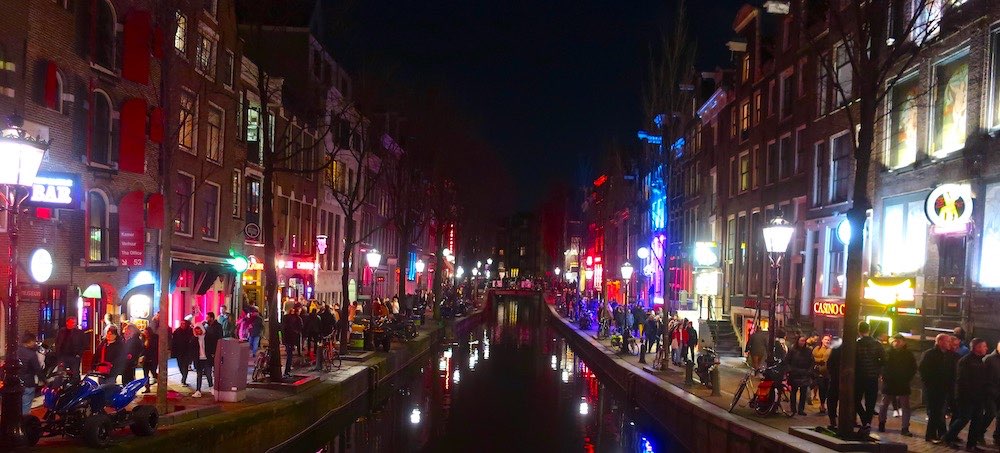
De Wallen Meaning
Here’s a quote of an Amsterdam archeologist and professor Jerzy Gawronski in the Red Light District tour app explaining what De Wallen actually means:
The word ‘Wallen’ comes from the canals that cross section the Red Light District; the Oudezijds Voorburgwal and the Oudezijds Achterburgwal.
A ‘burgwal’ means ‘defensive wall’ with a canal in front, but now the name is used for the canals itself, which were dug as a defense for Amsterdam. That’s why the whole neighborhood is now called “De Wallen” in Dutch.
Appreciate our detailed guide on De Wallen? Support us to keep providing accurate, up-to-date information about Amsterdam’s most iconic neighborhood. Your help makes it all possible!
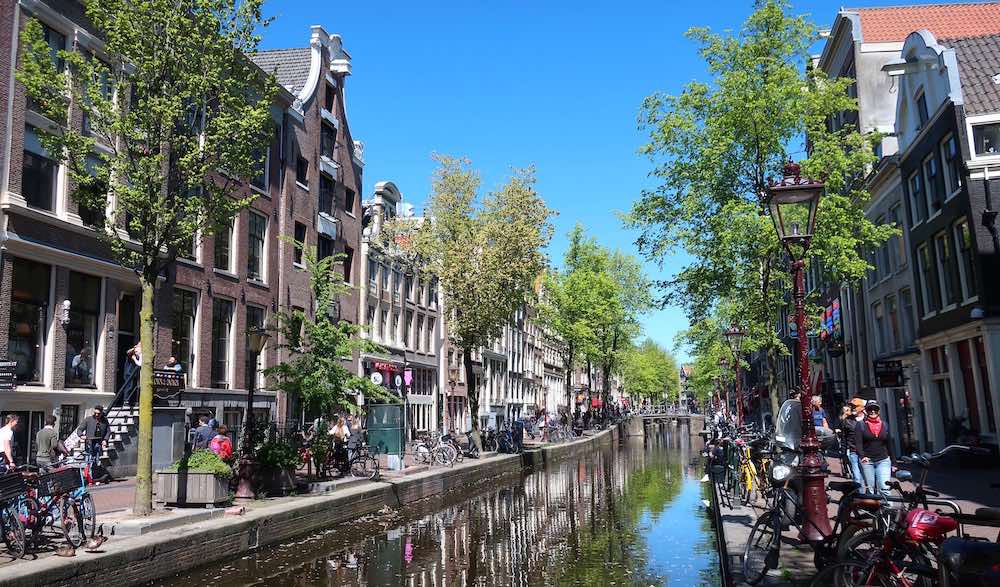
Amsterdam, De Wallen, Oudezijds Achterburgwal.
Where Is De Wallen Located?
De Wallen is located in Amsterdam’s historic city center, just southeast of Amsterdam Central Station. It sits in the oldest part of the city, an area shaped by medieval canals and narrow streets. Because of this central position, De Wallen is easy to reach on foot and often included in short city walks.
The neighborhood is mainly centered around the Oudezijds canals, especially Oudezijds Achterburgwal and Oudezijds Voorburgwal. These canals form the core of De Wallen and help visitors understand where the district begins and ends. Nearby landmarks such as Dam Square and the Oude Kerk are useful reference points when navigating the area.
located in the oldest part of the city, just a short walk from Central Station.
History of De Wallen
De Wallen grew up around Amsterdam’s earliest canals and trading routes. That’s why it still feels medieval: tight streets, old canal houses, and buildings from the 16th–17th centuries (and older).
Over time, the area became a mix of shipping, lodging, nightlife, and services for sailors and visitors—common in port cities.
A key point: De Wallen’s story is not just “adult nightlife.” It’s also about how Amsterdam managed space in a crowded historic center. Regulation and zoning—what is allowed, where, and under what rules—are part of that long history.
Today, you can still see the “layers”:
-
Medieval church life (Oude Kerk)
-
Golden Age canal houses
-
Modern tourism and nightlife in the same blocks.
Timeline (high-level)
| Era | What shaped De Wallen |
|---|---|
| Medieval | Canals + city defenses (“walls/embankments”) |
| Golden Age | Dense building + trade + urban growth |
| Modern | Regulation, tourism, and neighborhood change |
De Wallen area is the oldest part of Amsterdam. Both the above mentioned Old Church and the Warmoesstraat situated next to it date back as far as the 13th century. In the 15th century or even before that prostitution was taking place in De Wallen area. Perhaps not on the exact streets that are the places for it today.
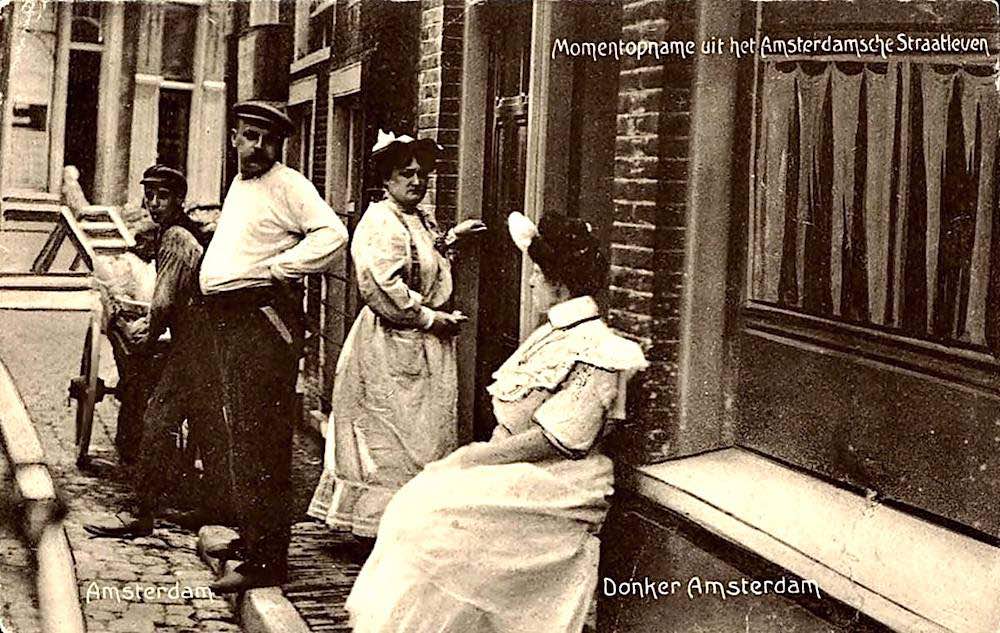
Amsterdam’s Red Light District in 1905 with two prostitutes.
But ever since the 15th century prostitution hasn’t left this part of town. There’s a historical record of brothels and other prostitution establishment being located in the Oudezijds area. Also often also in other parts of the city.
Prostitution in Amsterdam has often been banned from 1578 and onwards. Those people who did it or facilitated it were sanctioned and driven away from the city. Window brothel prostitution made its first appearance in the 1930’s. Prostitutes were forbidden from soliciting men from their doorway by the police. Sitting behind a window with a tiny split in the curtains was allowed.
In the 1960’s – during the sexual revolution – the modern iteration of the Red Light District really started. In that era prostitution increased significantly in the area. More window brothels and and more sex shops were opened.
What You Will See in De Wallen
A walk through De Wallen offers a fascinating mix of Amsterdam’s adult culture, rich history, and everyday life. The district is best known for its red-lit windows, where licensed sex workers legally offer their services. But there’s much more to see than just the red lights.
What visitors commonly see (organized list)
-
Historic canals and alleyways
-
Red-lit windows in specific streets
-
Sex shops and adult-themed venues
-
Bars and coffeeshops (cannabis shops)
-
Museums (including prostitution-history exhibits)
You’ll find a wide variety of sex shops, peep shows, and erotic theaters, as well as unique attractions like the Red Light Secrets Museum of Prostitution, which gives a behind-the-scenes look into the life of sex workers. Nestled among the narrow alleyways are also historic buildings, including the Oude Kerk (Old Church)—Amsterdam’s oldest surviving structure, dating back to the 13th century.
By day, De Wallen reveals itself as a living neighborhood, full of charming canals, Dutch cafés, independent boutiques, and centuries of layered stories. It’s an area where modern freedom meets medieval heritage—and where every corner has something unexpected to show you.
Many visitors walking through De Wallen are surprised by how much everyday social life happens alongside the historic alleys, canals, and small cafés tucked between the old houses.
Locals often meet friends or dates in the narrow streets around the Oude Kerk, or in nearby bars like Café Remember or De Prael, which are popular spots for relaxed first meetups.
The mix of residents, students, and travelers creates a lively atmosphere that shapes how people connect in this part of the city. If you want to understand how dating fits into Amsterdam’s broader social culture—including where people meet, how they communicate, and what feels normal here—you can learn more about dating in Amsterdam in our complete city guide.
Is Prostitution Legal in De Wallen?
In Amsterdam, sex work in De Wallen is legal when it’s done within the rules (licensed, regulated, and adult-only). De Wallen is known for “window” work, where services are offered from small rooms behind red-lit windows.
That legal framework exists for a reason: it’s meant to create clearer rules, safer working conditions, and easier enforcement than a hidden system.
Definition
-
Legal = allowed by law under conditions
-
Regulated = the city sets rules and checks compliance
-
Consent = the non-negotiable requirement for any interaction
Respectful visitor checklist (do this, not that)
-
✅ Treat workers like professionals (polite, brief, respectful)
-
✅ Follow posted rules and local guidance
-
❌ Don’t take photos or videos of workers/windows (this is a major rule)
-
❌ Don’t block doorways or crowds in narrow alleys
Why and how regulation works (process)
-
Businesses operate in designated areas
-
City rules define what’s allowed
-
Enforcement focuses on safety and order
Window Brothels and Red Lights Explained
The red light windows in the Red Light District are there for a reason. Sex. Legal prostitution. Here anyone from the age of 18 can legally have sex with a prostitute. Provided that the sex worker also wants this, of course.
Do you want sex in the Red Light District with a window prostitute? Then it is best to go to the relevant window brothel and approach the sex worker in a friendly manner.
If she is available, she will open the door a crack and ask about your wishes. Once she accepts this, she can let you into the small brothel. Follow the etiquette and Wallen rules and be respectful. This enhances the experience for both.
Would you like to have sex at De Wallen, but rather not with a prostitute? Then consider using the popular sex date sites & apps in Holland. Here you will find like-minded people who are looking for someone who wants sex, without a relationship. Register now, make direct contact and who knows, you might find someone near you at De Wallen.
How Much Does It Cost in De Wallen
Costs in De Wallen depend on what you do. A simple visit (walking + a drink) can be low-cost, while shows or adult venues will add ticket prices. Prices can change by season, demand, and venue, so it’s smart to check official sites and menus before you go.
Cost categories
-
Free: walking around the canals
-
Typical: drinks, snacks, museum entry
-
Higher: shows or paid attractions
Budget equation (easy)
Total Budget = Transport + Food/Drinks + Tickets + Buffer
A good buffer is 10–20% for surprise costs.
Example budget table
| Style | What you do | Simple budget idea |
|---|---|---|
| Low | walk + one drink | €15–€30 |
| Medium | walk + museum + drink | €35–€70 |
| High | show + drinks + extras | €80+ |
Step-by-step budgeting
-
Pick 1 paid activity max (museum or show).
-
Decide your “cap” before you go.
-
Keep extra cash or card room for transport back.
How much does a window in De Wallen cost?
Renting a window brothel at De Wallen costs between 80 and 200 euros. The exact price depends on the day, time and exact location. A prostitution window is cheaper during the day than at night. Also, the best windows in the best locations are more expensive than outlying windows.
De Wallen District Windows
Window brothel prostitution takes place in De Wallen area in the following streets:
✦ Barndesteeg
✦ Bethlehemsteeg
✦ Bloedstraat
✦ Boomsteeg
✦ Dollebegijnensteeg
✦ Enge Kerksteeg
✦ Gordijnensteeg
✦ Monnikenstraat
✦ Molensteeg
✦ Oudekerksplein
✦ Oudezijds Achterburgwal
✦ Oudezijds Voorburgwal
✦ Oudekennissteeg
✦ Sint Annendwarsstraat
✦ Sint Annenstraat
✦ Stoofsteeg
✦ Trompetterssteeg
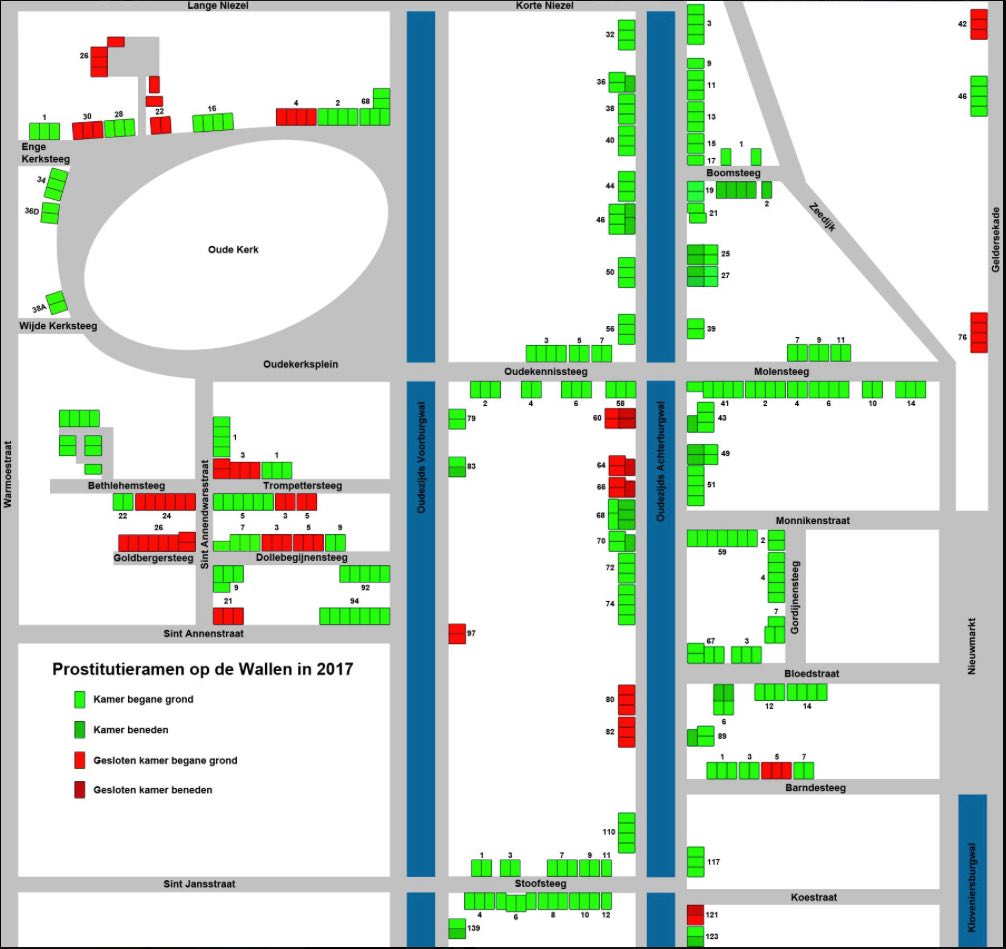
A map of all window brothels on De Wallen in 2017.
Amsterdam Red Light District (De Wallen) has currently 201 window brothels which are rented in the daytime and nighttime.
Why red lights in De Wallen?
What’s the deal with all the red lights in De Wallen? Many people wonder why this is such a common sight in prostitution. There are actually a few reasons for it! One reason is that it helps to hide imperfections. Red light is very forgiving, and it can help to disguise any blemishes or flaws in the skin. This is why many prostitutes choose to use red lights. Another reason is that red has represented the color of love for centuries.
De Wallen for Couples & First-Time Visitors
Couples and first-time visitors often worry about feeling uncomfortable. That’s normal. De Wallen can be a “culture shock” because it mixes historic beauty with adult nightlife in a small space.
The easiest way to reduce stress is to plan a respectful, low-pressure visit.
For couples: what helps
-
Agree on boundaries before you go
-
Start with a canal walk and a drink in a regular bar/café
-
Choose one structured activity (museum or show) and keep it simple
For first-timers: a gentle approach
-
Visit in daylight first (learn the layout)
-
Return early evening if you want the vibe
-
Keep the visit short (30–60 minutes is plenty for many people)
-
Leave before it gets too crowded
Why this works (the “how and why”)
-
Familiarity lowers anxiety
-
Short plans prevent overwhelm
-
Clear boundaries prevent arguments
-
Respectful behavior avoids conflict with locals and workers
Mini checklist
-
Comfortable shoes (cobblestones)
-
Small bag, zipped
-
Map route saved
-
No photos of windows/workers
More Info: Window Brothel Map

Amsterdam, Oudekennissteeg.
Shows and Entertainment in De Wallen
De Wallen is not only home to Amsterdam’s famous window brothels but also several live sex shows that are legal, safe, and designed for tourists. The most well-known among them is the Moulin Rouge Amsterdam, located right on Oudezijds Achterburgwal—one of De Wallen’s main streets.
Definition
-
Adult show venue: a ticketed place with adult-themed performances or entertainment
What to expect (high-level)
-
House rules (often strict)
-
No photography
-
A set program length or continuous loops, depending on venue
How to choose a venue (step-by-step)
-
Decide the vibe: theatrical vs quick novelty.
-
Check location and timing (avoid late-night rush).
-
Buy tickets from official sources when possible.
-
Follow the rules inside (especially no photos).
Moulin Rouge offers a continuous program of erotic stage performances, including striptease, fetish acts, and real sex performed live by consenting couples. Each show lasts about an hour and consists of multiple short acts, so you can enter at almost any time and still catch the full experience.
The venue has a cozy theater setting with table seating and bar service. Tickets for Moulin Rouge typically cost around €50 and can be purchased online. Photography is strictly forbidden, and respectful behavior is expected from all visitors.
For those curious about Amsterdam’s erotic culture but hesitant to visit a brothel, a sex show is a comfortable and entertaining introduction to De Wallen’s adult nightlife.
Entertainment In De Wallen
The area also offers many other forms of other erotic entertainment. These include many sex shops, stripbars and erotic theatres.
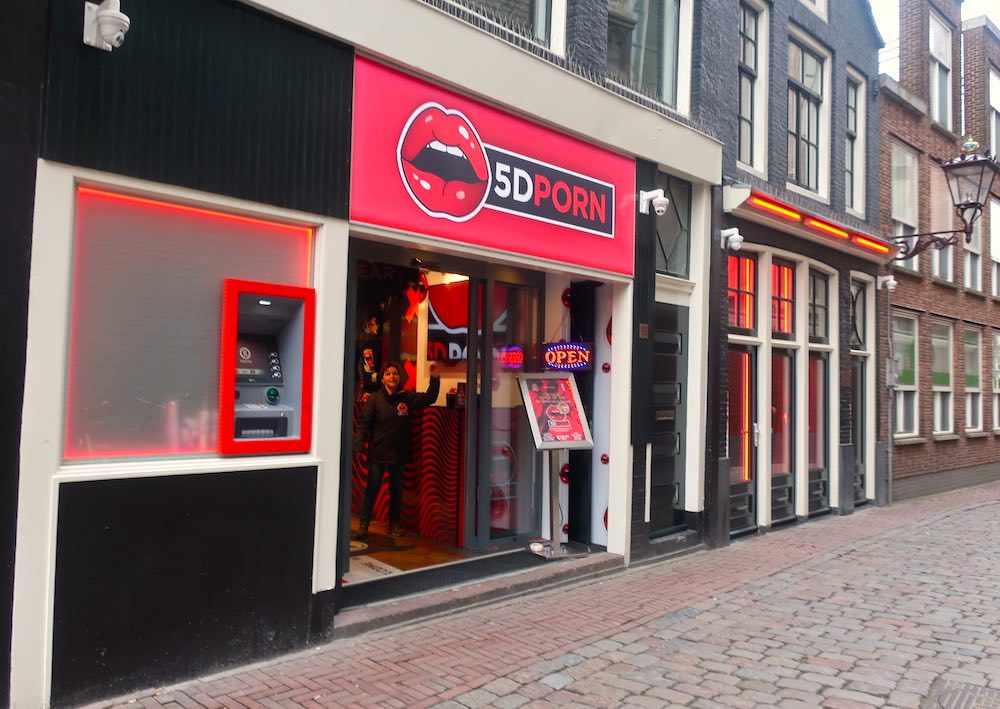
Moulin Rouge Amsterdam, 5D Porn Cinema and the Peep Show are the best sex shows in De Wallen area. Moulin Rouge tickets are exclusively available on website. De Wallen also has many bars and coffeeshops.
For those looking for more cultural experience de Wallen also has Ons’ Lieve Heer Op Solder Museum. The Hash Marihuana & Hemp Museum. The Museum Of Prostitution and changing expositions in Amsterdam’s oldest building; The Old Church.
15 ATTRACTIONS IN DE WALLEN >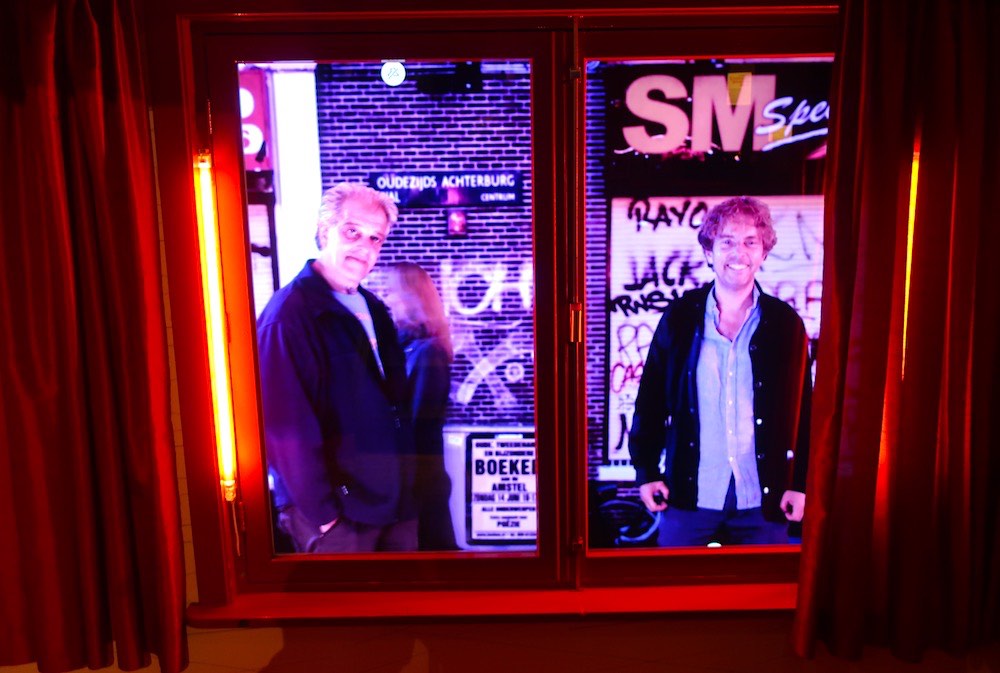
What a window worker sees.
De Wallen Travel Details
Size Of De Wallen Amsterdam
Despite what many people might think about De Wallen area – also known as Red Light District – it isn’t really that big. The total size of de Wallen is 1 km2. The prostitution area itself measures around 250 meters by 250 meters.
The area borders on de Lange Niezel en Korte Niezel streets in the northern part. The Zeedijk and Nieuwmarkt in the eastern part, the Koestraat and Sint Jansstraat in the South and the Warmoesstraat in the west.
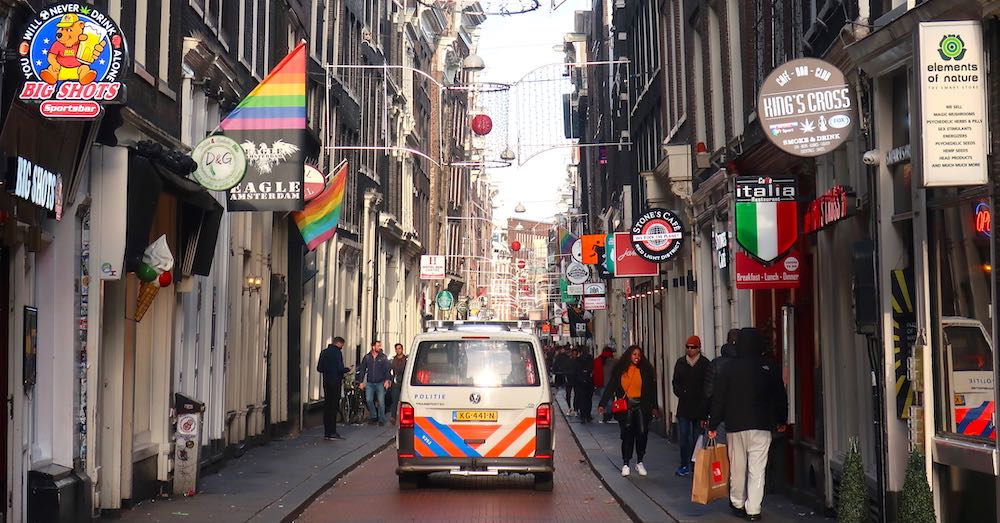
The Warmoesstraat in De Wallen.
De Wallen Amsterdam Map
Outlined in red are the borders this area. As you can see Amsterdam Central Station is located on top of it. From Schiphol Airport by train you can be in area within 25 minutes.
De Wallen Hotels
This area has a hotel for every taste. From the most luxury hotels in Amsterdam to the low cost bunkbed backpacker hotel.
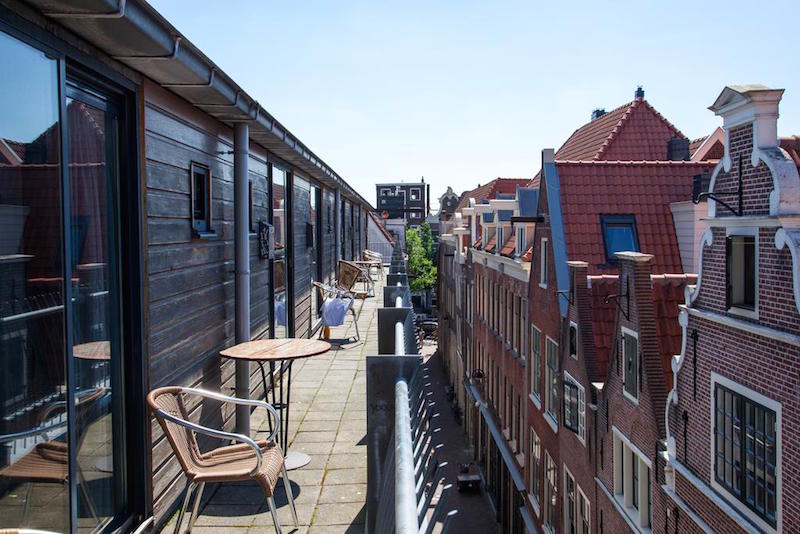
Prices are seasonably bound so expect to pay more in the summer and less in low season. Low season in Amsterdam is between October and March, excluded the holidays in December. High season is between April and September.
On the following page you can find the best hotels in Amsterdam Red Light District. The overview offers both affordable and exclusive hotels.
Where to stay near De Wallen (fast pick)
- Couples / quieter: choose a canal-side hotel 5–10 minutes’ walk away
- Budget: pick a hostel/hotel near Centraal for the best transport
- First-time visitors: stay close to Dam Square/Centraal for easy navigation
Hotel Map
The top 10 hotels are listed in De Wallen map:
De Wallen Opening Hours
De Wallen is always open as it is a residential and public area in Amsterdam’s city centre.

Sint Annendwarsstraat in De Wallen.
Window Brothels Opening Hours
The opening hours for window brothels are between 12:30 pm and 3 am. Depending on the time of day there might be more or less sex workers working,
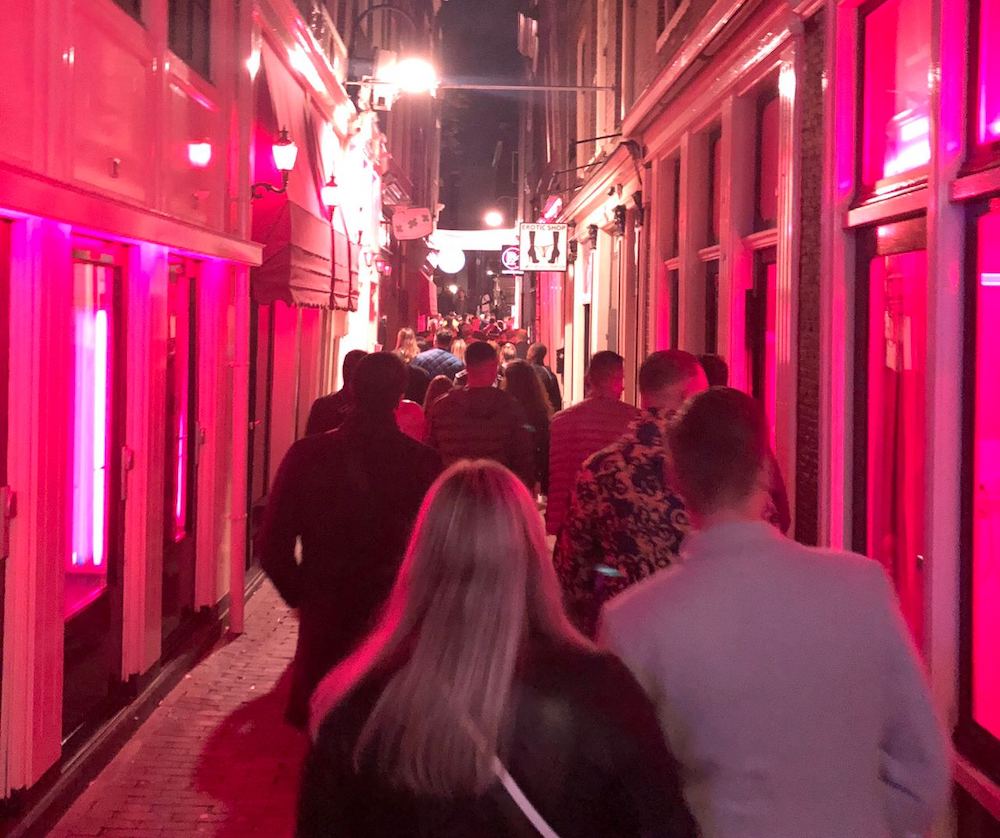
The Molensteeg.
The windows are rented in shifts; day shifts and night shifts. Most prostitutes prefer to take the night shifts because then there are more visitors in the Red Light District.
Bars and Restaurants Opening Hours
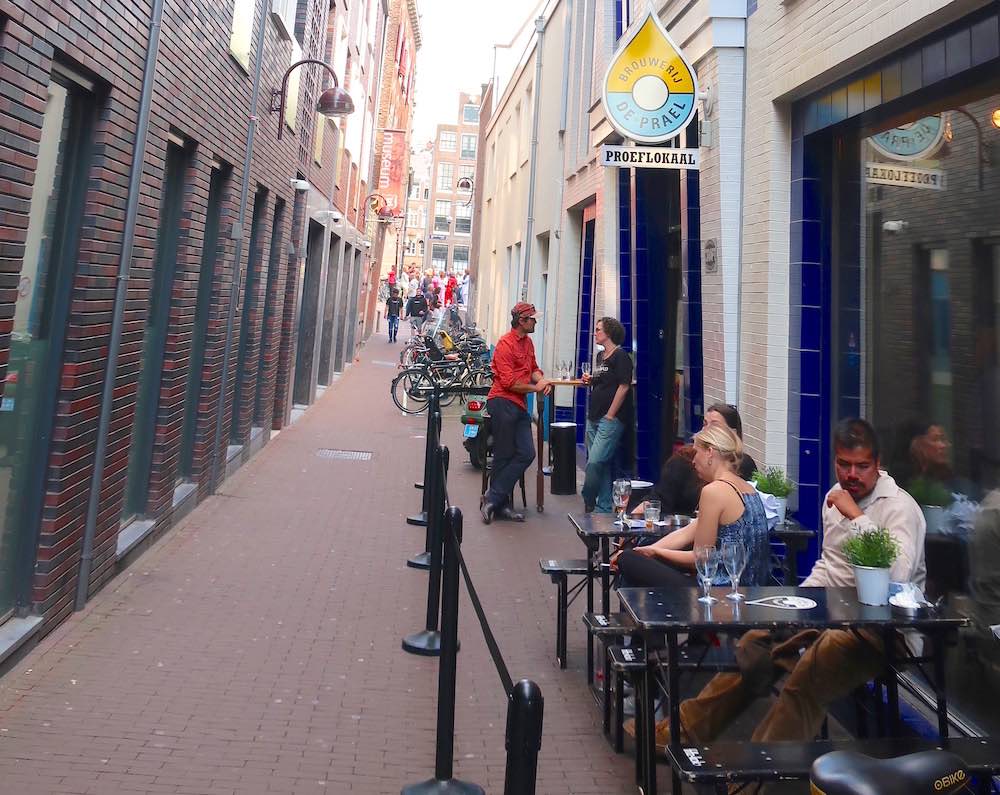
Cafe de Prael with its own beer brewery in the Oudezijds Armsteeg.
Restaurants and bars open and close spread out throughout the day. You can have breakfast starting from 8:00 am. Most restaurants close around 10:00 pm. The latest closing time for cafes and bars is 2 AM.
Shops Opening Hours
Regular shops tend to open around 10:00 am and close around 7:00 pm.
Entertainment and erotic related shops tend to open around 10:00 am and close around 10:00 pm.

Amsterdam, Red Light District, Oudezijds Voorburgwal.
De Wallen Location
De Wallen is located in the heart of Amsterdam, just a short walk from the Central Station. The boundaries of De Wallen are officially between the Beursstraat, Nes, Nieuwmarkt, Zeedijk & Prins Hendrikkade. The area is bounded by canals, and its narrow streets are lined with cafes, bars, and shops.
The main streets in De Wallen are the Warmoesstraat, Oudezijds Voorburgwal, Oudezijds Achterburgwal and Zeedijk.
Navigate to the middle of De Wallen by using this address Oudezijds Achterburgwal 39-A in Google Maps.
De Wallen is best known for its window brothels, which are located on several of the area’s streets. However, there is much more to De Wallen than its red-light district. The area is also home to many museums and historical landmarks, making it a popular destination for tourists.
De Wallen Demographics
How many inhabitants does De Wallen in Amsterdam have?
In 2025, De Wallen has 4,760 residents (source). This refers to the Burgwallen-Oude Zijde neighborhood. Between 2013 and 2025, the number of residents in the Burgwallen-Oude Zijde neighborhood increased from 4,250 to 4,760. This represents an increase of 510 residents, or a total growth of approximately 12%.
Inhabitants De Wallen Amsterdam
2013 ▓▓▓▓▓▓ (4,250)
2014 ▓▓▓▓▓▓ (4,260)
2015 ▓▓▓▓▓▓▓ (4,278)
2016 ▓▓▓▓▓▓▓ (4,280)
2017 ▓▓▓▓▓▓ (4,245)
2018 ▓▓▓▓▓▓▓ (4,310)
2019 ▓▓▓▓▓▓ (4,295)
2020 ▓▓▓▓▓▓▓▓ (4,465)
2021 ▓▓▓▓▓▓▓▓ (4,520)
2022 ▓▓▓▓▓▓▓▓ (4,550)
2023 ▓▓▓▓▓▓▓▓ (4,565)
2024 ▓▓▓▓▓▓▓▓▓ (4,740)
2025 ▓▓▓▓▓▓▓▓▓ (4,760)
On average, approximately 42 new residents joined each year, representing an annual growth rate of almost 1%.
The figures show clear growth: the number of residents increased slightly almost every year.
People Also Ask
1. What is De Wallen in Amsterdam?
De Wallen is the official name of Amsterdam’s Red Light District. It is a historic neighborhood near Amsterdam Central Station known for canals, old buildings, regulated sex work, bars, and museums.
2. Is De Wallen the same as the Red Light District?
Yes. “De Wallen” is the neighborhood name, while “Red Light District” describes its function. Locals usually say De Wallen; tourists use Red Light District.
3. Is prostitution legal in De Wallen?
Yes. Prostitution is legal and regulated in De Wallen. Sex work is allowed only in licensed locations and under strict city rules.
4. Is De Wallen safe for tourists?
Yes, De Wallen is generally safe, especially on main streets and canals. Visitors should watch their belongings, avoid late-night crowds, and follow local rules.
5. Can tourists take photos in De Wallen?
No. Taking photos or videos of sex workers or occupied windows is strictly prohibited and can result in fines or confrontation.
6. What is the best time to visit De Wallen?
Early evening is the best time to visit. Mornings are calm and quiet, while late nights are busier and more crowded, especially on weekends.
7. How do you get to De Wallen from Amsterdam Central Station?
De Wallen is a 5–10 minute walk from Amsterdam Central Station. Walk toward Dam Square and the Oudezijds canal area.
8. Is De Wallen suitable for couples or first-time visitors?
Yes. Many couples and first-time visitors explore De Wallen safely by visiting early, planning a short walk, and focusing on the historic canals and museums.
9. Where can I find sex workers in Amsterdam?
Sex workers in Amsterdam can be found in different ways:
✦ Escorts
✦ In window brothels on De Wallen, Ruysdaelskade & The Singel area + Spuistraat
✦ Sex clubs & private sex houses
✦ Brothels
✦ Home prostitutes
10. What’s the minimum age at De Wallen?
Wondering how old you have to be for De Wallen? That’s simple! There is no minimum age to enter De Wallen. After all, it is a residential, shopping and entertainment area.
There is, however, a minimum age to visit the prostitutes, coffee shops and smart shops. You must be at least 18 years old for this.
11. Can you go to the Red Light District as a woman?
Yes, women are allowed in the Amsterdam Red Light District. In fact, it is one of the most popular tourist destinations for women in the city. While there are some areas that are off-limits to women, such as the windows where the prostitutes display themselves, there is still plenty to see and do in the district. Women can visit the many sex shops, brothels, and museums, or simply enjoy the lively atmosphere. Of course, it is important to be aware of your surroundings and not to stray into any areas that may be dangerous. But overall, the Amsterdam Red Light District is a safe and interesting place for women to visit.
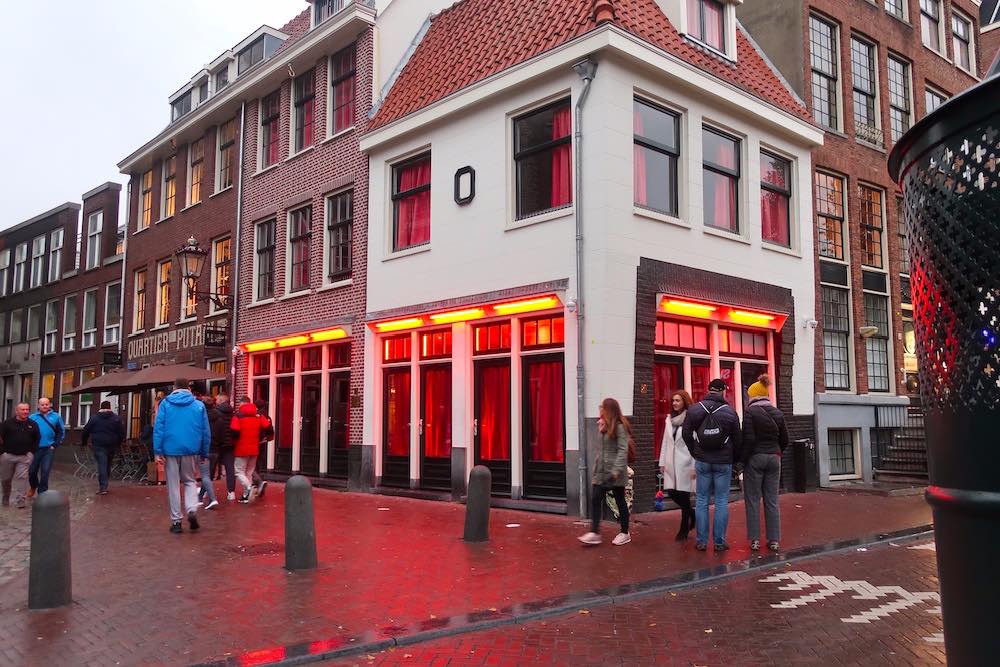
Amsterdam’s Oudekerksplein (Old Church Square) with a daycare and window brothels.
Changes in De Wallen (Project 1012)
In the summer of 2007, the Coalition Project 1012 (in short Project 1012) was initiated. Together the municipality and the centre district of Amsterdam started working on creating more variety and reducing crime. And also to economically upgrade the zip code area 1012, which is also the zip code of De Wallen.

The Upcycle Store is part of gentrification-plan called Project 1012.
In 2009, the city council agreed to designate window prostitution as a criminal sector. In 2011, the city council decided to expel the window brothels from, for example, Sint Annenstraat and Oudekerksplein and the surrounding area. All located in the same area. The municipality expected to help women who were forced into prostitution.
The building above used to have several window brothels. The building was bought by the City of Amsterdam which rents it to an entrepreneur who offers recycled products in the Red Light District. This company is hardly visited, because people do not visit this neighborhood for these types of products.
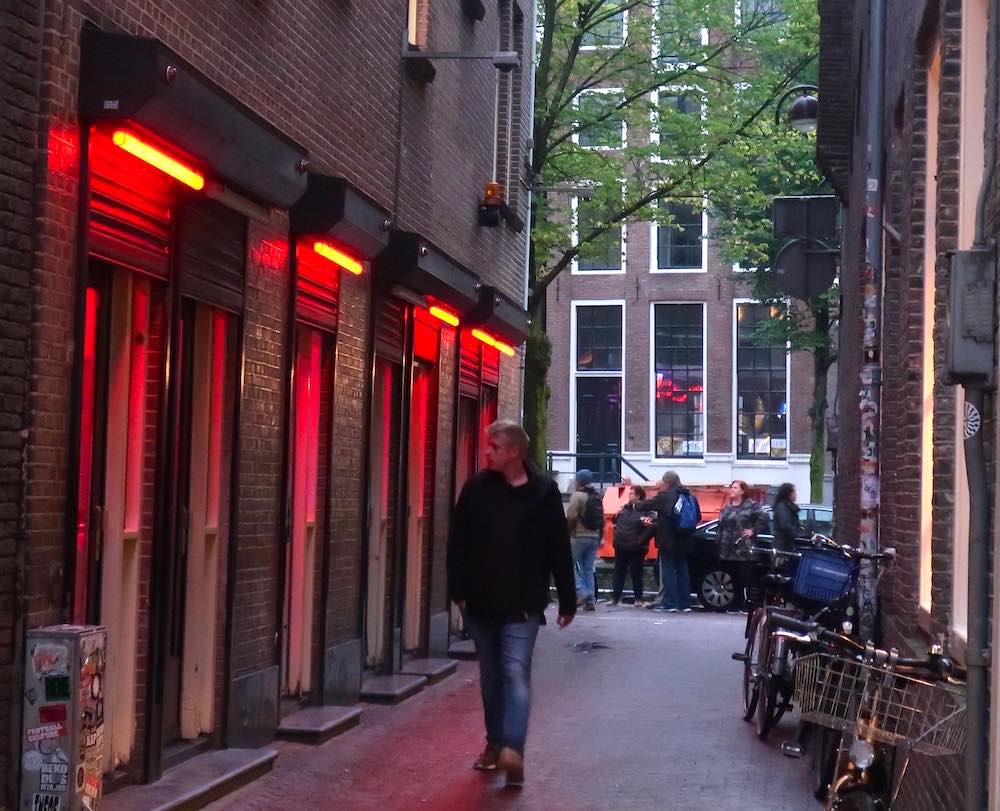
Amsterdam, Red Light District, Sint Annenstraat.
Amsterdam Project 1012 Failed
In 2018, the Amsterdam Court of Audit found that the government’s Red Light District project had not been successful. Despite the closure of 112 window brothels and 48 coffeeshops. And almost no crime related to this project was found 10 years in De Wallen.
Some locals and experts claimed that the local government only used Project 1012 as an excuse to change this part of Amsterdam by decreasing prostitution and cannabis related businesses.
ALSO READ:
Amsterdam Red Light District Prices





-
- Coffeeshops
- Restaurants
- Sex Clubs
- Museums
- Canal Cruises
- Bike Rental
Entertainment
-
Contact


© 2010–2026 Amsterdam Red Light District – Amsterdam Red Light District Travel Guide. Webdesign by BIRO.
 ZH
ZH  EN
EN  DE
DE  FR
FR  NL
NL  ES
ES