


Amsterdam Stock Exchange 2026
Amsterdam Stock Exchange
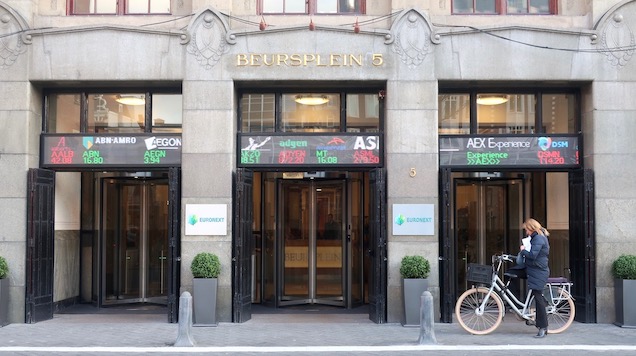
The Amsterdam Stock Exchange is one of the most important financial landmarks in Europe. It is based at Beursplein 5 in the historic city centre, close to Dam Square, Warmoesstraat, and the old trading heart of Amsterdam.
If you want the short answer, here it is: this is widely seen as the world’s oldest functioning stock exchange. It helped shape modern share trading and still matters today through Euronext Amsterdam and the AEX index.
Last updated: 31 March 2026

The Amsterdam Stock Exchange as it is today, located on Beursplein 5.
Quick facts
| Topic | Answer |
|---|---|
| Address | Beursplein 5, 1012 JW Amsterdam |
| Current operator | Euronext Amsterdam |
| Main cash market hours | Weekdays, 9:00 AM to 5:30 PM |
| Best-known index | AEX |
| Why it matters | It is widely regarded as the oldest functioning stock exchange in the world |
| Nearest major landmark | Dam Square |
What does the abbreviation AEX mean?
AEX means Amsterdam Exchange Index. It is the main Dutch blue-chip stock index and is used as a quick way to track the top large companies listed on Euronext Amsterdam.
A simple definition helps here. A stock index is a basket of selected shares used to measure how a market segment is doing. When the AEX goes up or down, people often read it as a signal about the Dutch stock market as a whole.
The AEX started in 1983 and is now a free-float market-cap-weighted index. That means bigger companies usually have more influence, but their weight is adjusted so the index stays investable and does not become too dominated by one stock.
A simple version of the idea looks like this:
index move = the combined price movement of its member stocks, weighted by size and free float
- AEX is the best-known Dutch stock index
- It is used by funds, ETFs, futures, and options
- It reflects major listed Dutch and Dutch-linked companies
- It is one of the main indicators people watch for the Dutch market
During our research, we noticed many people confuse the AEX with the building itself. The building is the historic exchange location. The AEX is the index.
Amsterdam Exchange Opening Hours
The main cash market at Euronext Amsterdam is open on weekdays from 9:00 AM to 5:30 PM. These are the standard trading hours most visitors and readers mean when they ask when the exchange is open.
That does not mean the building works like a public walk-in museum all day. Trading itself is digital now, so most people do not see traders shouting on a busy floor anymore. The visible public experience is different from the old days.
The exchange is still home to many major listed companies and remains one of Europe’s key markets. It is also a popular subject for visitors because the history is far older than the digital screens now used for trading.
| Market item | Hours |
|---|---|
| Cash market trading | 9:00 AM – 5:30 PM, weekdays |
| Best visitor takeaway | Historic building, modern digital market |
| Public visit option | Amsterdam Exchange Experience, by reservation |
If you are arriving from the airport and want a simple transfer into the centre before visiting Beursplein, this private airport transfer is a practical option.
World’s First Stock Market
The Amsterdam Stock Exchange is widely described as the oldest functioning stock exchange in the world. Its roots go back to 1602, when the Dutch East India Company, known as the VOC, introduced transferable shares that could be traded by investors.
This matters because it changed how money could be raised. Before that, trade and finance existed, but Amsterdam helped turn share trading into a repeatable public market system.
A useful definition here is share. A share is a unit of ownership in a company. If a company has 1,000 shares and you own 10, you own 1% of that company.
The basic ownership math looks like this:
your ownership percentage = shares you own ÷ total shares issued
That idea sounds normal now, but it was a major shift at the time. Investors could put money into a company and later recover it by selling their stake to someone else. This made capital more flexible and helped create the model later used around the world.
- 1602: VOC launches public shareholding
- 1606: early share certificates appear
- 1611: Amsterdam gets its first exchange building
- Today: the market continues through Euronext Amsterdam
In our opinion, this is the single most important reason the exchange matters to visitors. It is not just a local landmark. It is part of global financial history.
历史
Amsterdam’s First Regular Traders’ Market
The city’s first regular traders’ market was located near the harbour, in the Warmoesstraat. A document dating from 1493 describes the north side of this street as a place where traders met every day.
There was no actual market building at that time. During the second half of the 16th century, the traders’ market, still an open-air market, moved to the Nieuwe Brug near the IJ. In bad weather, traders used the nearby St. Olofskapel and the Oude Kerk.
It was not until 1611 that they acquired an exchange building of their own. That tells you something important: the exchange grew out of daily city trade before it became a formal institution.
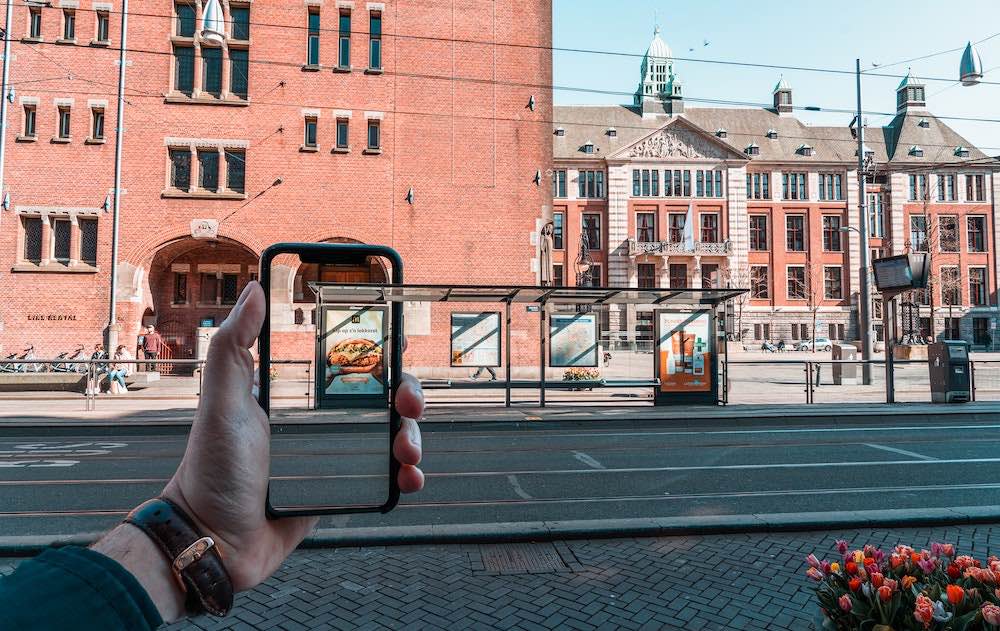
The Amsterdam Stock Exchange building on the right.

During rainy days people traded inside Amsterdam’s Old Church (on the right).
Amsterdam’s First Trading Law
In 1592, Amsterdam’s city council passed the first by-law to ensure that market trading was conducted in an orderly fashion. The by-law laid down fixed trading hours and a code of conduct.
An exchange clerk was given the task of ringing a bell to signal the start of trading. Any latecomers were fined. That tradition still survives in another form today, because opening ceremonies still use a sound signal, now usually a gong or drum instead of a bell.

The Old Church in Amsterdam, the oldest building in the city.
Amsterdam Stock Exchange 1602
The Dutch East India Company, the VOC, was the first company in the world to issue shares to the public at large. This was the beginning of worldwide share trading on a public scale.
Investors from many backgrounds were invited to buy in. It was a revolutionary change because people could sell their position later, while the company kept the invested capital for long-term trade and expansion.
The first stock issued by the VOC is actually the main plot device for the movie Ocean’s 12 (2004).
First Amsterdam exchange buildings
First Amsterdam Stock Exchange
Amsterdam’s first commodity exchange opened in 1611. Architect Hendrick de Keyser designed the building on the south side of Dam Square, over arches spanning the Rokin canal.
Traders worked in an open courtyard enclosed by numbered pillars. That layout made it easier to find people with a fixed place and helped bring order to the busy flow of trade.
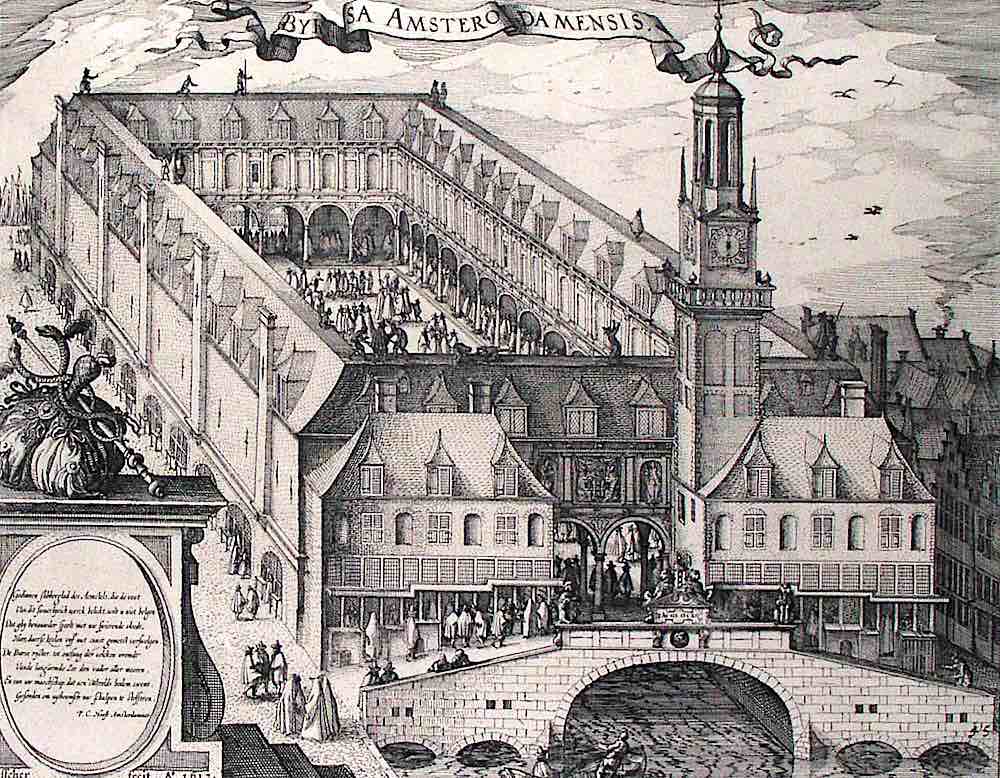
The Hendrick de Keyser Exchange, world’s first stock exchange.
For more than 200 years, the Hendrick de Keyser Exchange remained the centre of trade in Amsterdam. Most of the business was in commodities, though securities gradually became more important.
Obligations That Make A Payout To This Day
The trade in VOC shares encouraged other issuers to use the public capital market. One famous example came in 1624, when the Lekdijk Bovendams water board issued a fixed-interest bond to repair a breached dike.
That bond is known today as the oldest perpetual bond still paying interest. It shows how public finance, risk, and long-term funding were already being tested in the Dutch Republic centuries ago.
Tulip Bulb Mania Of 1634
The first tulips appeared in the Netherlands around 1590. Their prices rose sharply in the 1630s and then collapsed in 1637, making “tulip mania” a famous early example of mass speculation.
It is important to note that this was not the same as modern exchange trading in every detail. Still, the story matters because it helps explain how quickly markets can move when emotion outruns value.

The Netherlands, tulip fields.
Nowadays Dutch tulips are also traded on several markets, like the Amsterdam Flower Market.
Books, funds, and financial innovation
Share Trade Books
In 1688, the Portuguese Jewish writer Joseph de la Vega published the first book fully devoted to stock market life, Confusion de Confusiones.
The book is still important because it explains speculation, investor behavior, rumor, and market psychology in a way that still feels familiar today. During our research, this stood out as one of the strongest proof points that Amsterdam helped invent not just trading tools, but also trading language.
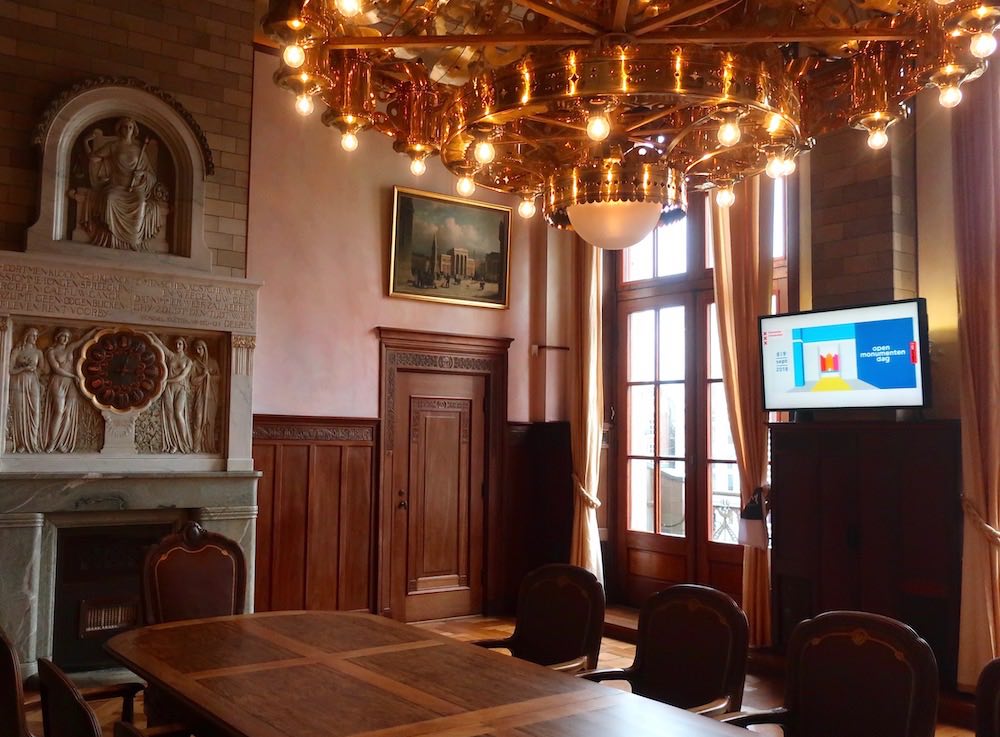
A backroom inside Amsterdam’s current stock exchange.
World’s First Investment Fund
An Amsterdam merchant-broker called Abraham van Ketwich set up the world’s first investment fund in 1774. Named Eendragt Maakt Magt, it helped investors spread risk across many holdings instead of betting on just one.
A simple definition helps here. An investment fund pools money from many investors and spreads it over several assets. The idea is basic:
more diversification = lower risk from one single failure
That concept is now normal in finance, but it was a major innovation at the time.
Nineteenth and twentieth century exchange growth
Amsterdam Zocher Exchange
After the Hendrick de Keyser Exchange closed in 1835, a second commodity exchange opened in 1845. It stood on the site now occupied by De Bijenkorf and was designed by Jan Zocher.
Like the older building, it had an open trading floor with arcades and numbered pillars. But traders complained about draughts and lack of space, which shows how quickly the market was growing.

The city’s coat of arms in the Amsterdam Stock Exchange.
Royal Dutch Shell
The second half of the 19th century was a boom period. Between 1865 and 1900, the number of listed stocks grew sharply, driven by industrialization and a wider investor base.
One of the notable later giants was Royal Dutch Shell, which became one of the best-known names linked to the Dutch market. The old exchange helped channel the capital that fed industrial growth.
Amsterdam Berlage Exchange

De Beurs van Berlage pictured in 1903 Amsterdam.
The Berlage Exchange gave securities traders a dedicated floor from 1903. But even then complaints continued, because the building shifted and the fast growth in securities trading soon made it feel too small.
Beursplein 5
In 1913, the Amsterdam Stock Exchange Association opened its own securities exchange at Beursplein 5, designed by architect Jos Cuypers. Trading started there in early 1914.
Traders now had about 1,350 square meters of floor space, roughly twice what they had before. That move explains why Beursplein 5 still matters today as the symbolic heart of the market.
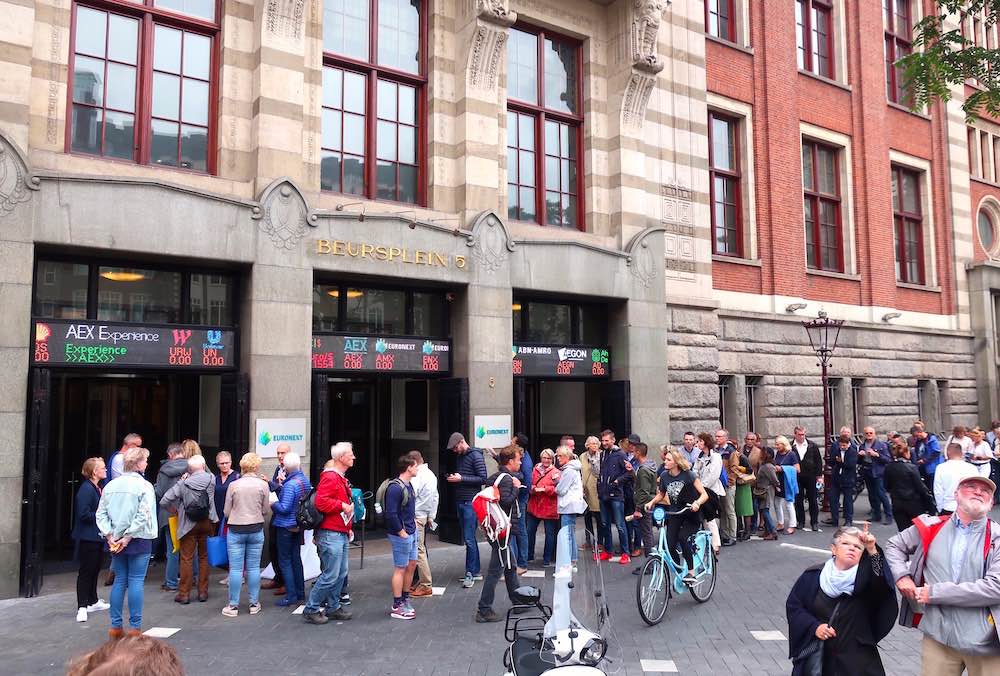
Entrance to the current Amsterdam Stock Exchange at Beursplein 5.
Information, technology, and screen trading
Amsterdam Stock Exchange: Information & Innovation
Even in VOC times, investors understood the value of fast, accurate information. People came to the exchange not just to trade, but also to hear the latest news.
As foreign investment grew in the 18th and 19th centuries, the need for shared information grew too. The exchange responded by using new tools for communication, and later supported the rise of specialist financial publications.
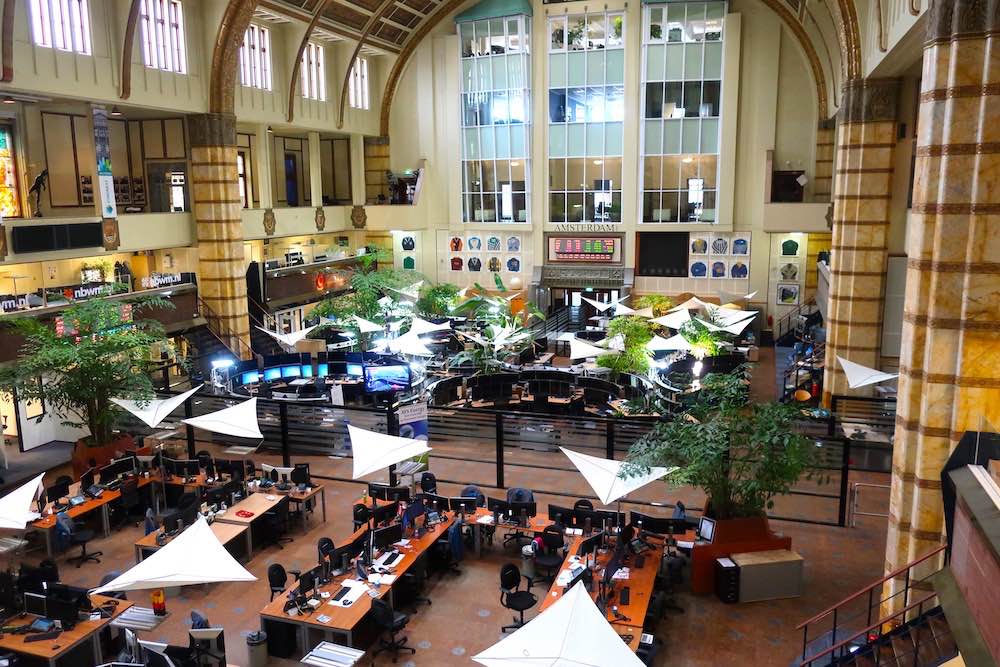
Inside the fully digitised Amsterdam stock exchange.
Stock Market Technology
Beursplein 5 recorded a notable first in 1920, when share prices were broadcast by wireless before national Dutch radio services had fully started. Later, ticker machines accelerated the spread of prices across the country.
This mattered because price information is only useful if many people get it quickly. Better information systems made markets more transparent and more useful.
Screen Trading

During our visit inside Amsterdam Stock Exchange we took this image of Coca-Cola’s IPA in Europe.
The stock market moved from physical floor trading to computer screens in 1998, and the options trade followed in 2002. This ended the old open outcry system, where brokers shouted buying and selling prices on the floor.
The closing gong on 6 December marked the symbolic end of about 400 years of physical trading in Amsterdam. In our opinion, this is one of the clearest examples of how the exchange preserved its history while fully changing its method.
Amsterdam Stock Exchange Euronext
Amsterdam Stock Exchange Euronext

On 22 September 2000, the Paris, Amsterdam, and Brussels exchanges merged to form Euronext. Later, Lisbon and LIFFE joined as well, creating one of Europe’s major integrated exchange groups.
The merger followed the arrival of the euro and growing competition from electronic trading platforms. It marked the end of a fully national Dutch exchange era, but not the end of Amsterdam’s role in European finance.
Today Euronext Amsterdam remains a national regulated securities and derivatives market inside that wider group. The AEX continues to serve as the main Dutch benchmark index.
| Then | Now |
|---|---|
| Open-air and floor trading | Digital trading systems |
| Local market rules | Pan-European exchange group |
| Bell and voice trading | Screens, data, and electronic order books |
| Commodity-heavy beginnings | Equities, derivatives, ETFs, funds, and more |
Current AEX companies and practical investor basics
Examples of AEX-listed companies
The current AEX is made up of the largest and most actively traded shares listed on Euronext Amsterdam. Recent official index documents show names such as ASML, Shell, Unilever, ING, Prosus, RELX, Adyen, Ahold Delhaize, ASM International, Wolters Kluwer, and Heineken among the constituents.
- ASML Holding
- Shell
- Unilever
- ING Groep
- Prosus
- RELX
- Adyen
- Ahold Delhaize
- ASM International
- Wolters Kluwer
- Heineken
- Universal Music Group
Because index composition changes over time, readers should treat any company list as a snapshot rather than a permanent record. That is one reason a live index page matters more than an old static list.
How to buy Amsterdam stocks?
Buying Amsterdam-listed shares usually starts with a brokerage account that offers access to Euronext Amsterdam. The simple process is:
- open an account with a broker
- verify your identity
- fund your account
- search the stock or ETF
- place a buy order
During our review of the original page, one thing stood out: readers looking up the exchange often want history first, but some also want beginner investing context. That is why a short practical section helps.
What are the requirements and rules to list a stock on the Amsterdam exchange?
Listing rules are set by Euronext and the relevant legal and regulatory framework, not by a simple fixed public checklist on a blog post. In broad terms, companies need to meet disclosure, governance, legal, and admission requirements before their shares can be listed.
The exact requirements can vary by market segment and listing route, so serious issuers should always use current official Euronext documentation rather than older secondary summaries.
What happens when a company delists from stock exchange?
When a company delists, its shares may stop trading on the main exchange. In some cases they move to over-the-counter markets, but in other cases they may become much less liquid or stop public trading altogether.
A simple risk formula is useful here:
less liquidity + less public information = higher difficulty for investors
That is why delisting can matter so much. Investors may find it harder to buy, sell, value, or even follow the company after it leaves the market.
How to get to Amsterdam Stock Exchange from Central Station
The exchange is easy to reach from Amsterdam Central Station on foot. In our opinion, walking is the best option because the route is short, simple, and takes you through the old commercial heart of the city.
Step by step, here is the easiest way:
- leave Amsterdam Central Station from the main front side
- walk south toward Damrak
- continue straight along Damrak toward Dam Square
- just before or at Dam Square, turn toward Beursplein
- look for Beursplein 5
The walk usually takes around 10 minutes at a normal pace. During our own city-centre walks, this is one of the easiest landmark routes in Amsterdam because Damrak leads you almost directly there.
| From | To | Best option |
|---|---|---|
| Amsterdam Central Station | Beursplein 5 | Walk via Damrak |
| Schiphol Airport | Beursplein 5 | Train or private transfer |
| Exchange area | Museum Quarter | Canal cruise plus museum combo works well |
If you want a relaxed sightseeing option after the city centre, this canal cruise and Van Gogh Museum combo is a relevant add-on. It pairs well with a day that starts in the historic centre and ends in the Museumplein area.
Also read
Amsterdam Red Light District History




-
- Coffeeshops
- Restaurants
- Sex Clubs
- Museums
- Canal Cruises
- Bike Rental
Entertainment
-
Contact


© 2010–2026 Amsterdam Red Light District – Amsterdam Red Light District Travel Guide. Webdesign by BIRO.
 ZH
ZH  EN
EN  DE
DE  FR
FR  NL
NL  ES
ES