

Your Essential Guide To The Blue Light District in Amsterdam in 2026
Publicado el: 1 de junio de 2026
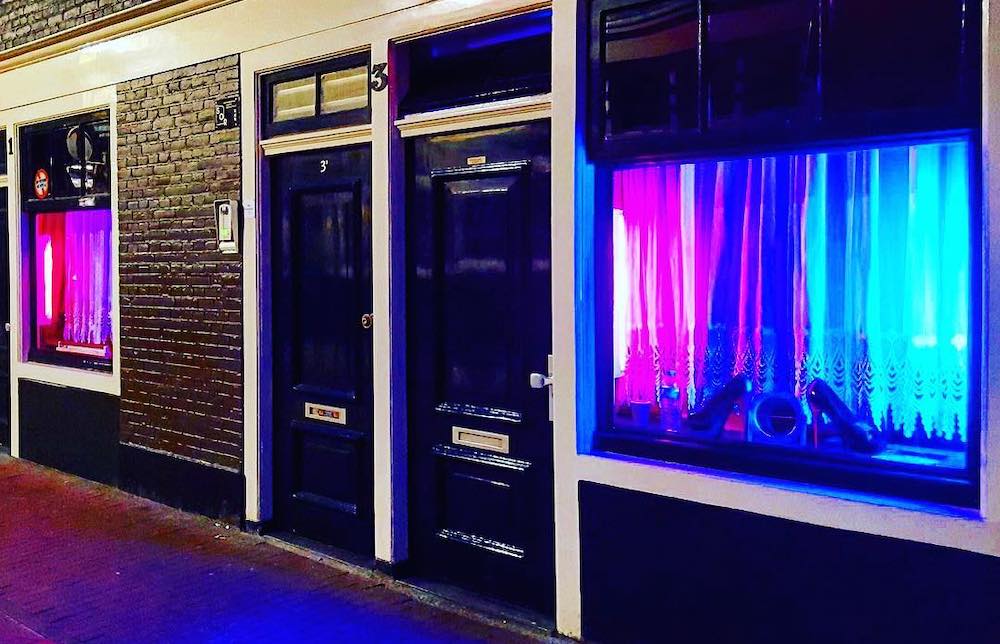
Blue Light District Amsterdam (2026 Guide)
The Blue Light District is not a separate, official district. It is a small part of Amsterdam’s Red Light District (De Wallen) — mainly Bloedstraat and Gordijnensteeg, just off Oudezijds Achterburgwal — where a few window brothels glow blue instead of red. The blue light has historically signalled that the sex worker behind that window is transgender.
The Blue Light District Amsterdam is a small, lesser-known part of barrio rojo Amsterdam where some window brothels use blue lighting instead of red. Many visitors hear the name online, but are not sure whether it is real, where it is, or what they are actually looking at.
This guide gives the short, practical answer first. You will learn where to find the blue-lit windows, what the term usually means, how to visit respectfully, and what tourists should know before walking through this part of Amsterdam.
Última actualización: julio de 2026
Quick answer
The Blue Light District Amsterdam is not a separate official district. It usually refers to a few blue-lit window brothels on side streets near Oudezijds Achterburgwal, especially around Bloedstraat y Gordijnensteeg.
Most useful next steps: Mapa · Normas & leyes · audio tour
| What it is | The part of De Wallen where some window brothels light up blue instead of red |
| Streets | Bloedstraat and Gordijnensteeg, just off Oudezijds Achterburgwal |
| The blue light | Traditionally signals transgender window workers (red is used across the rest of De Wallen) |
| Precios | Broadly the same as the rest of the Red Light District (see prices below) |
| Best time | After dark, once the windows are lit |
| Photos | Not allowed — never photograph the workers or the windows |
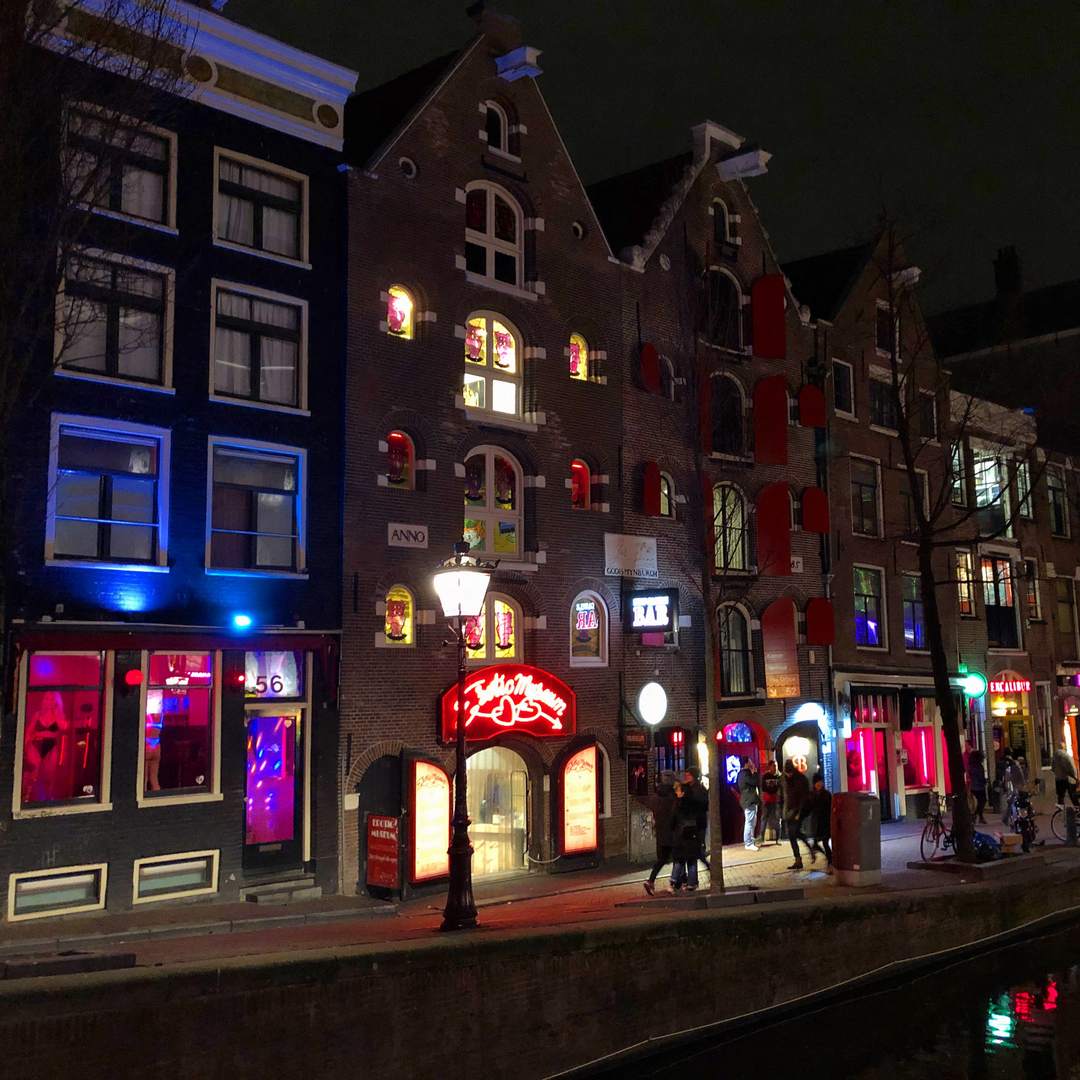
¿Qué es el Distrito de Luz Azul de Ámsterdam?
The term Blue Light District is a visitor nickname for a small part of Amsterdam’s wider Red Light District where some window brothels use blue lighting. It is mainly used to describe windows associated with transgender sex workers, although the lighting itself is not an official legal category.
That point matters. Many tourists imagine a fully separate district with its own borders, but that is not really how it works. In practice, the Blue Light District Amsterdam is part of the broader De Wallen area and blends into the same old-city streets, canals, and nightlife routes that visitors already know from the Red Light District.
Simple definition: the Blue Light District = a small cluster of blue-lit windows inside De Wallen, not a separate neighborhood on the city map.
Is the Blue Light District real?
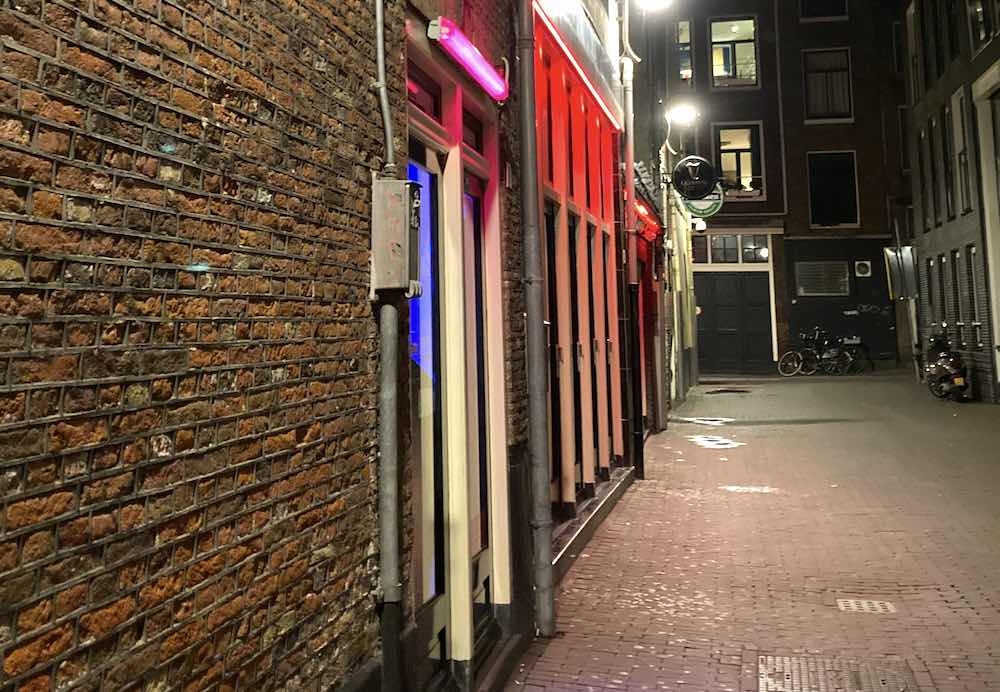
Yes — the blue windows are real, but “Blue Light District” is a visitor nickname rather than an official district. The blue lighting has long been linked to transgender window workers in a couple of barrio rojo Amsterdam streets. There is no separate legal zone or boundary — it is part of the same regulated window-prostitution area, under exactly the same rules as the red-lit windows.
Yes, it is real, but it is often misunderstood online. The name is widely used by tourists and websites, yet it does not refer to one clearly marked district in the same way that “De Wallen” does.
Another thing that causes confusion is that not every transgender window worker uses blue lighting, and not every blue-lit window is active at the same time. Some windows may be closed, some streets may show both red and blue lights, and the atmosphere can change depending on the hour.
That is why visitors should think of it as a known sub-area or local nickname, not as a fully separate red-light zone with its own official boundary signs.
If the Blue Light District has made you curious about Amsterdam’s broader adult scene, it can also be useful to compare the online side of dating in the Netherlands. Our guide to the mejores sitios de citas de sexo gay en Holanda helps readers explore which platforms are best for fast matches, more discreet contact, and gay dating options beyond the better-known streets and venues of Amsterdam.
Where is the Blue Light District in Amsterdam?
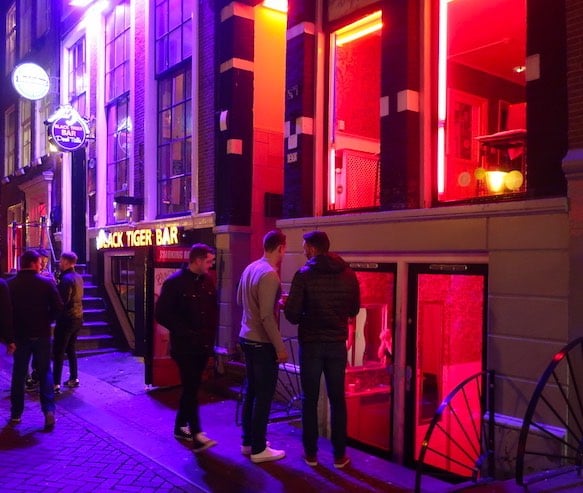
The Blue Light District Amsterdam is usually associated with Bloedstraat y Gordijnensteeg, two small streets just off Oudezijds Achterburgwal. This is one of the busiest and best-known streets in De Wallen.
Because the area is small, many people walk through it without realizing what they are seeing. The easiest way to find it is to navigate toward Oudezijds Achterburgwal first, then look at the nearby side streets rather than searching for a big separate zone.
- Main reference street: Oudezijds Achterburgwal
- Most-mentioned side streets: Bloedstraat and Gordijnensteeg
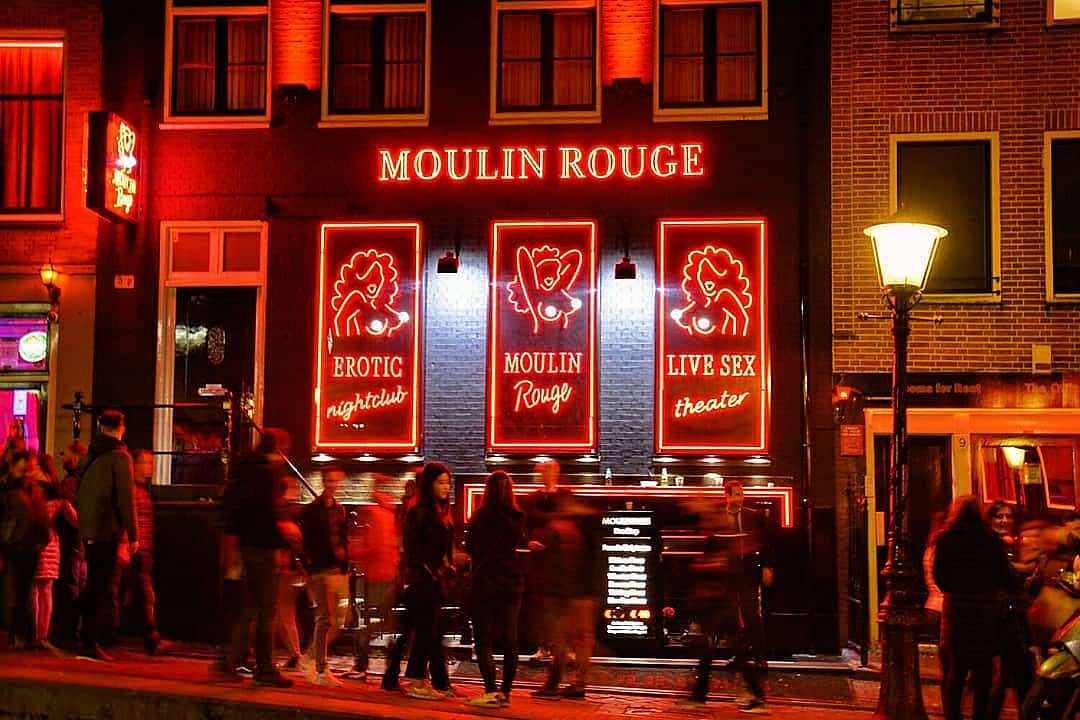
- Nearby landmark: Moulin Rouge
Utilice nuestra mapa interactivo if you want to understand the layout before you go.
Blue Light District map
El Blue Light District se concentra en la Bloedstraat, una pequeña calle en pleno corazón de De Wallen. Estas son las dos rutas a pie más sencillas para llegar — desde Dam Square (roja, ~7 min) y desde Amsterdam Centraal (azul, ~11 min).
🔴 Desde Dam Square
Abrir ruta a pie en Google Maps ↗🔵 Desde Amsterdam Centraal
Abrir ruta a pie en Google Maps ↗Las ventanas de luz azul están en Bloedstraat y Gordijnensteeg, justo al lado del canal Oudezijds Achterburgwal. Toda la zona es peatonal, así que siempre se llega a pie.
Want more than directions? Combina esta ruta con nuestro Tour del Barrio Rojo (audioguía con GPS). It helps you understand what you are seeing, why the area matters, and how to behave respectfully while walking through it.
Who works in the Blue Light District?
The Blue Light District is generally linked to transgender window sex workers. That is the main reason the term became known among tourists and online travel guides.
At the same time, visitors should avoid thinking in rigid categories. Streets in De Wallen can change over time, windows can switch lighting, and different workers may use the same area. That makes it more accurate to say that this area is associated with transgender window sex work rather than claiming every single window there follows one fixed pattern.
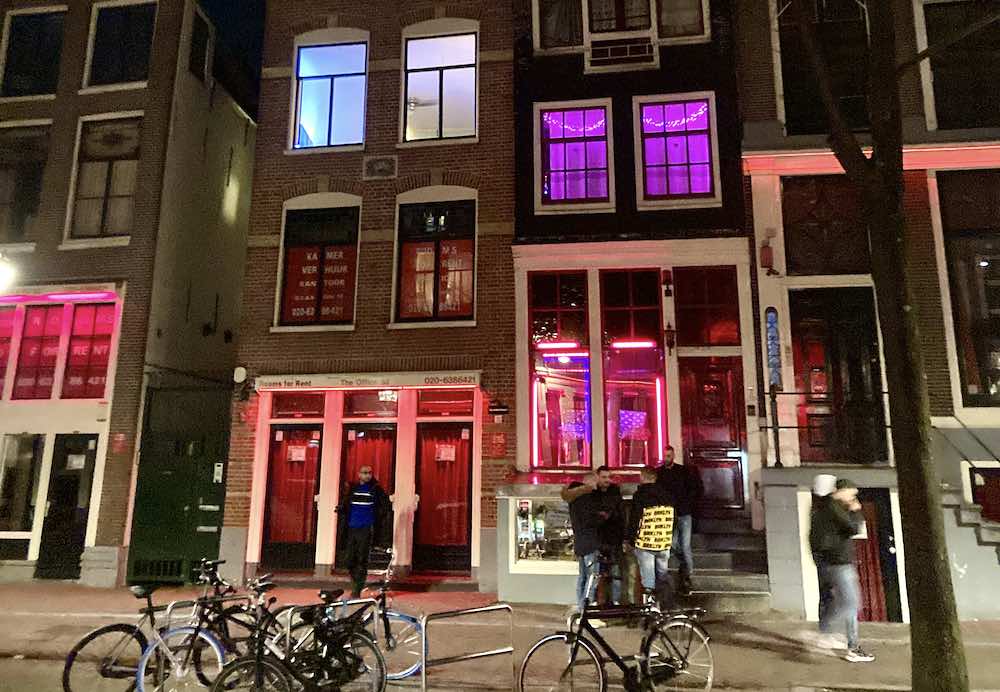
Window brothels on the Oudezijds Achterburgwal.
For visitors, the most important point is not the label, but the behavior: these are workers in a real workplace, inside a real neighborhood, and they should be treated with the same respect as anyone else in De Wallen.
How to visit respectfully

Respect matters even more in smaller side streets because they are narrow, easy to block, and often quieter than the main canal roads. Workers in blue-lit windows are also known to be especially protective of privacy, and for good reason.
The fastest way to create trouble is to treat the area like a spectacle. A calm, quiet walk is fine. Taking photos, pointing, shouting, staring, or turning the street into a joke is not.
- Do not take photos or videos of workers or occupied windows
- Keep doorways, alleys, and bridges clear
- Lower your voice late at night because residents live here
- If you are unsure, keep walking and observe quietly
For the full visitor rules, read our Normas & leyes y Etiqueta guides.
Blue Light District prices
Prices in the Blue Light District are broadly similar to other window areas in De Wallen. There is no official printed menu for the entire area, and rates can vary by worker, timing, and what is agreed.
A commonly reported starting point is around €100 for a short visit, but visitors should treat that as a market indication, not a guaranteed fixed rate. Like elsewhere in the Red Light District, prices can change and workers can always refuse customers.
If you want the broader pricing context, read our main guide on Precios del Barrio Rojo de Ámsterdam.
Best time to visit the Blue Light District
The area can be visited any day, but the experience changes a lot between daytime and evening. During the day, the side streets feel quieter and more residential. At night, the atmosphere becomes more recognizable and the blue lighting is easier to spot.
For most visitors, the best moment is early evening to late evening. That is when the area feels active, but before the very late-night crowds become too heavy.
Best timing
- Morning / daytime: quieter, easier to orient yourself, fewer active windows
- Evening: more atmosphere, more visible blue lights, livelier streets
- Best for first-timers: around 8 PM to 10 PM
Tip: use the Mapa del Barrio Rojo before walking there in low light.
Is the Blue Light District legal?
Yes. Blue-lit windows are legal when they are part of Amsterdam’s regulated window sex work system. The same broad city framework applies here as in other licensed parts of De Wallen.
This page does not need to repeat the full laws cluster, but the visitor basics are simple: window sex work in Amsterdam operates under municipal rules, licensed venues, and local enforcement. That does not mean tourists can do whatever they want. Privacy, nuisance rules, and respectful behavior still apply.
- licensed venues are legal
- workers set boundaries and can refuse anyone
- privacy rules matter just as much here as elsewhere in De Wallen
If you want the full legal explanation, go to our Amsterdam Red Light District laws página.
Blue Light District in daylight
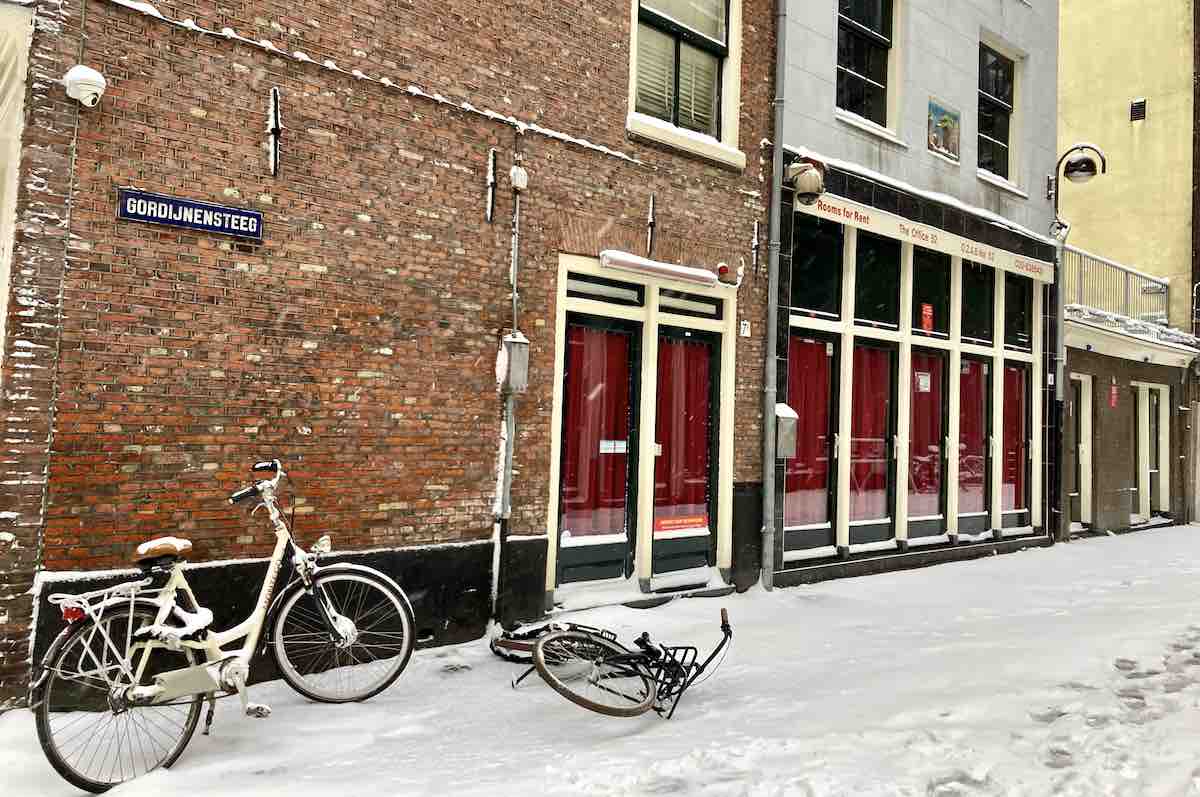
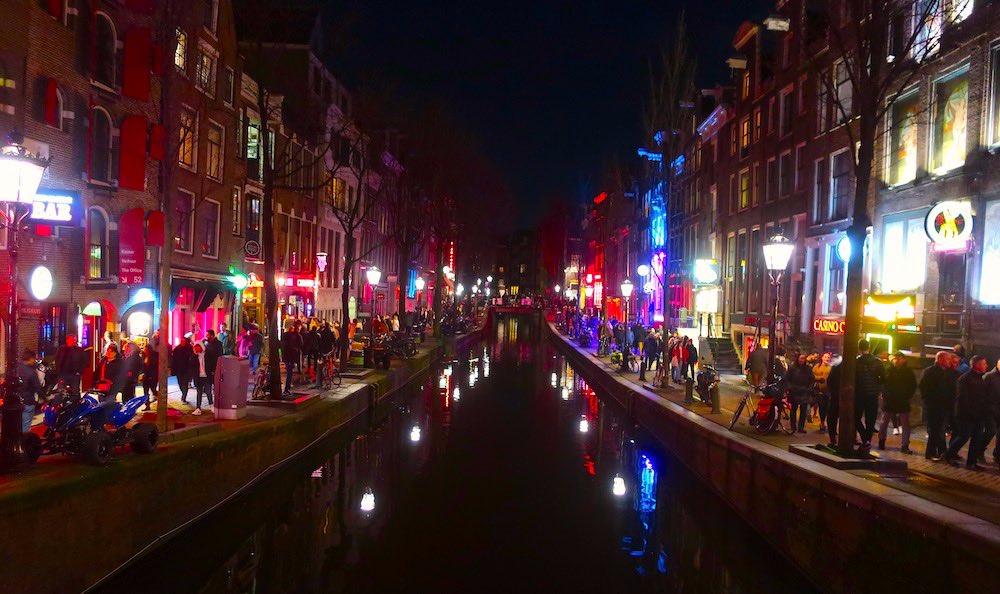
In daylight, the Blue Light District looks much more like a normal part of Amsterdam’s old centre. The small streets, brick buildings, and canal-side layout stand out more than the nightlife identity.
That contrast is one reason many visitors find the area interesting. By day it feels like a quiet historic side street. By night it becomes part of the wider Red Light District atmosphere. Seeing both versions helps you understand De Wallen better.
Tours in the Blue Light District
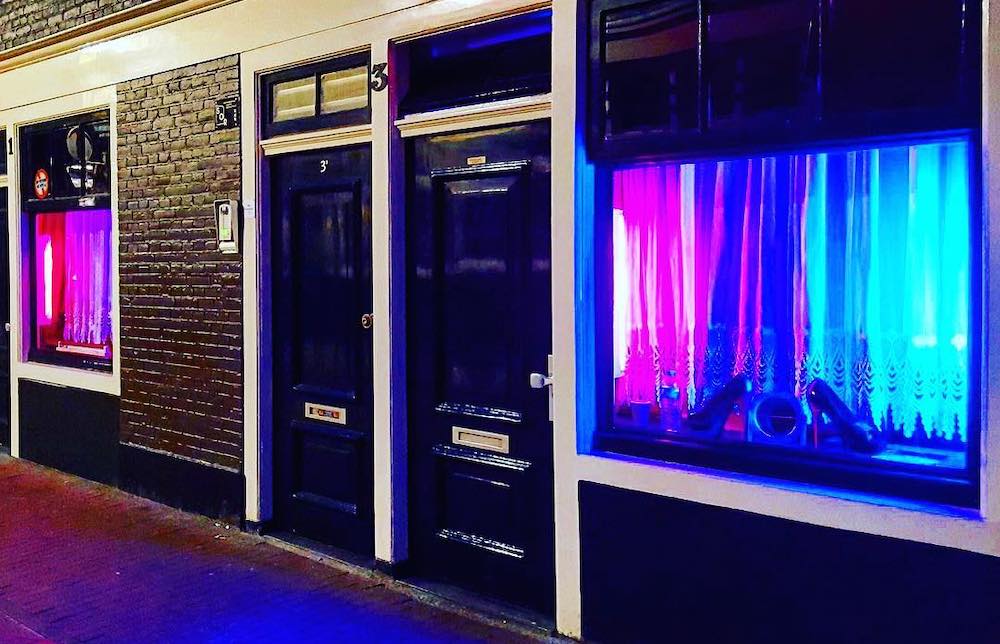
If you want context, stories, and practical guidance, the best legal way to explore this area is with a self-guided audio format. Large guided groups are not allowed to pass the prostitution windows in the way older tours once did.
Nuestro Audioguía del Barrio Rojo helps you understand how the area fits into De Wallen as a whole. It gives you route guidance, local context, and a more respectful way to walk through a sensitive neighborhood.
GET TOUR >How this area fits into the wider Red Light District
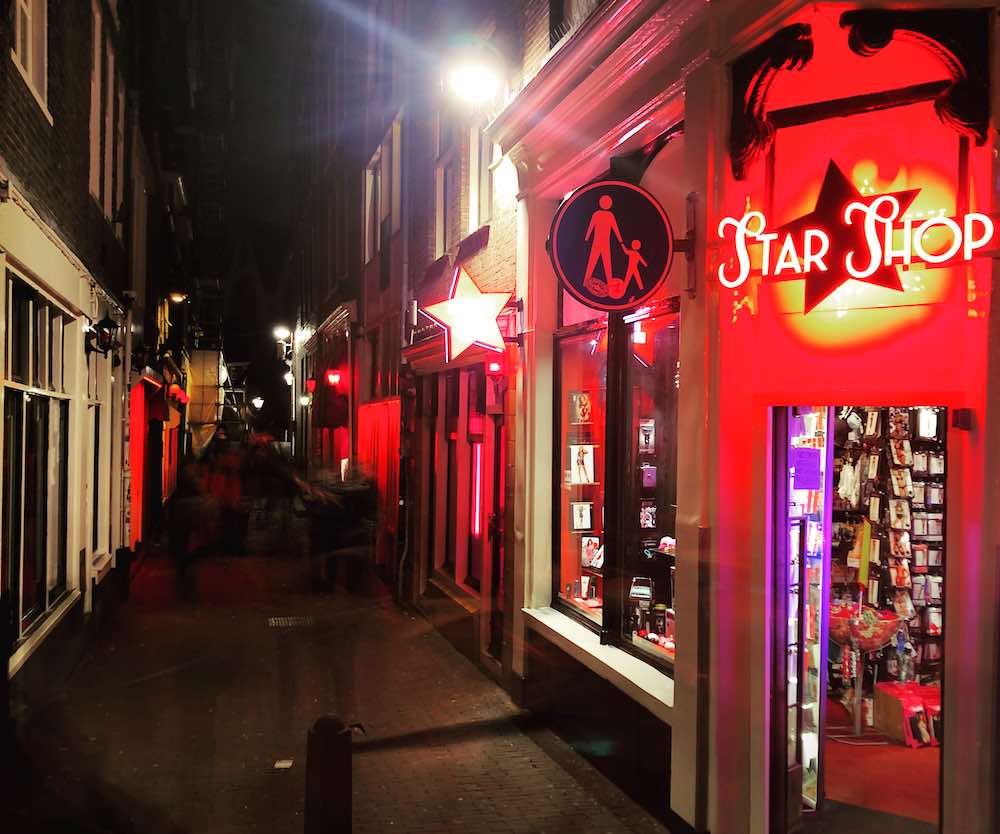
The Blue Light District makes the most sense when you see it as one part of a larger system: De Wallen is not one single street, but a network of canals, alleys, nightlife venues, homes, and window areas with slightly different identities.
That is why this page should stay focused on the blue-lit windows themselves, while broader questions belong on the main supporting pages. Use these if you want the bigger picture:
- ¿Qué es el Barrio Rojo de Ámsterdam?
- ¿Qué es De Wallen?
- Etiqueta del Barrio Rojo
- Luxury hotels in Amsterdam
FAQs about the Blue Light District Amsterdam
What is the Blue Light District Amsterdam?
It is a visitor nickname for a small part of De Wallen where some window brothels use blue lighting, often associated with transgender sex workers.
Is the Blue Light District a separate official district?
No. It is not a separate official district on the city map. It is better understood as a small sub-area or nickname inside the wider Red Light District.
Where is the Blue Light District?
Visitors usually mean the blue-lit windows around Bloedstraat and Gordijnensteeg, near Oudezijds Achterburgwal in De Wallen.
¿Es seguro visitarlo?
Yes, generally it is safe for most visitors, especially if you stay aware, keep your belongings secure, and behave respectfully.
Can you take photos there?
No. Do not photograph or film workers or occupied windows. Privacy is one of the most important rules in this area.
What is the best time to visit?
For most visitors, early evening is best because the area is active and the lighting is visible, but it is not yet at its busiest late-night point.
Are the prices different from the rest of De Wallen?
Not dramatically. Prices are generally in line with other window areas, though exact rates can vary by worker, time, and agreement.
DESCUBRE TAMBIÉN:
Precios del Barrio Rojo de Ámsterdam
Looking for a date? Read our guide: the 9 best sex-dating sites in the Netherlands.
10 Responses to Your Essential Guide To The Blue Light District in Amsterdam in 2026
Deja una respuesta



-
- Inicio
- Tours
- Hoteles
- Información
- Historia
- Preguntas frecuentes
- Contacto
- Política de Privacidad
Mapa del sitio
-
Contacto

© 2010–2026 Distrito Rojo de Ámsterdam – Guía de Viaje del Barrio Rojo de Ámsterdam. . Diseño web por BIRO.
 ES
ES  EN
EN  DE
DE  FR
FR  NL
NL  ZH
ZH
I want to be a gay male escort in Amsterdam
[…] lights instead of red, which is for workers who identify as transgenders. This area in Amsterdam is referred to as the Blue Light District due to the use of blue lighting in the sex workers’ rooms, […]
[…] blue lights in Amsterdam’s Red Light District are more than just a decorative feature. They serve as a signal of safety, a deterrent to human trafficking, and a symbol of the […]
Amazing exercise in the blue light district coming back next year
Hi, I’m a woman and would like to have Oral and possibly full sex with a blue light worker. Are they likely to accept/offer this service?
Yes, its possible
Hi, my wife and I would like to experience oral & full sex with a transgender woman in the Blue Light district. Is this acceptable and possible ?
Do they allow you to give them oral?
Just had my first experience with a shemale sex worker . All I can say is wow. I’ve only ever been with women before but this experience was amazing . She fucked me for a while and then let me suck her while I was climaxing . I will be exploring this again in the near future
Amsterdam is a great place to experience this