

¿Qué es el Barrio Rojo de Ámsterdam?
Posted on: abril 1, 2026
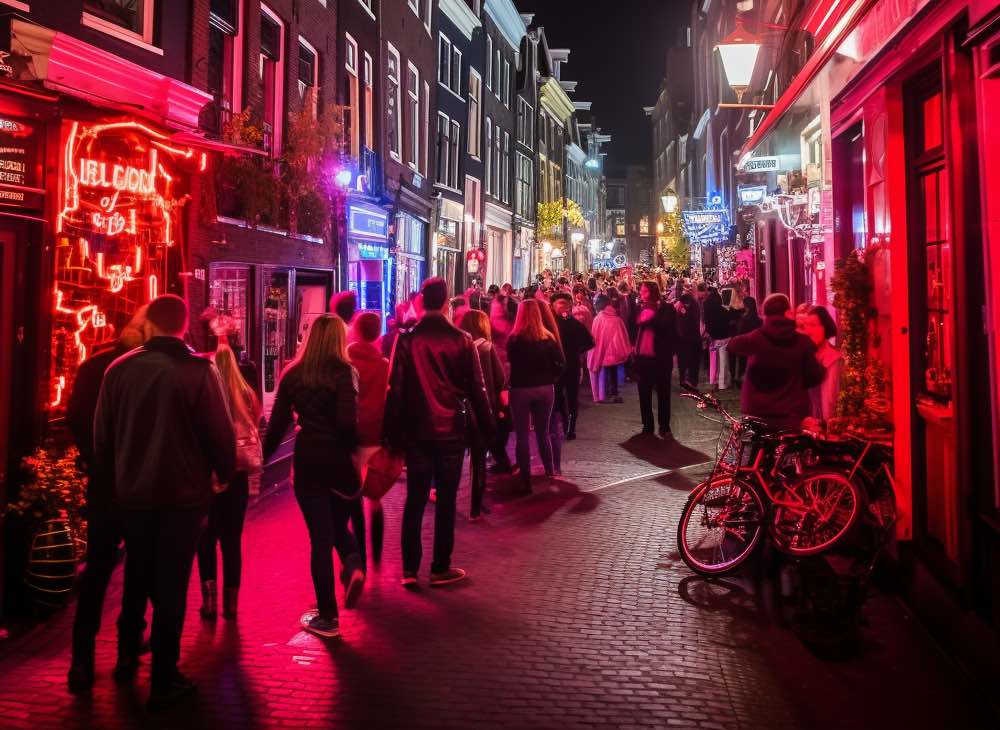
What Is Amsterdam Red Light District?
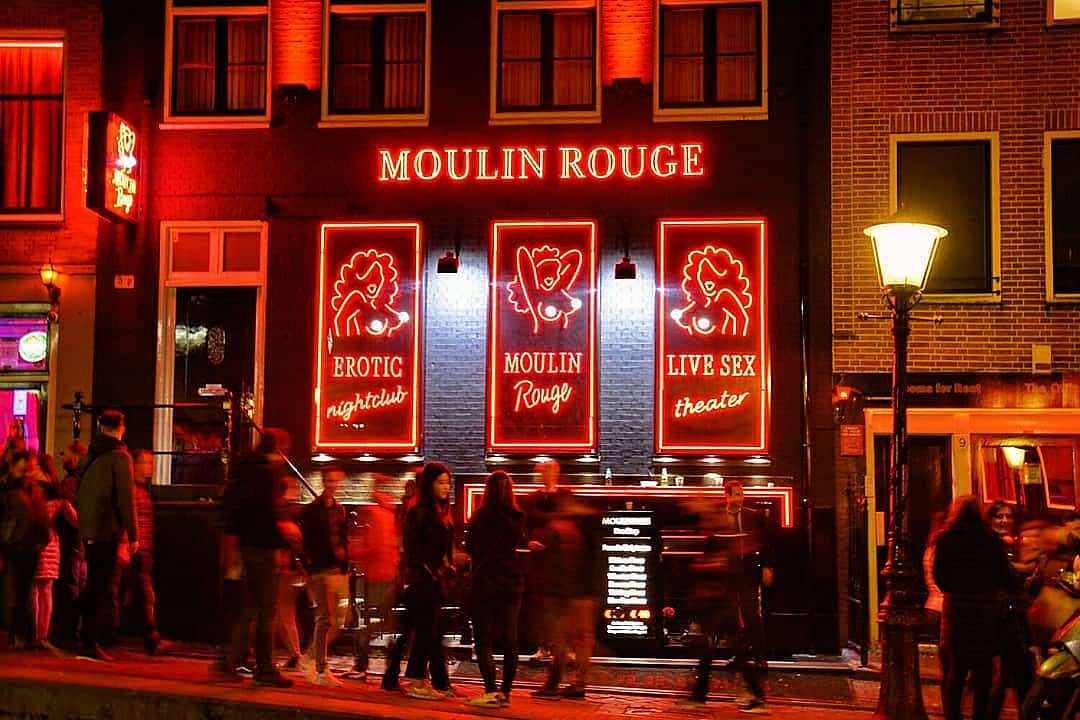
Amsterdam’s Red Light District is a historic neighborhood in the old city centre where regulated sex work exists alongside canals, old buildings, bars, museums, and everyday residential life. Locals usually call the best-known part of it barrio rojo Amsterdam.
This page gives you the short answer. If you want routes, planning tips, and a full visitor overview, use our complete Amsterdam Red Light District guide.
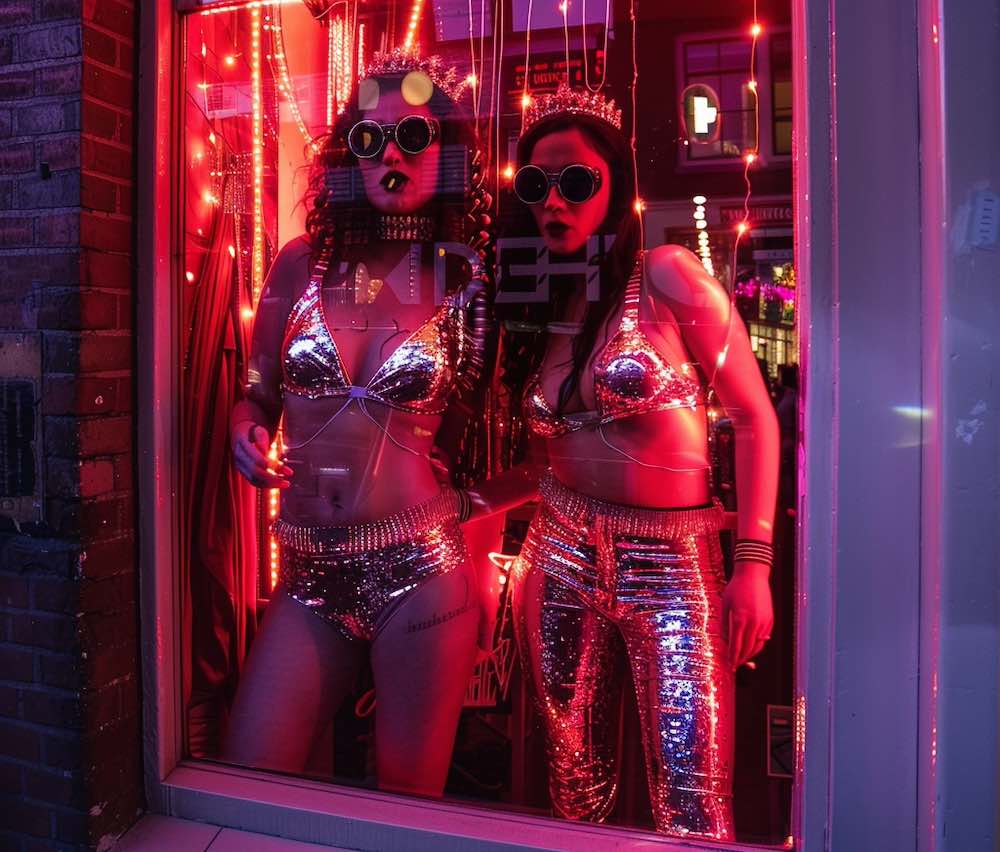
Short answer
Amsterdam Red Light District is one of the city’s best-known neighborhoods. It is famous for its red-lit windows and adult nightlife, but it is also a real part of Amsterdam with canals, churches, museums, bars, and residents.
That is why many visitors misunderstand it. They expect only nightlife, while the area is actually a mix of history, tourism, regulation, and everyday city life.
- Nombre local: barrio rojo Amsterdam
- Location: Amsterdam old centre
- Known for: red-lit windows, nightlife, canals, and history
- Important to remember: it is a neighborhood, not a theme park
What is the local name?
The local name is barrio rojo Amsterdam. “Red Light District” is the international tourist label that most visitors use online. In practice, both names usually refer to the same best-known area in Amsterdam’s historic centre.
This matters because many people search for “Red Light District,” while locals and more in-depth guides often say “De Wallen.” If you see both names, they are usually talking about the same place.
If you want the full explanation of the name, meaning, and local context, read ¿Qué es De Wallen?.
Where is Amsterdam Red Light District?
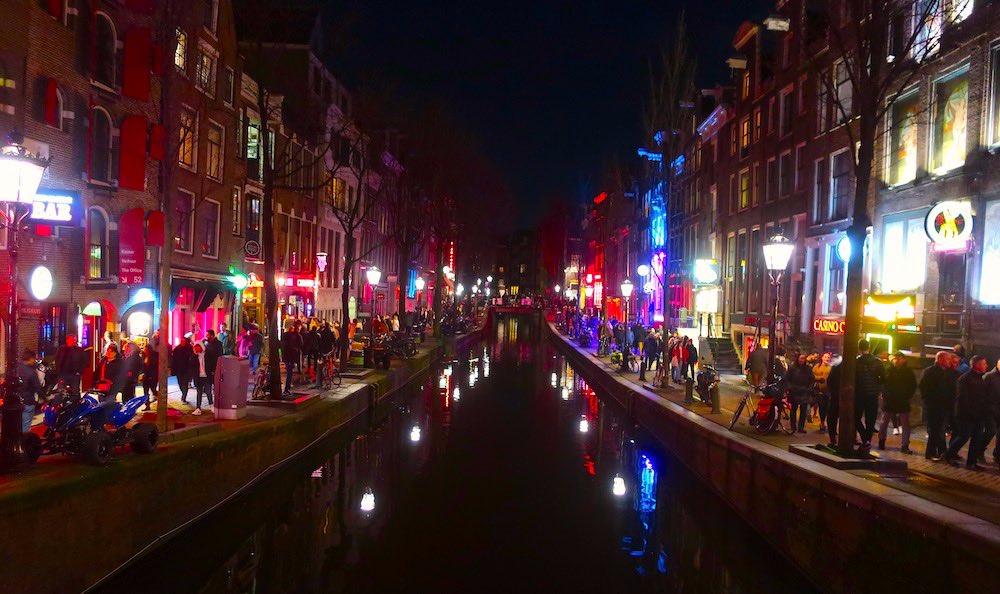
The Red Light District is in central Amsterdam, a short walk from Centraal Station, around the Oudezijds Achterburgwal and Oudezijds Voorburgwal canals, near the Oude Kerk, Warmoesstraat, Dam Square, and Nieuwmarkt.
For most visitors, the easiest way to understand the area is to think of it as part of Amsterdam’s old canal centre. It is not far away or hidden. It sits right inside one of the city’s most historic zones.
- From Central Station: about 5 to 10 minutes on foot
- Best-known landmark: Oude Kerk
- Main area: around the Oudezijds canals
If you want the walking layout, use our map and directions page.

Why is it famous?
It is famous for its red-lit windows and adult nightlife, but also for its age, architecture, canals, and symbolic place in Amsterdam’s image of tolerance and regulated freedom.
That mix is what makes the area unusual. In many other cities, these worlds are separated. In Amsterdam, they exist close together: church history, medieval streets, tourism, nightlife, and local residents all share the same small part of the city.
This is also why the area gets so much attention in travel media. It is not only about what happens there, but also about how unusual the setting is.
Is it only about sex work?
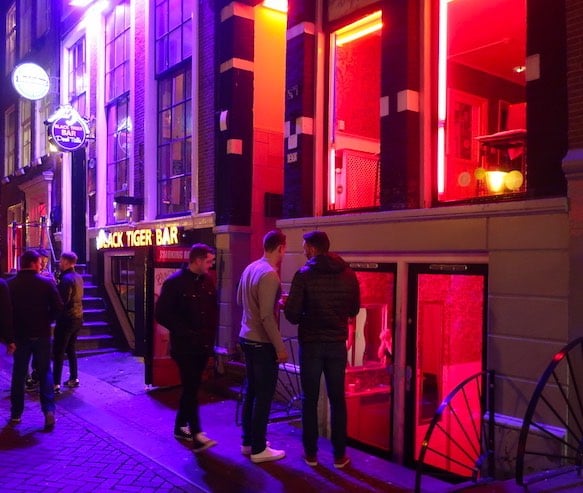
No. That is one of the biggest misconceptions. The area also contains museums, bars, restaurants, churches, old canal houses, and normal residential life.
Visitors who expect only shock value usually miss the real character of the neighborhood. During the day especially, De Wallen feels much more like a historic canal district than many first-time tourists expect.
- historic canals and bridges
- the Oude Kerk
- museums and nightlife venues
- bars, cafés, and restaurants
- small streets where residents also live
Is prostitution legal there?
Sex work in the Netherlands is legal under rules and regulation. In De Wallen, licensed window prostitution exists in designated parts of the neighborhood. That does not mean “anything goes.” Visitors still need to follow strict rules and local norms.
The key point for tourists is simple: legal does not mean careless. The area works under rules about licensing, privacy, and respectful behavior. That is one reason photography and nuisance are taken seriously there.
If you want the full legal explanation, go to Normas & leyes.

What should tourists know before visiting?
Most first-time visitors do fine if they remember one thing: this is a real neighborhood. People live there, work there, and expect basic respect from visitors.
The easiest way to avoid problems is to behave calmly and not turn the area into a performance. Visitors who stay respectful usually have a much smoother experience.
- Do not photograph or film sex workers or occupied windows.
- No trates la zona como una broma o un espectáculo.
- Keep your voice down in narrow streets.
- Vigile sus pertenencias entre la multitud.
- Use the map and rules pages if it is your first visit.
Best next step for visitors
If you want to understand the area properly, use the right page for the right question. That will help you much more than trying to get every answer from one short explainer.
- Guía completa del Barrio Rojo
- ¿Qué es De Wallen?
- Normas & leyes
- Mapa & cómo llegar
- Preguntas frecuentes
Preguntas frecuentes
¿Qué es el Barrio Rojo de Ámsterdam?
It is a historic neighborhood in central Amsterdam where regulated sex work exists alongside canals, old buildings, museums, nightlife, and everyday residential life.
Is De Wallen the same thing?
Yes. De Wallen is the local neighborhood name, while Red Light District is the broader international label.
Can tourists visit?
Yes. The area is open to visitors, but respectful behavior is expected.
Can you take photos there?
No photos of sex workers or occupied windows. That is one of the most important rules in the area.
Is it safe?
Generally yes for most visitors, especially if you stay aware, avoid nuisance behavior, and keep your belongings secure.
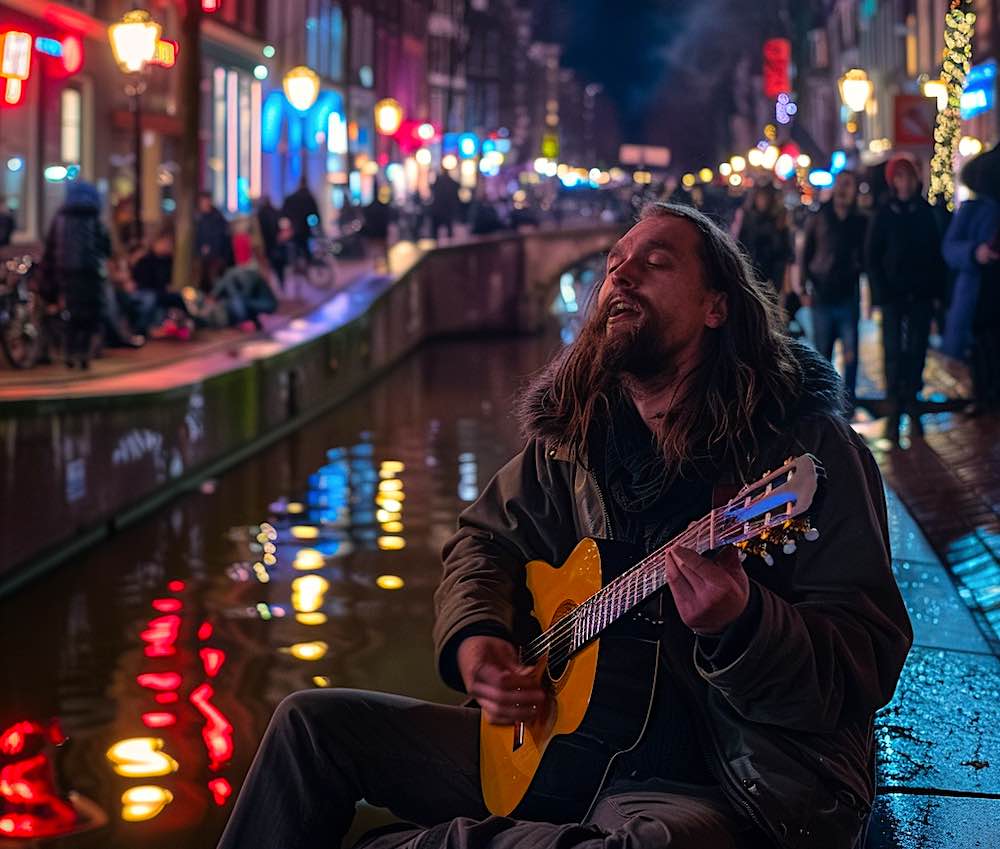
Street artist on the Oudezijds Achterburgwal.
VER TAMBIÉN:
Guía del Barrio Rojo de Ámsterdam

Respuestas de 1 a What is the Red Light District in Amsterdam?
Deja una respuesta




-
- Inicio
- Tours
- Hoteles
- Información
- Historia
- Preguntas frecuentes
- Contacto
- Política de Privacidad
Mapa del sitio
-
Contacto

© 2010–2026 Distrito Rojo de Ámsterdam – Guía de Viaje del Barrio Rojo de Ámsterdam. . Diseño web por BIRO.
 ES
ES  EN
EN  DE
DE  FR
FR  NL
NL  ZH
ZH
It feels so good to receive emails from Amsterdam Red Light District.I always feel that it is amost beautiful and fascinating place .I love seeing all the images and archive images on the websites and videos please keep in touch as I say it feels so good to feel part of it now by your emails