



Prostitution
Prostitution in Holland: laws, rules and how it works
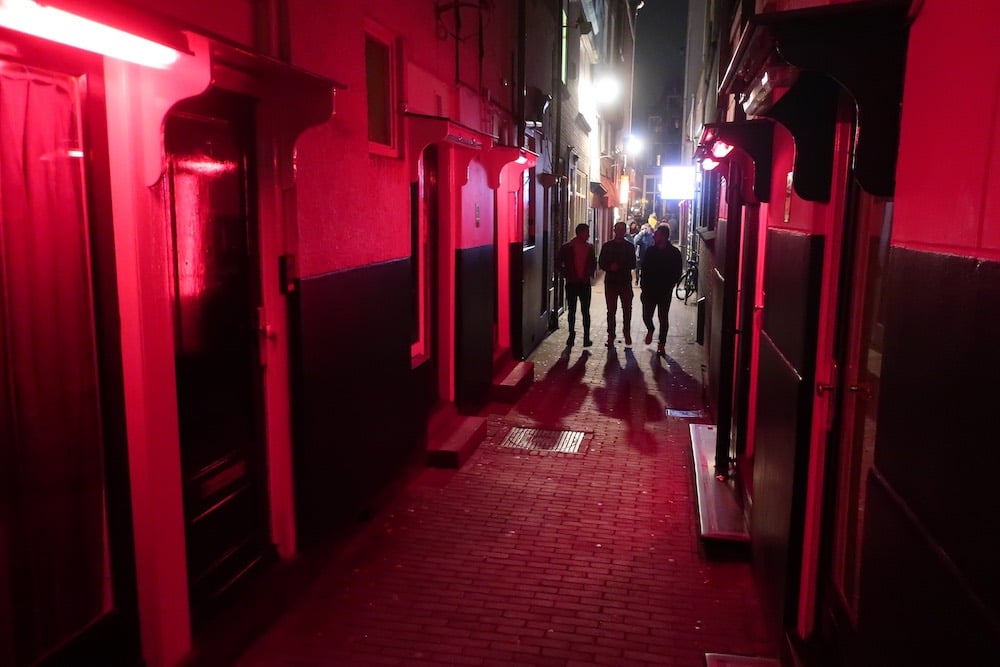
Definition of prostitution
Prostitution means sexual services offered in exchange for payment. In simple words, it is paid sex between adults. In the Netherlands, the more neutral term sex work is also widely used, especially in legal, social, and health discussions.
Last updated: 3 April 2026
Definition: prostitution is the exchange of sexual services for money or another agreed payment. Definition: sex worker is a person who offers sexual services as work.
This page explains prostitution in Holland and Netherlands prostitution in a clear and factual way. It focuses on what is legal, what is illegal, what forms exist, and how the Dutch system works in practice.
During our research for Amsterdam city-centre guides, we found that many visitors confuse legal sex work with trafficking, coercion, or adult entertainment venues. These are not the same thing, and understanding the difference is the best place to start.
- Legal sex work means voluntary paid sex between consenting adults
- Illegal activity includes coercion, trafficking, underage prostitution, and unsafe working conditions
Is prostitution legal in Netherlands?
Yes, prostitution is legal in the Netherlands if it involves consenting adults and the work is voluntary. Forced prostitution, underage prostitution, and exploitation are criminal offences.
This is the most important thing to understand about prostitution in Holland. Legal does not mean unregulated. It means the work can be lawful, but only under rules set by Dutch law and local municipalities.
Municipalities can require permits for brothels, escort agencies, erotic massage businesses, and other sex businesses. They can also set local rules on age, location, operators, and safety requirements.
One thing that confuses many readers is that Dutch national accounts sometimes include prostitution in broader economic estimates alongside illegal activities. That does not mean prostitution itself is always illegal. It is a statistical method used by CBS for national economic reporting.
| Question | Short answer |
|---|---|
| Is prostitution legal in the Netherlands? | Yes, if it is voluntary and between consenting adults |
| Is forced prostitution legal? | No, it is a criminal offence |
| Is underage prostitution legal? | No |
| Do municipalities set extra rules? | Yes, often through permits and local policy |
If you want a visitor-friendly way to understand how the sex industry is explained inside Amsterdam itself, the Red Light Secrets Museum of Prostitution is a helpful place to start. It gives historical and cultural context before you walk through De Wallen.
How prostitution in Holland works
The Dutch system is built around the idea that voluntary adult sex work can be lawful, but the sector must be monitored to reduce abuse and exploitation. National law, local permits, police work, health services, and support organizations all play a role.
In practice, prostitution in Holland works through a combination of adult consent, municipal control, and health and safety support. That is why two cities can look similar to tourists while still having slightly different local rules.
Step by step, the system works roughly like this:
- A sex worker must be an adult and work voluntarily
- A sex business such as a brothel or escort company often needs a municipal permit
- The municipality checks age, management, safety, and anti-exploitation measures
- Police and local authorities monitor signs of coercion, trafficking, or illegal work
- Health and support services remain available, especially in larger cities like Amsterdam
Dutch business guidance explains that self-employed sex work can be treated as legal professional activity. It also notes that while the national minimum age is 18, many municipalities use 21 as a practical minimum age in local policy and licensing.
In our experience writing about the Red Light District, this is one of the biggest misunderstandings. Many visitors think one simple national rule explains everything, but the reality is layered. National law matters, municipal permits matter, and local enforcement matters too.
Different forms of prostitution in Holland
Netherlands prostitution does not happen in just one way. The best-known image is window prostitution in Amsterdam, but the wider sector includes escorts, brothels, sex clubs, home-based work, and some forms of erotic massage work.
Each type has its own working conditions, level of public visibility, and local rules. That is why it is not helpful to talk about all prostitution as if it were one single model.
Here are the main forms:
- Window prostitution: a worker rents or uses a visible room, often behind a street-facing window
- Escort work: the client and worker meet outside a fixed visible location, often through an agency or direct arrangement
- Brothel or sex club: a licensed venue where workers and clients meet indoors
- Home-based sex work: the worker receives clients at home where local rules allow it
- Erotic massage or related venues: these can overlap with sex work, depending on services and municipal rules
Definition: window prostitution means sex work offered from a visible, rented workspace behind a street-facing window. Definition: an escort is a sex worker who meets the client outside a window or fixed public-facing location. Definition: a brothel is a venue where sex work takes place indoors under an operator or permit structure.
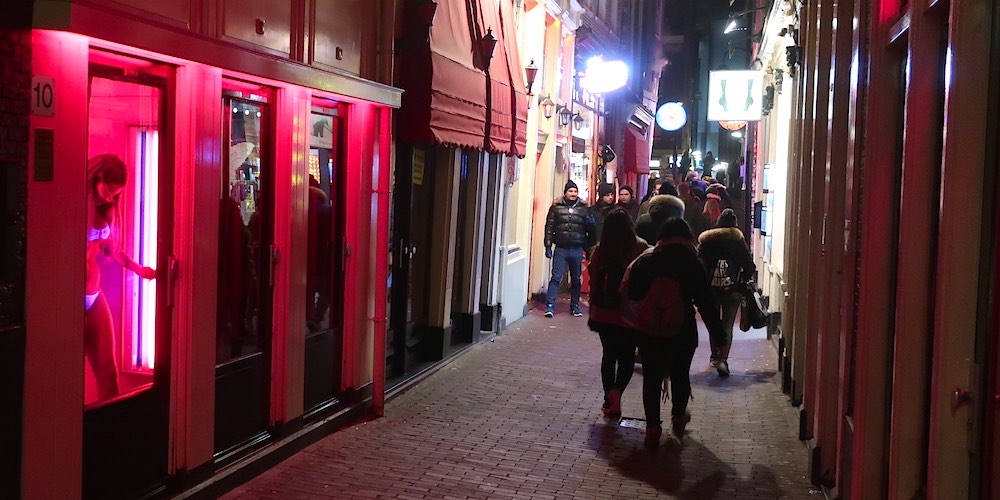
Amsterdam, Red Light District, Oudekennissteeg.
The form matters because the work environment changes. Window prostitution is highly visible. Escort work is less visible and often more private. Clubs and brothels offer indoor facilities but also create different kinds of competition and operator control.
If you want a more practical, place-based overview of venues in the city, our guide to Amsterdam brothels helps explain how the different indoor forms compare in Amsterdam itself.
Window prostitution in Holland
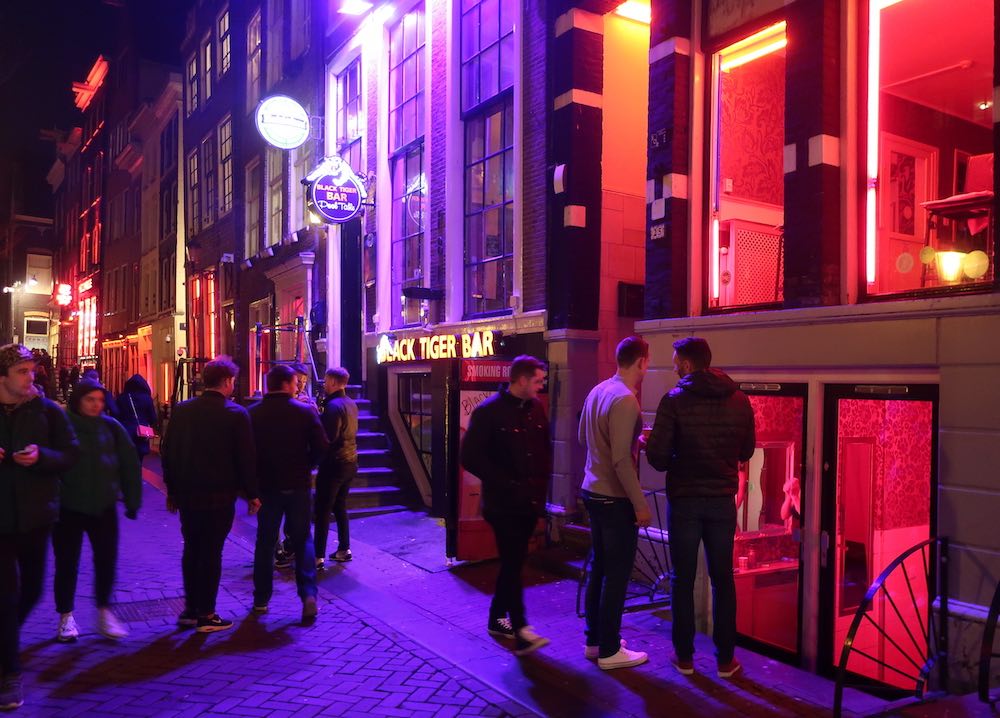
Amsterdam, Red Light District, Oudezijds Achterburgwal.
Window prostitution is the form most people think of first when they imagine prostitution in Holland. It is especially linked to Amsterdam’s Red Light District, where workers operate from small, street-facing rooms.
In this system, a client approaches the door or window, speaks briefly with the worker, and asks about price, time, and boundaries. If both agree, the payment is usually made inside and up front.
One important fact is often missed: sex workers are not required to accept every client. In legal window prostitution, the worker can refuse a client, set boundaries, and decide how they want to work.
During our visits to the district, we found that many tourists assume every person behind a window is part of one central system. That is not accurate. Many workers are self-employed and make their own choices within the rules of the area.
| Window prostitution | What it usually means |
|---|---|
| Where it happens | Street-facing rented rooms in designated areas |
| How contact starts | Brief conversation at the door or window |
| Who sets boundaries | The worker |
| Main advantage | Visibility and nearby oversight |
| Main drawback | Competition and public exposure |
If you want cultural context before visiting the district, the Museum of Prostitution is one of the easiest and most respectful starting points.
Brothels, sex clubs, escorts, and indoor venues
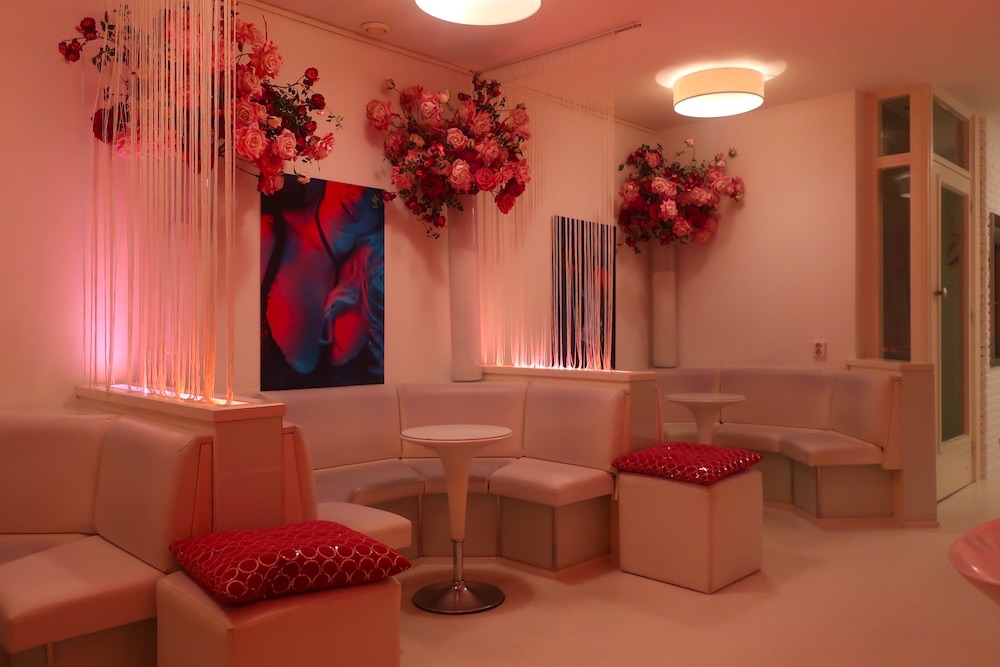
Amsterdam, Brothel LV.
Brothels, sex clubs, and escort businesses are important parts of prostitution in Holland. These forms are less visible than window prostitution, but they are still part of the legal sector if they follow municipal permit rules.
A brothel usually means a fixed indoor location where sex work takes place. A sex club often includes a social area where clients meet workers before going to a private room. Escort work usually starts online or by phone, and the meeting happens elsewhere.
Each model changes the working environment. Escort work can offer more anonymity but less public visibility. Clubs can offer more indoor control but also more competition between workers. Window rooms offer visibility but much less privacy.
In our experience, people often mix prostitution with adult entertainment venues. That is why it helps to make a clear distinction. If your interest is the nightlife side of the district rather than prostitution itself, Moulin Rouge Amsterdam is a different category. It is an adult entertainment venue, not the same thing as prostitution.
Health, safety, and STI testing
Sex workers in the Netherlands are not legally required to do regular STI checkups. However, in practice, public health services strongly encourage testing, prevention, and access to healthcare.
GGD Amsterdam offers STI and HIV testing and health support for sex workers. There are also organizations in Amsterdam that provide legal information, social support, and advice on safer working conditions.
This matters because many visitors assume legal prostitution automatically means mandatory testing. It does not. The Dutch model puts more emphasis on voluntary healthcare access, safer sex education, and prevention.
Step by step, the health logic is simple:
- Provide easy access to testing and health advice
- Encourage regular voluntary checks for people at higher risk
- Support condom use and safer sex information
- Make it easier for workers to seek help without fear
Condoms remain one of the most important tools for reducing STI risk. In practice, health services stress prevention and voluntary care much more than forced medical checks.
The economics of prostitution in the Netherlands
The economics of prostitution are more complex than many readers expect. CBS explains that Dutch national accounts estimate prostitution together with other activities in a broader framework that also includes illegal activities, even though prostitution itself can be legal in Dutch law.
According to CBS, illegal activities as a whole added 4.5 billion euros to Dutch GDP in 2021, equal to 0.5% of the economy. CBS also notes that earnings from prostitution remain part of the Dutch economy, unlike much of the cocaine trade, where large profits often flow abroad.
This does not mean prostitution makes up the whole figure. It means the Dutch statistical system measures it as part of a wider economic picture because European accounting rules require broad coverage.
| Economic point | What it means |
|---|---|
| Illegal activities added 4.5 billion euros in 2021 | About 0.5% of Dutch GDP |
| Prostitution is measured in national accounts | Even though it can be legal in statutory law |
| Prostitution earnings stay in the Dutch economy | Unlike much cocaine income, which often flows abroad |
For readers, the takeaway is simple: prostitution in Holland is not only a legal or moral issue. It is also treated as an economic sector that the state, municipalities, police, and healthcare system all interact with in different ways.
Street prostitution and common misunderstandings
Street prostitution plays a much smaller role in the Netherlands than many outsiders think. Amsterdam no longer has a legal street prostitution zone, and only a small number of municipalities have or had designated areas known as tippelzones.
That means the typical Amsterdam model is not street-based. It is much more strongly linked to window prostitution, indoor venues, and escort work.
Another common misunderstanding is that legal prostitution means every workplace is automatically safe and legal. That is not true. The Dutch government and police repeatedly stress that coercion, unsafe conditions, underage prostitution, and exploitation still occur and remain criminal matters.
In our experience, visitors understand the Dutch system much better once they stop treating Amsterdam prostitution as one simple thing. It is better to think in categories: legal voluntary work, licensed businesses, public health support, and separate criminal enforcement against abuse.
Interview and local perspective
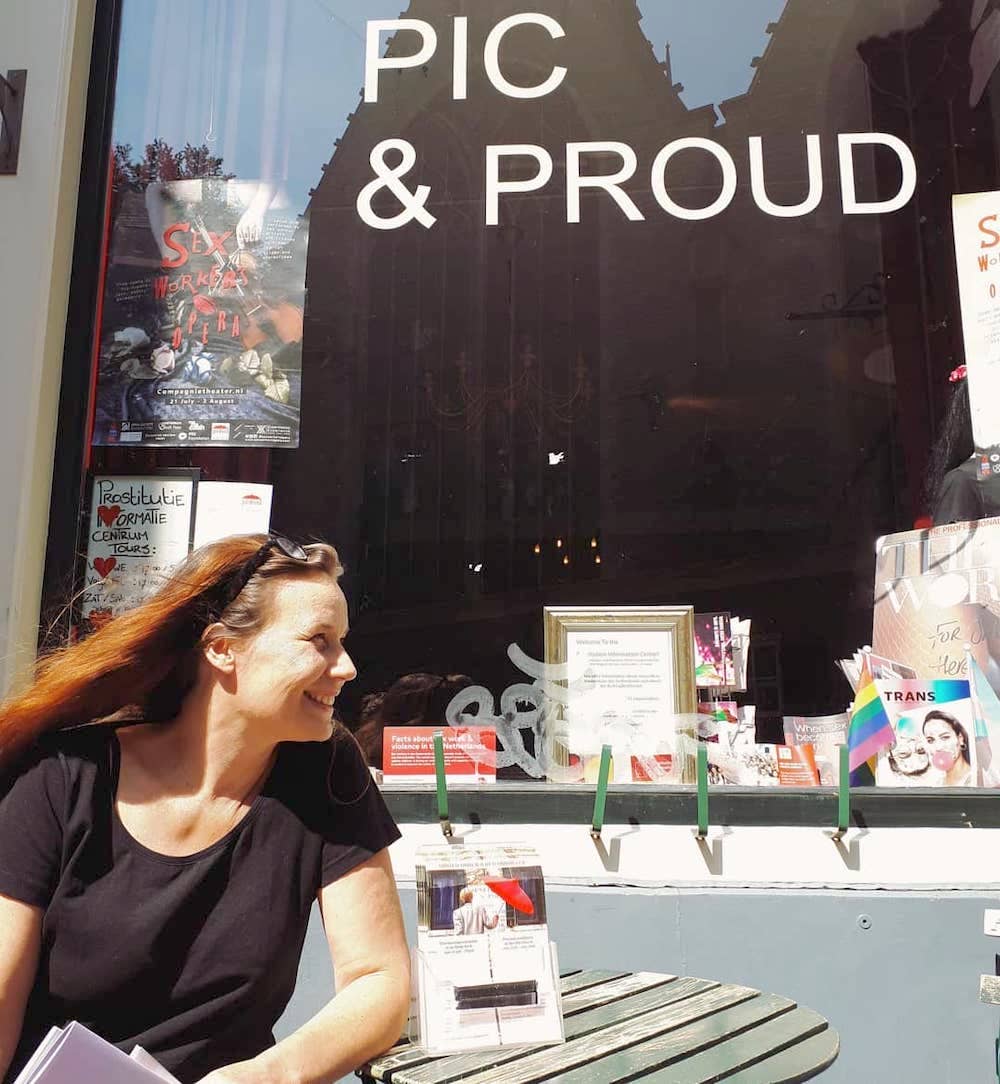
One reason we take this subject seriously is that we do not rely only on rumor or stereotypes. We have also spoken with people who know the industry from the inside, including former sex worker and activist Mariska Majoor.
She founded the Prostitution Information Center and has been active for decades in sex worker rights and public education. That perspective matters because prostitution in Holland is often described by people who only know it from a quick tourist walk.
People who have actually worked in the sector usually explain things in a more realistic way. They talk about boundaries, stigma, working conditions, rights, and practical support, not just spectacle.
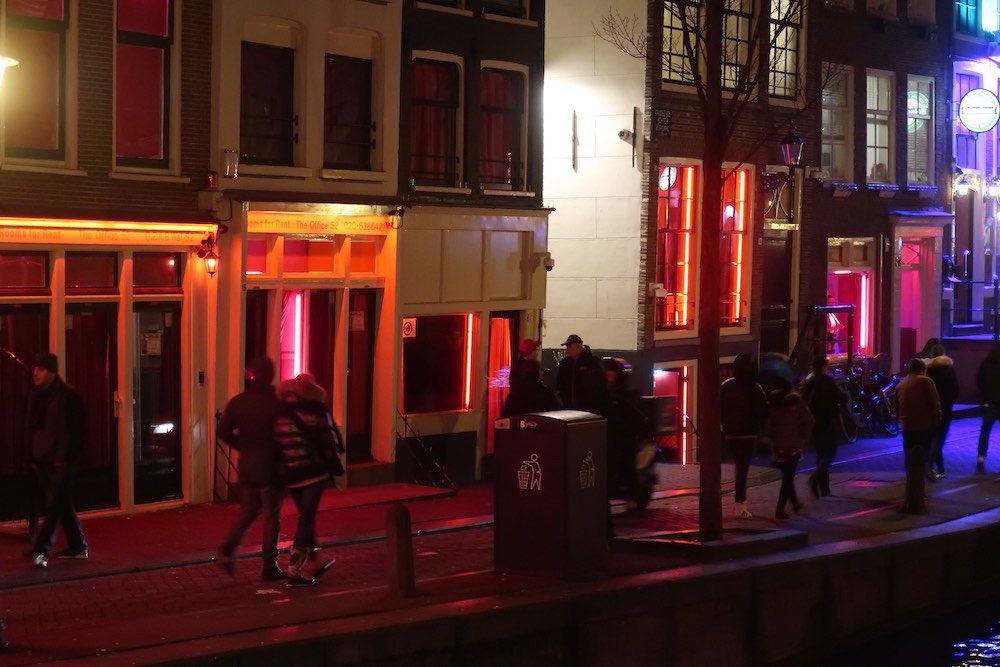
Amsterdam, Red Light District, Oudezijds Achterburgwal.
This page is not meant to glamorize or condemn. It is meant to explain. In our experience, that is what most readers want when they search for prostitution in Holland or Netherlands prostitution: a simple, accurate, and honest overview of the law, the different forms, and the main misunderstandings.
Also read
Amsterdam’s Red Light District Prices




-
- Home
- Tours
- Hotels
- Información
- Historia
- FAQ
- Contact
- Privacy Policy
Sitemap
-
- Coffeeshops
- Restaurants
- Sex Clubs
- Museums
- Canal Cruises
- Bike Rental
Entertainment
-
Contact


© 2010–2026 Amsterdam Red Light District – Amsterdam Red Light District Travel Guide. Webdesign by BIRO.
 ES
ES  EN
EN  DE
DE  FR
FR  NL
NL  ZH
ZH