


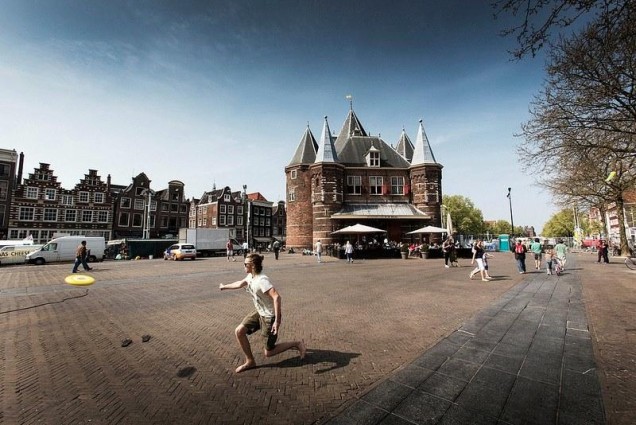
Nieuwmarkt Amsterdam: history, bars, market, nightlife and tips
The Nieuwmarkt (New Market Square) is a must-see in Amsterdam
Nieuwmarkt is one of the best squares in central Amsterdam. It combines old buildings, local terraces, market stalls, Chinatown, and nightlife in one compact area.
Last updated: 31 March 2026
If you want the short answer, here it is: Nieuwmarkt is worth visiting because it gives you a real mix of Amsterdam history and daily life. You can see the Waag, sit on a terrace, visit nearby bars, and walk straight into the Red Light District or the old Jewish Quarter.
During our visits, we found Nieuwmarkt especially good for people watching, casual drinks, and slow city walks. It feels lively without being as hectic as Dam Square.
| Quick fact | Answer |
|---|---|
| What is Nieuwmarkt? | A historic square in central Amsterdam |
| Main landmark | The Waag |
| Nearest metro stop | el Nieuwmarkt |
| Best for | History, terraces, bars, market visits, local atmosphere |
| Nearby areas | Chinatown, Red Light District, old Jewish Quarter |
If you want to combine Nieuwmarkt with more city highlights in one day, the Amsterdam Pass can be useful. It works especially well if your plan includes museums, canal activities, and several city-centre stops instead of just one square.
Historical Background of Nieuwmarkt
Nieuwmarkt has been important to Amsterdam for centuries. The square was created in the early 17th century after canals were filled in, and it quickly became a trading space in the growing city.
The best-known building here is the Waag. The Waag began as part of the old city gate system and later became a weigh house, where goods were checked and weighed before trade. That is why the square has such a strong link to Amsterdam’s commercial past.
Definition: a weigh house was a public building where merchants brought goods to be officially weighed. This was important because taxes, prices, and trade deals often depended on weight.
The square did not stay the same over time. It moved from defense to trade, then to daily local life, and later to protest and culture. That layered history is one reason Nieuwmarkt feels richer than many other central squares.
During our visits, we noticed that the history here is easy to feel even without going inside a museum. The shape of the square, the old brick buildings, and the Waag in the middle all make the area feel older and more grounded than nearby shopping streets.
- Old city edge and trade zone
- Home of the Waag
- Connected to Chinatown and the old Jewish Quarter
- Known later for social protest and local activism
In simple terms, Nieuwmarkt matters because it shows how Amsterdam changed from a trading city into a modern capital without losing its older street pattern.
Top Attractions in Nieuwmarkt
The biggest attraction is the Waag. It is the castle-like building in the middle of the square and one of the oldest non-religious buildings in Amsterdam. Even if you do not go inside, it gives the square its whole identity.
Another major draw is the location itself. Nieuwmarkt sits between several interesting areas, so it works well as a base. From here, you can walk into Chinatown, continue toward the Red Light District, or head east toward the Jewish Cultural Quarter.
Markets are also a big reason to visit. The square has weekday stalls and a popular organic market on Saturdays, which makes the area feel more local than a square built only for tourists.
Definition: a market square is a public open space where trade, food, and community life come together. Nieuwmarkt still works that way today.

| Top attraction | Why it matters |
|---|---|
| The Waag | Main landmark and historic centrepiece |
| Saturday market | Best day for local produce and square atmosphere |
| Chinatown edge | Adds food, culture, and color |
| Terraces | Great for people watching and a casual drink |
Nieuwmarkt is also part of our Red Light District GPS audio guided tour. That is useful because the square often gets treated as just a stop on the way somewhere else. In the audio tour, we explain why the Waag matters, how the square connects to old trade routes, and which nearby streets are worth entering instead of skipping. It helps you see more than just the surface.
Food and Drink Scene
Nieuwmarkt is a very good place to eat or drink because it sits between local Amsterdam and tourist Amsterdam. That means you can find terraces, brown cafés, casual meals, Asian food nearby, and a few stronger cocktail or bar options within a short walk.
During our visits, we noticed the square works best for relaxed food and drinks rather than formal dining. People sit outside for coffee, beer, wine, and snacks, then often continue the night elsewhere in the centre.
If you want to eat something local, this is a good area to try bitterballen. They are small fried Dutch snacks with a soft meat filling, usually served with mustard. They work perfectly with a beer on a terrace, especially around Nieuwmarkt where sitting outside is part of the experience.
One of the easiest options is In de Waag, inside the historic building itself. That gives you food and atmosphere at the same time. Around the square and nearby streets, you also find many places that work well for a quick drink before heading deeper into the nightlife of the city centre.
5 best bars on or around Nieuwmarkt
- In de Waag – best for history and terrace atmosphere
- Café Cuba – good for a lively local bar feel near the square
- Café de Sluyswacht – beautiful old leaning canal-house bar nearby
- Rosalia’s Menagerie – good cocktail option within walking distance
- Café De Druif – a classic old Amsterdam bar not far from Nieuwmarkt
If you plan to combine Nieuwmarkt with several other city attractions in one day, the Amsterdam Pass can save time on planning. It is especially helpful if you want one day that includes the centre, a museum, and maybe an extra activity beyond the square itself.
Nightlife and Entertainment
Nieuwmarkt becomes more social in the evening. Terraces fill up, bars get busier, and the square becomes a meeting point for both locals and visitors. It is not the loudest nightlife zone in Amsterdam, but that is part of its charm.
For many people, Nieuwmarkt works best as a starting point for the night. You meet here, have a drink, and then decide whether to stay around the square, walk into the Red Light District, or move toward another nightlife area like Rembrandtplein or Leidseplein.
During our visits, we found the square especially good at the start of the evening, when there is still enough light to enjoy the Waag and the full square view. Later at night, it feels more like a transit point between bars and neighborhoods.
One good next step from Nieuwmarkt is the Red Light District entertainment zone. If you want a clearer idea of what that part of the city is actually like before going, our Moulin Rouge de Ámsterdam. helps explain what to expect, how the atmosphere feels, and whether it suits your night out.
| Night plan | Why it works |
|---|---|
| Drink on Nieuwmarkt first | Easy meeting point with good atmosphere |
| Then walk into De Wallen | Very short distance, more nightlife options |
| Stay around the square | Better for a lower-key evening |
| Continue to Rembrandtplein | Good for a louder, more club-focused night |
In simple words, Nieuwmarkt nightlife is not about one giant venue. It is about location, terraces, and flexibility.
Nieuwmarkt in World War 2
Nieuwmarkt sits next to an area deeply marked by the Second World War. The nearby old Jewish Quarter was heavily affected by Nazi persecution, deportation, and loss. That wider historical setting matters when you visit the square today.
The square itself also has a direct museum link to this period. The Jewish Museum first opened in 1932 in the Waag on Nieuwmarkt, but during the Nazi occupation it was forced to close and much of its collection was lost.
This gives Nieuwmarkt a more serious layer than many visitors expect. It is easy to focus only on terraces and bars, but the surrounding streets also connect to one of the darkest parts of Amsterdam’s history.
During our visits, we found this contrast striking. On one side, Nieuwmarkt feels social and open. On the other, you are only a short walk from memorial sites and museums that explain what happened to Amsterdam’s Jewish population in World War 2.
- Close to the old Jewish Quarter
- Near important war-history museums and memorial spaces
- The Waag has a direct link to Jewish museum history
- Adds depth to a visit that might otherwise feel only social
In our opinion, this is one reason Nieuwmarkt deserves more than a fast photo stop. It helps connect pleasure, memory, and history in one small part of the city.
Cultural Significance of Nieuwmarkt
Nieuwmarkt is not only about older history. It also played an important role in modern Amsterdam during the 1970s. The area became famous for protests against demolition and metro construction, later known as the Nieuwmarkt Riots. Those protests changed how the city thought about planning and local residents.
Definition: urban protest is when local people push back against city plans that they believe will damage their homes, streets, or community. That is exactly why Nieuwmarkt became such an important symbol.
Today, that history still shapes the area’s identity. Nieuwmarkt feels less polished than some postcard parts of Amsterdam, and that is a strength. It still feels like a place where people live, meet, argue, and claim space for everyday life.
During our visits, we noticed this cultural side most in the mix of people using the square. It is not only tourists. Locals still come here for markets, drinks, and daily routines, which keeps the place from turning into a stage set.
| Cultural layer | What it adds |
|---|---|
| Trade history | Connects the square to old Amsterdam |
| Religious and Jewish history nearby | Adds depth and context |
| 1970s protest history | Shows the square’s role in modern civic life |
| Markets and terraces today | Keeps the square socially active |
That mix is what makes Nieuwmarkt more than just a pretty location. It is a square where Amsterdam’s past and present still meet in visible ways.
Local Life and Atmosphere at Nieuwmarkt
Nieuwmarkt is one of those places where you can understand Amsterdam just by sitting still for a while. Locals come for coffee, drinks, market shopping, lunch, and evening terraces. Visitors come for the Waag, nearby nightlife, and old-city atmosphere.
The square works because it is open enough to feel social but small enough to feel human. That balance is hard to find in central Amsterdam. Dam Square is much larger and more formal. Nieuwmarkt feels more relaxed and more lived in.
The terraces are a big part of that. During weekends, especially in good weather, the square gets full quickly. In winter, too, people still sit outside under heaters and blankets. During our visits, we found it one of the best places in Amsterdam for people watching.
The market rhythm helps too. Weekdays bring smaller stalls, while Saturdays are more active because of the organic market. That keeps the square from feeling the same every day.
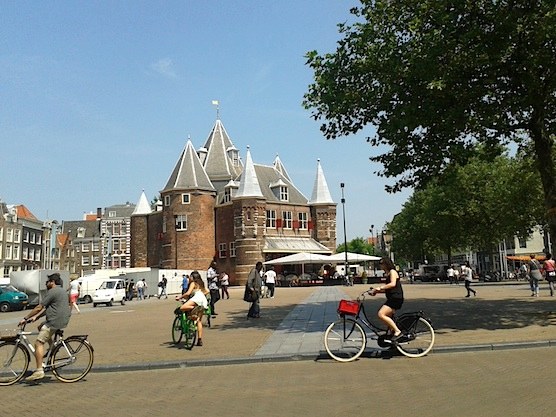
There is almost always something happening on Nieuwmarkt.
Fun fact: the Waag is the oldest non-religious building in Amsterdam. That is one reason the square feels so different from newer parts of the city.
How to get to Nieuwmarkt
Nieuwmarkt is easy to reach from most central areas. The metro station called Nieuwmarkt sits right on the square, which makes the area simple to visit even if you are not staying in the old city centre.
Here are the easiest options:
- Metro: lines 51, 53, or 54 to Nieuwmarkt
- By foot from Central Station: about 10 minutes
- By foot from Dam Square: about 10 minutes
- By foot from the Red Light District: often 2 to 8 minutes depending on where you start
How to get to Nieuwmarkt from Rembrandtplein
Walking from Rembrandtplein is usually the easiest option. The route is short, scenic, and takes you through central Amsterdam without needing public transport.
- Start at Rembrandtplein
- Walk north toward the Amstel side streets
- Head toward Waterlooplein
- Continue west or northwest toward Sint Antoniesbreestraat
- Follow the signs or map to Nieuwmarkt
At a normal pace, the walk is usually around 10 to 15 minutes. In our experience, this is a pleasant route because it moves through one of the most interesting parts of central Amsterdam without being too long.
Fun things to do on Nieuwmarkt Square in Amsterdam
- Buy a drink and sit on a bench to watch the square
- Visit In de Waag and sit on the terrace
- Order a Dutch beer or jenever and stay for the atmosphere
- Have an ice cream at Tofani nearby and walk the side streets
- Visit the Saturday organic market
- Use the square as your base before exploring Chinatown or De Wallen
During our Red Light District GPS audio guided tour, Nieuwmarkt is one of the stops that adds real context to the area. We explain how the square connects to old trade routes, where locals actually sit, and why the Waag matters far beyond being a nice photo background. That makes the stop useful, not just scenic.
Preguntas frecuentes
What is Nieuwmarkt in Amsterdam?
Nieuwmarkt is a historic square in central Amsterdam, best known for the Waag, its terraces, markets, and location near Chinatown and the Red Light District.
Where is Nieuwmarkt located?
Nieuwmarkt is in central Amsterdam, east of Dam Square and close to Chinatown, the old Jewish Quarter, and De Wallen.
What is the Waag at Nieuwmarkt?
The Waag is the large historic building on the square. It began as a city gate and later became a weigh house.
What can you do at Nieuwmarkt?
You can sit on terraces, visit bars, see the Waag, shop at the market, and walk into nearby historic neighborhoods.
When is the Nieuwmarkt market open?
There are weekday market stalls, and Saturday is the main day for the organic farmers’ market. In summer, there can also be Sunday market activity. :contentReference[oaicite:7]{index=7}
Why is Nieuwmarkt historically important?
It is historically important because of the Waag, its role in trade, its location near the old Jewish Quarter, and its part in the 1970s Nieuwmarkt protests. :contentReference[oaicite:8]{index=8}
Also discover:





-
- Home
- Tours
- Hotels
- Información
- Historia
- FAQ
- Contact
- Privacy Policy
Sitemap
-
- Coffeeshops
- Restaurants
- Sex Clubs
- Museums
- Canal Cruises
- Bike Rental
Entertainment
-
Contact


© 2010–2026 Amsterdam Red Light District – Amsterdam Red Light District Travel Guide. Webdesign by BIRO.
 ES
ES  EN
EN  DE
DE  FR
FR  NL
NL  ZH
ZH