

Body Worlds Amsterdam: Exploring Human Anatomy & Science
Publicado el: 1 de marzo de 2026
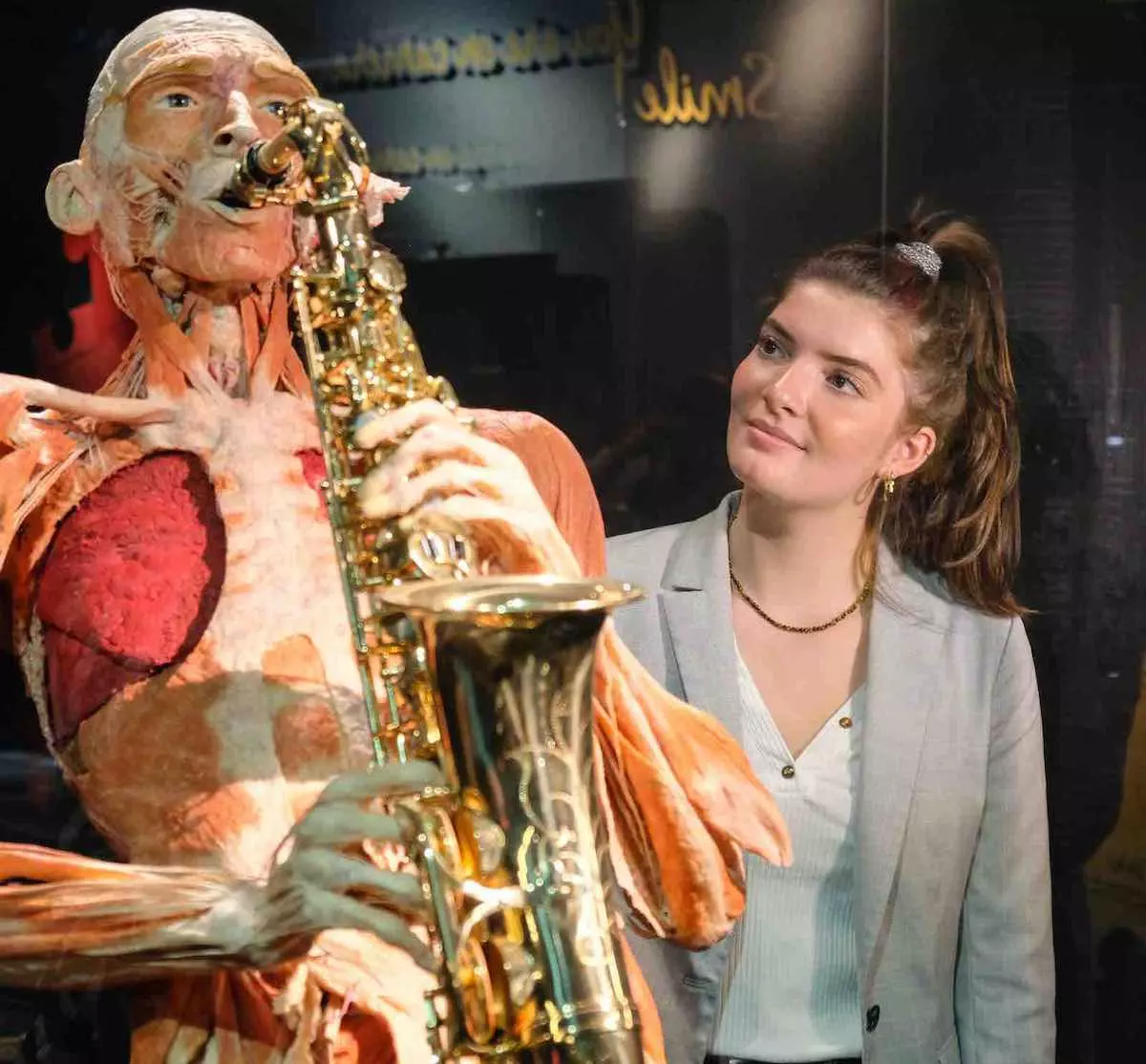
Body Worlds Amsterdam: tickets, highlights, visitor tips and directions
Is there a human body museum in Amsterdam?
Body Worlds Amsterdam is the city’s best-known human body and anatomy museum, on Damrak 66 near Central Station — real preserved bodies, not wax or models. It is one of the city’s most unusual museums because it mixes anatomy, health education, and real preserved human specimens in one modern exhibition.
This guide is built to answer the main questions fast: what the exhibition is, what you see inside, how long it takes, how to get there, and whether it is suitable for children. If you are curious about the human body and want something different from a normal museum, this is one of the strongest indoor things to do in central Amsterdam.
Última actualización: 30 de septiembre de 2026
Introduction to Body Worlds Amsterdam
Body Worlds Amsterdam is an educational exhibition about the human body, health, and happiness. It uses real human bodies and organs that have been preserved through a process called plastination, so visitors can see muscles, bones, organs, nerves, and body systems in a way that books and screens cannot fully show.
Definition: plastination is a preservation method invented by Dr. Gunther von Hagens. Plastination replaces body fluids and fat with curable polymers, leaving real tissue dry, stable and suitable for scientific display.
The current permanent exhibition in Amsterdam is called The Happiness Project. Instead of showing anatomy alone, it also explores how stress, movement, lifestyle, and emotion affect the body. That makes the experience broader than a standard medical display.
During our visit we found the staff really friendly, everything felt quite modern too. The welcome area and circulation through the building felt organized, and the exhibition texts were easy to follow for regular visitors, not just science students.
| Quick fact | Answer |
|---|---|
| Official exhibition | BODY WORLDS: The Happiness Project |
| Dirección | Damrak 66, 1012 LM Amsterdam |
| Languages | Dutch and English |
| Typical visit time | About 90 minutes to 2 hours |
| Photos allowed | Sí |
| Ideal para | Adults, students, older children, and curious visitors |
If you want an indoor activity near Central Station that is educational, visual, and very different from a classic art museum, this exhibition is a strong choice.
The Exhibits and Displays

Body Worlds Amsterdam includes about 200 real plastinated specimens. You will see full bodies, separate organs, and detailed sections that show how the human body works from the inside. This helps visitors understand not just what the body looks like, but how different systems connect.
One of the strongest parts of the exhibition is the way it uses poses and movement. Displays are not placed randomly. They are arranged to show how muscles stretch, how joints work, and how the body responds during action. That makes the educational message easier to understand.
The official venue also links the exhibition to happiness and health. That means visitors do not only see anatomy. They also learn about exercise, smoking, stress, and other lifestyle choices. The exhibition answers two questions: how does the body work, and what helps or harms it?
Based on official photos and visitor visuals, the interior looks dark, clean, and modern, with black backgrounds, spotlighting, and display spaces that keep attention on the specimens. The exterior on Damrak looks much more like a normal city-centre building, with a retail-style streetfront in a busy shopping area. That contrast works well: outside feels ordinary Amsterdam, while inside feels focused, quiet, and scientific.
- full-body plastinates
- organs and body systems
- health and lifestyle displays
- movement-focused poses
- English and Dutch wall texts
- audio guide available at the box office
It pays to move slowly and actually read the short explanations. The visual shock is only one part of the value. The real strength is understanding what you are looking at.
The History and Mission
The BODY WORLDS concept was created by Dr. Gunther von Hagens, the anatomist who invented plastination in 1977 at the University of Heidelberg. Since the exhibition series began in 1995, official venue information says around 40 million people have visited BODY WORLDS exhibitions in more than 100 cities.
That background matters because it explains why this is not a small local experiment. The Amsterdam location is part of a larger international project that combines anatomy, science education, and public health communication.
The mission of the Amsterdam exhibition is to help a broad public understand the human body better. The official site says the exhibition focuses on how everyday choices affect health and happiness. That is why the name The Happiness Project is not just a marketing slogan. It is the main theme of the permanent Amsterdam version.
During our visit, we found that the exhibition does a good job of mixing science with accessibility. It does not assume you already know anatomy terms. Instead, it uses real examples, short text panels, and visual contrast to explain complex ideas in a more direct way.
| Topic | Why it matters |
|---|---|
| Dr. Gunther von Hagens | Invented plastination and created BODY WORLDS |
| Started in 1995 | Shows the project has long public history |
| 40 million visitors | Suggests strong global public interest |
| The Happiness Project | Links anatomy to health and daily life |
In simple words, the mission is this: show the real body, explain it clearly, and help people think about their own health choices. That is why the exhibition feels more educational than sensational.
Educational and Scientific Aspects
Body Worlds Amsterdam has value because it uses real anatomical material for public learning. This makes the educational experience more direct than diagrams or animations. You can see how thick muscles really are, how organs fit together, and how body systems overlap.
That matters for one simple reason: people often understand better when they can see the real thing. A picture of lungs is useful, but a real preserved specimen makes the size, texture, and structure much easier to grasp.
The exhibition also teaches by comparison. Healthy and unhealthy conditions can be shown side by side, helping visitors understand how behavior can affect the body over time. That is one reason the health message feels concrete rather than abstract.
A useful concept here is body systems. A body system is a group of organs and tissues that work together to do one main job. For example, the respiratory system helps you breathe, and the circulatory system moves blood through the body.
- skeletal system: support and protection
- muscular system: movement and posture
- nervous system: signals and control
- circulatory system: blood flow and oxygen transport
- respiratory system: breathing and gas exchange
Step by step, the exhibition teaches in a simple way:
- show the real body part
- name the structure
- explain the function
- connect it to daily life or health
- show what can go wrong when health declines
In our opinion, this process is why the museum works for both students and casual visitors. You do not need a science background to learn something useful here.
Visitor Experience and Practical Information
Body Worlds Amsterdam is in a very practical location at Damrak 66. That puts it in the city centre, close to Central Station, Dam Square, and the edge of the barrio rojo. Because of that, it fits easily into a normal day of sightseeing.
The official visitor information says a visit takes about 2 hours, while the ticket page says around 90 minutes. In real terms, most visitors should plan for about 1.5 to 2 hours, depending on how carefully they read and how crowded it is.
Photos are allowed, which is useful for visitors who want to remember specific displays. The venue also says strollers are allowed, the exhibition is in Dutch and English, and audio guides are available at the box office.
During our visit, we found the route through the building easy to follow. Everything felt quite modern, and the staff were really friendly when people had questions. That matters because some visitors arrive unsure whether the exhibition will feel too clinical or too intense. In practice, it feels organized, professional, and visitor-friendly.
| Visitor point | What to know |
|---|---|
| Dirección | Damrak 66, Amsterdam |
| Time needed | About 1.5 to 2 hours |
| Languages | Dutch and English |
| Audio guide | Available at the box office |
| Photos | Allowed |
| Stroller | Allowed |
If you want to combine this visit with a relaxing city activity afterward, a canal cruise from Central Station works well because the museum is already close to that area.
How to get to Body Worlds Amsterdam from Central Station
Getting there from Amsterdam Central Station is simple. The official FAQ says it is about a ten-minute walk from the station, and several trams also stop in front of the door, including lines 4, 14, and 24.
For most visitors, walking is easiest because the route is short and direct. You leave Central Station from the main front side, head south along Damrak, and continue until you reach number 66.
Step by step, the walking route looks like this:
- leave Amsterdam Central Station from the main front entrance
- walk south toward Damrak
- stay on Damrak and keep walking straight
- look for Damrak 66 on the same main route
- enter the exhibition building
If you prefer trams, use the city-centre network and get off near Damrak. That is useful in bad weather, but in our opinion walking is easier because it avoids platform time and is so short.
If you want help using trams, metro, buses, or train connections in the city, our guide to Amsterdam public transport explains the basics in a simple way and helps you plan the easiest route.
How to get to the Red Light District from Body Worlds Amsterdam
Body Worlds Amsterdam is very close to the Red Light District. Because the museum is on Damrak, you are already near one of the easiest walking routes into the old centre and De Wallen.
The shortest route is usually on foot. From Damrak 66, walk back toward the old centre side streets and continue east toward Warmoesstraat, Oudezijds Voorburgwal, or Oudezijds Achterburgwal, depending on which part of the district you want to see first.
Step by step, a simple route is:
- leave Body Worlds Amsterdam at Damrak 66
- walk toward Warmoesstraat or Oude Brugsteeg area
- continue east into the older streets
- follow signs or maps toward De Wallen
- arrive in the Red Light District in about 5 to 10 minutes
During our own city-centre walks, we found this route very easy because the museum sits between Central Station and the historic core. That makes it a good late-afternoon stop before an evening walk through De Wallen.
If you want to continue from science and anatomy into a very different side of Amsterdam nightlife, Entradas para el Moulin Rouge Amsterdam are a practical next step. The contrast is actually useful: Body Worlds explains the body in a scientific and educational way, while the Moulin Rouge experience places you in the city’s entretenimiento para adultos scene, just a short walk away in the old centre.
¿Pueden los menores visitar Body Worlds Amsterdam?
Yes, minors can visit Body Worlds Amsterdam. The official FAQ says there are no age limits for children or young people who are accompanied by educators, and the official ticket page lists child tickets for ages 6 to 17.
That does not mean the exhibition is right for every child. The displays use real human bodies, so parents and teachers should think about maturity, curiosity, and comfort level before visiting.
The official venue itself says parents and teachers should decide whether the children in their care are properly prepared for the exhibition. That is a sensible rule. Some children will find it fascinating. Others may find parts of it intense or strange.
- yes, minors can visit
- child ticket age listed as 6–17
- no fixed age ban mentioned in the FAQ
- adult judgment is still important
In our opinion, this exhibition works best for older children, teenagers, and students who already have some interest in science or health. For very young children, the visual impact may matter more than the educational value.
How long does it take to get through Body Worlds Amsterdam?
Most visitors spend about 1.5 to 2 hours inside. That gives enough time to see the displays, read the panels, and move through the building without rushing.
Body Worlds Location
Body Worlds Amsterdam is at Damrak 66 in the centre of Amsterdam. It is close to Amsterdam Central Station, Dam Square, and the Red Light District, which makes it easy to fit into a city-centre route.
Preguntas frecuentes
¿Qué es Body Worlds Amsterdam?
It is an anatomy and health exhibition that uses real plastinated human bodies and organs to explain how the body works.
What is plastination?
Plastination is a preservation method in which body fluids and fat are replaced with special materials so real tissue can be displayed for education.
How long does a visit take?
Most visits take around 90 minutes to 2 hours.
Is Body Worlds Amsterdam suitable for children?
Yes, minors can visit, but parents and teachers should decide whether the exhibition is suitable for the child. The official ticket page lists child ages 6 to 17.
Can I take photos inside?
Sí, se permite tomar fotografías dentro de la exposición.
How do I get there from Central Station?
Walk south along Damrak from Amsterdam Central Station. The exhibition is about a ten-minute walk away at Damrak 66.
How do I get to the Red Light District from Body Worlds Amsterdam?
Walk east from Damrak toward Warmoesstraat and De Wallen. The Red Light District is usually around 5 to 10 minutes away on foot.
Is there a human body museum in Amsterdam?
Yes. Body Worlds Amsterdam — officially BODY WORLDS: The Happiness Project — is the city’s human body and anatomy museum, at Damrak 66 near Central Station. It shows about 200 real plastinated human specimens rather than models or replicas.
Are the bodies in Body Worlds Amsterdam real?
Yes, they are real. The specimens are genuine human bodies and organs preserved through plastination, which replaces body fluids and fat with curable polymers. Body Worlds says they come from its own body-donation programme, in which donors gave written consent during their lifetime.
How much do Body Worlds Amsterdam tickets cost?
Adult tickets start at around €22.50 online, children aged 6–17 pay a reduced rate and under-6s enter free — check bodyworlds.nl or the skip-the-line link for current prices. The I amsterdam City Card usually gives a discount.
What is the difference between Body Worlds and Corpus?
Body Worlds Amsterdam shows real preserved human specimens at Damrak 66 in central Amsterdam. Corpus, in Oegstgeest near Leiden, is a walk-through model of a giant human body using replicas and interactive displays — not real bodies, and not in Amsterdam.





-
- Inicio
- Tours
- Hoteles
- Información
- Historia
- Preguntas frecuentes
- Contacto
- Política de Privacidad
Mapa del sitio
-
Contacto

© 2010–2026 Distrito Rojo de Ámsterdam – Guía de Viaje del Barrio Rojo de Ámsterdam. . Diseño web por BIRO.
 ES
ES  EN
EN  DE
DE  FR
FR  NL
NL  ZH
ZH