

Amsterdam Currency: Euro, ATMs, Cards & Tipping
Posted on: febrero 1, 2026
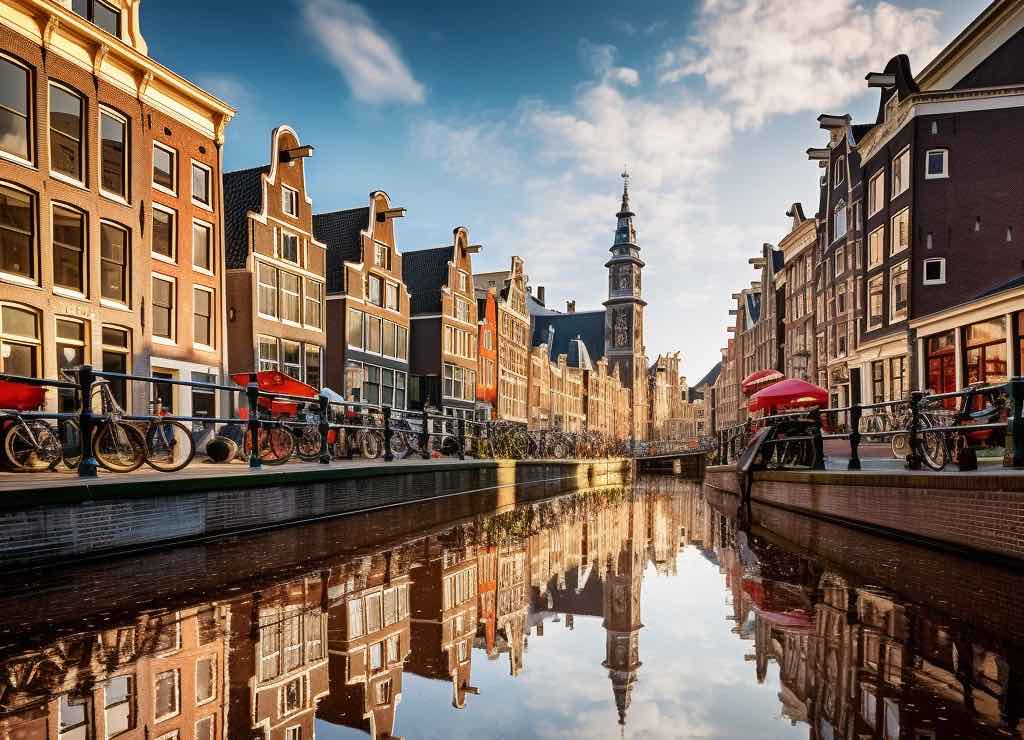
Amsterdam Currency Explained
Amsterdam currency trips up plenty of visitors. You land needing cash or a card that works, and you don’t want to lose money on bad exchange rates or a blocked card. Get it wrong and you overpay at an airport kiosk or get stuck at a cash-only bar. Here I cover what you need: the Euro, where to exchange, ATMs, cards, and tipping.
Última actualización: 24 de marzo de 2026
10 Things You Need To Know About Amsterdam Currency
- Currency Type: Amsterdam uses the Euro (€) as its official currency.
- Banknote Denominations: Available in 5, 10, 20, 50, 100, 200, and 500 euros.
- Coin Denominations: Includes 1, 2, 5, 10, 20, 50 cents, and 1 and 2 euros.
- Cash vs Digital: Both cash and digital payments are widely accepted.
- ATM Availability: ATMs are abundant and compatible with international cards.
- Currency Exchange: Best rates at banks and major transport hubs.
- Tipping Culture: Tipping is customary but not obligatory, usually 5-10%.
- Security Features: Euro notes have advanced anti-counterfeiting measures.
- Card Acceptance: Credit and debit cards are widely accepted, but have some cash.
- Cultural Transition: Switch from Dutch Guilder to Euro in 2002 marked a significant cultural shift.
Current Currency Used in Amsterdam
Amsterdam, like much of the Netherlands, primarily uses the Euro (€) as its official currency. Introduced in 2002, the Euro has since become a significant part of European trade and economics.
Nowadays, tourists and residents in Amsterdam will encounter Euro banknotes and coins in various denominations.
Banknotes come in 5, 10, 20, 50, 100, 200 and 500 Euro values, each with distinct colors and sizes for easy recognition.
The coins are in denominations of 1, 2, 5, 10, 20, and 50 cents, and 1 and 2 Euro.
The banknotes feature European architectural styles from different periods.
Currency Exchange Tips
Where you change money in Amsterdam decides how much of it you keep.
Numerous currency exchange offices can be found around major tourist areas and transport hubs like Schiphol Airport and Amsterdam Centraal Station.
However, it’s essential to be aware of the exchange rates and commissions charged. Often, banks offer better rates compared to standalone exchange kiosks.
Another tip is to avoid exchanging money at hotels due to typically unfavorable rates. It’s also wise to compare rates online and consider exchanging a portion of your money before traveling.
Some travelers opt for pre-paid travel cards available from banks, which can offer competitive rates and reduce the need to carry large amounts of cash.
Cash vs. Digital Payments
Amsterdam runs on both cash and cards, but it leans digital. Contactless cards and phone payments work in most restaurants, shops, and many market stalls. Larger places take cards without a problem, while some small shops and stalls still prefer cash, so keep a little on you.
ATM and Banking Services
ATMs are easy to find across Amsterdam, and most take major international credit and debit cards. Watch for foreign-transaction fees, which depend on your own bank and the ATM operator. Tell your bank you’re travelling so it doesn’t block your card, and check your daily withdrawal limit before you go.
Cultural Tips Related to Money
Tipping is customary but not mandatory in the Netherlands. In restaurants and cafes, it’s common to leave a small tip, typically around 5-10% of the bill, if the service is satisfactory. However, tipping in other services like taxis or hairdressers is less common and is usually a matter of personal choice. Bargaining is not a standard practice in Dutch stores or markets, so prices are generally considered fixed. However, at flea markets or when purchasing art or antiques, some negotiation might be acceptable.
Preguntas frecuentes
What is the currency used in Amsterdam?
Amsterdam uses the Euro (€) as its official currency. It includes banknotes in denominations of 5, 10, 20, 50, 100, 200, and 500 euros, and coins in 1, 2, 5, 10, 20, and 50 cents, and 1 and 2 euros.
Where is the best place to exchange currency in Amsterdam?
The best places for currency exchange in Amsterdam are banks and specialized currency exchange offices in major tourist areas and transport hubs like Schiphol Airport and Amsterdam Centraal Station. Banks usually offer more favorable rates compared to standalone kiosks.
Are credit cards widely accepted in Amsterdam?
Sí, credit cards are widely accepted in Amsterdam, especially in hotels, restaurants, and larger stores. However, it’s advisable to carry some cash for smaller shops and local markets.
Can I use digital payments in Amsterdam?
Digital payments, including contactless card payments and mobile payment apps, are increasingly popular in Amsterdam. They are accepted in many establishments, though cash remains a viable option for smaller transactions.
Are there any ATMs in Amsterdam where I can withdraw cash?
Amsterdam has a dense network of ATMs that support major international credit and debit cards, making it convenient to withdraw cash across the city. Be aware of potential fees for international transactions.
What are the tipping customs in Amsterdam?
Tipping in Amsterdam is customary but not mandatory. In restaurants and cafes, a tip of around 5-10% of the bill is common if the service is good. Tipping in other services like taxis is less common and is usually at the customer’s discretion.
Is the currency used in Amsterdam’s Red Light District different from the rest of the city?
No, the currency used in Amsterdam’s Red Light District is the same as the rest of the city, which is the Euro (€). Just like in other parts of Amsterdam, both cash and digital payments are accepted in the Red Light District, but it’s advisable to carry some cash as trabajadoras sexuales and smaller establishments might not accept cards.
For a full breakdown, see our guide to the Red Light District cost.
Amsterdam Currency Facts
- Polymer Notes Introduction: While traditionally made from cotton paper, the Eurozone has been considering the introduction of polymer notes for future Euro banknotes. Polymer notes, already used by several countries, are more durable and resistant to wear and tear compared to paper notes.
- Smallest and Largest Denominations: The smallest denomination of the Euro currency is the 1 cent coin, while the largest is the 500 Euro banknote. However, the 500 Euro note is no longer being issued since January 27, 2019, due to concerns about its use in illicit activities, though it remains legal tender.
- Euro Symbol Origin: The Euro symbol (€) is inspired by the Greek letter epsilon (Ε), reflecting the cradle of European civilization, and the first letter of the word ‘Europe’. The two parallel lines signify the stability of the Euro.
- Exchange Rate Impact: The Euro’s value against other currencies, particularly the US Dollar, has a significant impact on Amsterdam’s tourism and trade. A stronger Euro can make Amsterdam more expensive for tourists, while a weaker Euro can boost tourism and exports.
- Legal Tender Status: Euro banknotes and coins are legal tender across the Eurozone. This means they must be accepted for most types of transactions, although there are exceptions for certain types of payments or where the exact change cannot be given.
- Cultural Impact: The adoption of the Euro in Amsterdam and other Dutch cities marked a cultural shift, moving away from the Dutch Guilder, which had been in use since the 17th century. The transition to the Euro was a significant moment, reflecting deeper European integration and cooperation.

Respuestas de 1 a Amsterdam Currency: Euro, ATMs, Cards & Tipping
Deja una respuesta


-
- Inicio
- Tours
- Hoteles
- Información
- Historia
- Preguntas frecuentes
- Contacto
- Política de Privacidad
Mapa del sitio
-
Contacto

© 2010–2026 Distrito Rojo de Ámsterdam – Guía de Viaje del Barrio Rojo de Ámsterdam. . Diseño web por BIRO.
 ES
ES  EN
EN  DE
DE  FR
FR  NL
NL  ZH
ZH
[…] much more affordable than Casa Rosso which charges 60 euro per ticket. Moulin Rouge sex shows are offered from 40 […]